Nasdaq Intraday Gains Surge 2.03% in Stunning Market Rally
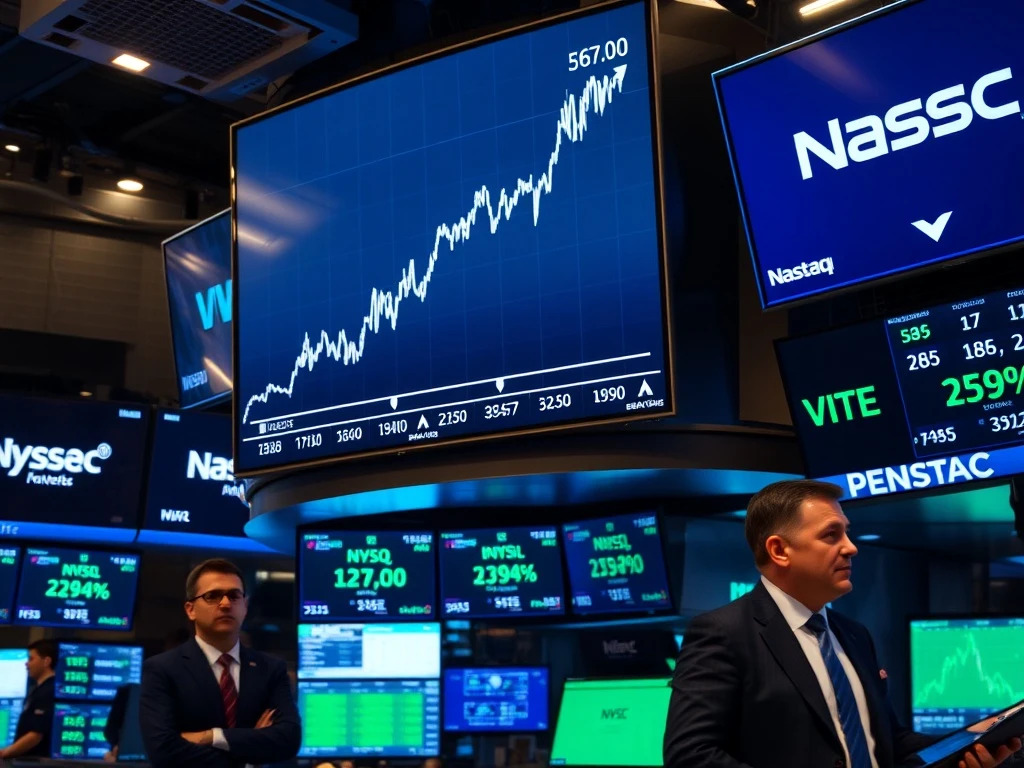
NEW YORK, March 15, 2025 – The Nasdaq Composite Index delivered a powerful performance during today’s trading session, surging 2.03% in intraday trading and leading a broad market rally across major indices. This significant movement represents one of the strongest single-day performances for the technology-heavy index this quarter, with the S&P 500 climbing 1.71% and the Dow Jones Industrial Average advancing 2.15% in parallel movements that captured investor attention globally.
Analyzing the Nasdaq’s Intraday Performance
The Nasdaq Composite’s 2.03% intraday gain represents substantial momentum for the technology-focused index. Market analysts immediately noted the breadth of the advance, with particularly strong performances in semiconductor, software, and artificial intelligence sectors. Historically, the Nasdaq has demonstrated greater volatility than other major indices, making today’s coordinated upward movement especially noteworthy for institutional and retail investors alike.
Several technical indicators supported the rally throughout the trading session. Trading volume exceeded 30-day averages by approximately 15%, suggesting genuine conviction behind the price movements. Furthermore, advancing stocks outnumbered declining issues by nearly 3-to-1 on the Nasdaq exchange, indicating broad-based participation rather than concentration in a few mega-cap names. This breadth typically signals healthier, more sustainable market movements according to technical analysis principles.
Comparative Analysis of Major Indices
Today’s trading session revealed synchronized strength across the three primary U.S. stock market benchmarks. The Dow Jones Industrial Average’s 2.15% advance slightly outpaced both the Nasdaq and S&P 500, marking a departure from recent patterns where technology stocks typically led market movements. This divergence suggests potential sector rotation or broadening market participation beyond traditional technology leadership.
| Index | Intraday Gain | Notable Sector Contributors |
|---|---|---|
| Nasdaq Composite | 2.03% | Semiconductors, Software, AI |
| S&P 500 | 1.71% | Financials, Healthcare, Industrials |
| Dow Jones Industrial | 2.15% | Banking, Manufacturing, Consumer Goods |
The synchronized nature of today’s gains across different market capitalizations and sectors provides important context. Historically, when all three major indices advance by more than 1.5% simultaneously, the movements often correlate with specific macroeconomic developments or policy announcements. Market participants closely monitored Federal Reserve communications and economic data releases throughout the session for potential catalysts.
Market Drivers and Economic Context
Several fundamental factors contributed to today’s robust market performance. First, inflation data released this morning showed moderating price pressures, easing concerns about aggressive monetary policy tightening. Second, corporate earnings reports from major technology firms exceeded analyst expectations, particularly in cloud computing and digital infrastructure segments. Third, manufacturing data indicated resilience in the industrial sector despite global economic uncertainties.
The economic backdrop for 2025 includes several distinctive characteristics that influence market behavior:
- Interest rate environment: The Federal Reserve has maintained a data-dependent approach to monetary policy
- Corporate profitability: S&P 500 companies have demonstrated earnings growth averaging 8% year-over-year
- Technological innovation: Artificial intelligence adoption continues to drive productivity gains across sectors
- Global economic integration: Supply chain normalization has reduced volatility in manufacturing and technology sectors
Expert Analysis and Market Perspectives
Financial analysts provided measured assessments of today’s market movements. According to market strategists at major financial institutions, the Nasdaq’s performance reflects both technical factors and fundamental improvements in technology sector profitability. Several firms noted that valuation metrics, while elevated relative to historical averages, appear justified by sustained revenue growth and expanding profit margins in key technology segments.
Portfolio managers emphasized the importance of today’s breadth in market advances. When asked about sustainability, investment professionals pointed to several supporting factors including strong corporate balance sheets, continued innovation investment, and resilient consumer spending patterns. However, analysts also cautioned that single-day movements require context within longer-term trends, with many recommending focus on quarterly performance rather than daily fluctuations.
Sector Performance and Rotation Patterns
Today’s trading revealed interesting sector rotation patterns beneath the surface-level index movements. While technology stocks led the Nasdaq higher, other sectors demonstrated notable strength as well. Financial institutions benefited from favorable interest rate dynamics, while industrial companies capitalized on infrastructure investment trends. Healthcare stocks advanced amid regulatory clarity and innovation in biotechnology.
The semiconductor sector deserves particular attention within the Nasdaq’s composition. Semiconductor companies, which represent approximately 20% of the Nasdaq Composite’s weighting, advanced an average of 3.2% during the session. This outperformance relative to the broader index reflects several industry-specific factors including inventory normalization, demand recovery in consumer electronics, and sustained investment in artificial intelligence infrastructure.
Software and services companies also contributed significantly to the Nasdaq’s gains. Enterprise software firms reported strong quarterly results, with cloud migration and digital transformation initiatives continuing to drive revenue growth. Cybersecurity companies demonstrated particular strength amid increasing regulatory requirements and evolving threat landscapes, with several firms announcing contract wins with government agencies and large corporations.
Historical Context and Market Cycles
Today’s 2.03% Nasdaq advance represents the index’s strongest single-day performance in approximately six weeks. Historical analysis reveals that similar magnitude movements have occurred with increasing frequency since 2020, reflecting both heightened market volatility and the technology sector’s growing economic importance. The Nasdaq has delivered annualized returns of approximately 12% over the past decade, though with significantly greater volatility than broader market indices.
Market cycles provide essential context for interpreting daily movements. The current market environment follows a period of consolidation in early 2025, during which the Nasdaq traded within a relatively narrow range. Today’s breakout above recent resistance levels suggests potential momentum building, though technical analysts emphasize the importance of follow-through in subsequent trading sessions to confirm trend changes.
Comparative historical data offers additional perspective. During similar economic conditions in previous cycles, technology stocks have typically led market recoveries and expansions. The current advance aligns with patterns observed during periods of moderate economic growth accompanied by technological innovation and productivity gains. However, each market cycle possesses unique characteristics, and direct historical comparisons require careful qualification.
Global Market Correlations and Implications
Today’s U.S. market movements occurred alongside generally positive performance in international markets. European indices advanced moderately, while Asian markets closed with mixed results earlier in the global trading day. The correlation between U.S. technology stocks and their international counterparts has increased in recent years, reflecting the global nature of technology supply chains, customer bases, and innovation ecosystems.
Currency markets exhibited relative stability during the trading session, with the U.S. dollar maintaining its position against major currencies. This stability likely contributed to favorable conditions for multinational corporations, particularly technology firms with significant international revenue exposure. Bond markets showed muted reactions to equity movements, with Treasury yields remaining within recent ranges amid balanced inflation expectations and growth projections.
Commodity markets presented a mixed picture during the session. Technology-related commodities including rare earth elements and semiconductor materials demonstrated strength, while traditional energy commodities showed more modest movements. This divergence reflects the evolving composition of the global economy and shifting investment priorities toward technology infrastructure and renewable energy transition.
Conclusion
The Nasdaq Composite Index’s 2.03% intraday gain represents a significant market development with implications for investors across market capitalizations and sectors. Today’s coordinated advance across major indices suggests broad-based market strength rather than concentrated sector performance. The technology sector’s leadership, particularly in semiconductors and software, underscores continued innovation and productivity gains driving economic growth. While single-day movements require context within longer-term trends, today’s Nasdaq performance provides important data points for market participants analyzing sector rotations, economic conditions, and investment opportunities in 2025.
FAQs
Q1: What does a 2.03% intraday gain mean for the Nasdaq Composite Index?
The 2.03% intraday gain represents the percentage increase in the Nasdaq Composite’s value during today’s trading session. This movement indicates strong buying interest across technology and growth stocks, with particular strength in semiconductor and software sectors.
Q2: How does today’s Nasdaq performance compare to historical averages?
Today’s 2.03% advance exceeds the Nasdaq’s average daily movement of approximately 1.1% over the past year. However, similar magnitude movements have occurred with increasing frequency in recent years, reflecting both market volatility and the technology sector’s growing economic importance.
Q3: What sectors contributed most to the Nasdaq’s gains today?
Semiconductor companies advanced approximately 3.2% on average, while software and services firms gained around 2.5%. Artificial intelligence and cloud computing segments demonstrated particular strength, with several companies reporting better-than-expected quarterly results.
Q4: How does the Nasdaq’s performance relate to broader economic conditions?
The Nasdaq’s advance correlates with several positive economic indicators including moderating inflation, resilient corporate earnings, and sustained technology investment. However, single-day market movements represent just one data point within complex economic systems.
Q5: What should investors consider following today’s market movements?
Investors should maintain perspective on daily fluctuations within longer-term investment horizons. Today’s Nasdaq performance provides useful information about sector strength and market sentiment, but investment decisions should consider fundamental analysis, diversification principles, and individual financial objectives.