Cryptocurrency Useless to Consumers: Minneapolis Fed President’s Stark Warning
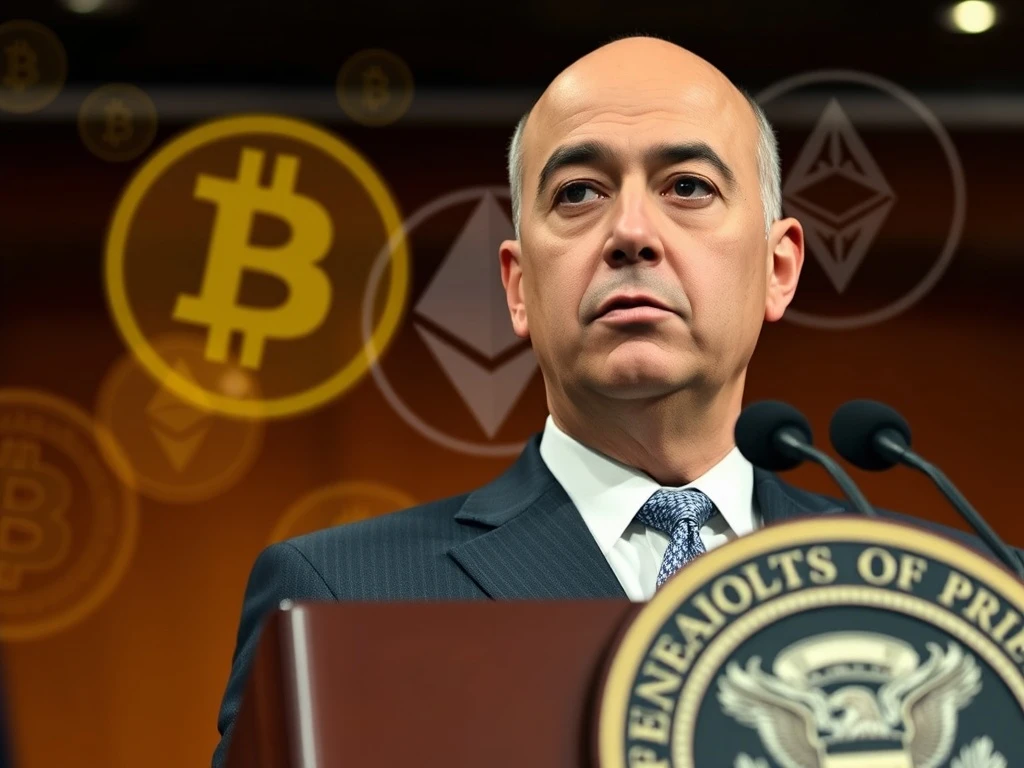
MINNEAPOLIS, March 2025 – Federal Reserve Bank of Minneapolis President Neel Kashkari delivered a blunt assessment of digital assets this week, declaring cryptocurrency fundamentally useless to consumers during a policy forum that has reignited debates about the practical value of blockchain-based financial instruments. His comments arrive at a critical juncture for digital asset regulation and highlight persistent tensions between traditional financial institutions and the rapidly evolving cryptocurrency ecosystem.
Neel Kashkari’s Cryptocurrency Critique
Neel Kashkari, a prominent figure within the U.S. central banking system, articulated his skepticism about consumer applications for cryptocurrencies during a public discussion on financial innovation. The Minneapolis Fed president specifically questioned whether digital assets like Bitcoin and Ethereum provide tangible benefits to everyday users. He emphasized that traditional payment systems already offer efficient, secure transactions without the volatility and complexity associated with most cryptocurrencies.
Furthermore, Kashkari pointed to several practical concerns that undermine cryptocurrency’s consumer utility. These include price volatility that makes cryptocurrencies unreliable as stores of value, transaction costs that sometimes exceed traditional payment methods, and security vulnerabilities that have led to substantial consumer losses. His critique extends beyond technical limitations to question whether cryptocurrencies solve genuine consumer problems that existing financial systems cannot address.
Historical Context of Federal Reserve Crypto Skepticism
Kashkari’s comments represent continuity rather than departure from Federal Reserve positions on digital assets. Since Bitcoin’s emergence in 2009, central bank officials have consistently expressed reservations about cryptocurrency adoption. Former Fed Chair Janet Yellen frequently highlighted concerns about illicit finance and investor protection. Current Chair Jerome Powell has acknowledged blockchain’s technological potential while emphasizing the need for comprehensive regulatory frameworks.
Also read: Bitcoin Treasury Companies Face New Pressure as US-Iran Tensions Shift
The Federal Reserve’s cautious approach reflects several institutional priorities. First, central banks maintain responsibility for monetary policy stability, which cryptocurrency volatility potentially threatens. Second, they oversee payment system integrity, creating natural skepticism toward decentralized alternatives. Third, consumer protection mandates make Fed officials particularly attentive to risks in emerging financial technologies. Kashkari’s remarks thus align with longstanding central banking principles despite cryptocurrency market maturation.
Comparative Analysis: Cryptocurrency vs Traditional Payment Systems
| Feature | Cryptocurrency | Traditional Payment Systems |
|---|---|---|
| Transaction Speed | Variable (minutes to hours) | Instant to 1-3 days |
| Transaction Cost | Highly variable | Typically low or zero |
| Price Stability | Extreme volatility | Stable value |
| Consumer Protections | Limited to none | Comprehensive regulations |
| Accessibility | Requires technical knowledge | Universally accessible |
This comparison illustrates why traditional financial institutions question cryptocurrency’s consumer value proposition. While blockchain technology enables certain innovations, existing systems already provide reliable services for most everyday transactions. Consequently, cryptocurrency adoption faces significant practical hurdles beyond technological novelty.
Cryptocurrency’s Evolving Regulatory Space
Kashkari’s critique emerges alongside intensifying regulatory scrutiny of digital assets. Multiple federal agencies have recently clarified cryptocurrency oversight responsibilities. The Securities and Exchange Commission continues pursuing enforcement actions against unregistered crypto securities offerings. Meanwhile, the Commodity Futures Trading Commission has expanded derivatives market oversight. These developments create compliance challenges for cryptocurrency businesses seeking mainstream adoption.
Several key regulatory issues directly impact consumer cryptocurrency utility. First, inconsistent classification creates uncertainty about which rules apply to different digital assets. Second, anti-money laundering requirements impose verification burdens that contradict cryptocurrency’s pseudonymous origins. Third, consumer protection regulations remain underdeveloped compared to traditional finance. These factors collectively limit cryptocurrency’s practical applications despite technological capabilities.
Expert Perspectives on Consumer Cryptocurrency Utility
Financial technology researchers offer nuanced perspectives on Kashkari’s assessment. Dr. Sarah Johnson, a payments systems economist at Stanford University, acknowledges cryptocurrency’s limited current utility while noting potential future applications. “Most consumers don’t need cryptocurrency for daily transactions,” Johnson explains. “However, blockchain technology enables innovative financial services that could eventually benefit underserved populations.”
Conversely, consumer advocacy groups highlight persistent cryptocurrency risks. The Consumer Financial Protection Bureau documented over 50,000 cryptocurrency-related complaints in 2024 alone. These include fraudulent investment schemes, exchange platform failures, and irreversible transaction errors. Such data supports Kashkari’s skepticism about current consumer protections in cryptocurrency markets.
Central Bank Digital Currency Development
Interestingly, Kashkari’s cryptocurrency criticism coincides with ongoing Federal Reserve research into central bank digital currencies (CBDCs). Unlike decentralized cryptocurrencies, CBDCs would represent digital forms of existing national currencies with full central bank backing. The Federal Reserve’s “FedNow” instant payment system, launched in 2023, already provides real-time settlement that addresses some cryptocurrency advantages.
CBDC development raises important questions about cryptocurrency’s future role. If central banks issue digital currencies with blockchain-like features, they could potentially offer cryptocurrency benefits without associated risks. However, CBDC implementation faces technical and policy challenges that may delay widespread adoption. Meanwhile, cryptocurrency advocates argue decentralized alternatives remain necessary for financial system diversity and censorship resistance.
Cryptocurrency’s Niche Applications and Limitations
Despite Kashkari’s broad critique, cryptocurrency does enable specific applications with consumer relevance. Cross-border remittances represent one area where digital assets sometimes outperform traditional systems. Blockchain-based transfers can bypass intermediary banks, potentially reducing costs and settlement times for international payments. However, regulatory compliance and exchange accessibility limitations constrain this advantage.
Additionally, cryptocurrency facilitates certain financial innovations with consumer implications. Decentralized finance platforms enable peer-to-peer lending without traditional intermediaries. Non-fungible tokens create new digital ownership models. Smart contracts automate agreement execution. Yet these applications primarily serve specialized users rather than general consumers, supporting Kashkari’s distinction between technological capability and practical utility.
Conclusion
Minneapolis Federal Reserve President Neel Kashkari’s declaration that cryptocurrency remains useless to consumers highlights persistent gaps between digital asset innovation and practical financial utility. His critique reflects legitimate concerns about volatility, security, and regulatory uncertainty that continue limiting mainstream cryptocurrency adoption. While blockchain technology enables novel applications, traditional financial systems currently better serve most consumer needs. The evolving cryptocurrency regulatory environment and central bank digital currency development will ultimately determine whether digital assets transition from speculative instruments to practical financial tools with genuine consumer utility.
FAQs
Q1: What specific criticisms did Neel Kashkari make about cryptocurrency?
Neel Kashkari argued that cryptocurrency provides no fundamental utility to consumers, emphasizing that traditional payment systems already offer efficient, secure transactions without cryptocurrency’s volatility, complexity, and security vulnerabilities.
Q2: How does Kashkari’s position compare to other Federal Reserve officials?
Kashkari’s skepticism aligns with cautious Federal Reserve approaches to cryptocurrency, though officials vary in their specific concerns. Most emphasize regulatory frameworks and consumer protections while acknowledging blockchain’s technological potential.
Q3: What consumer protections exist for cryptocurrency users?
Cryptocurrency consumer protections remain limited compared to traditional finance. While some regulations address fraud and market manipulation, many transactions lack the reversibility, insurance, and dispute resolution available in conventional banking.
Q4: Could central bank digital currencies address Kashkari’s concerns?
Central bank digital currencies might offer digital payment benefits without cryptocurrency risks, but implementation challenges and policy questions remain unresolved regarding privacy, accessibility, and financial system impacts.
Q5: Are there legitimate consumer uses for cryptocurrency despite Kashkari’s critique?
Cryptocurrency enables specific applications like cross-border remittances and decentralized finance, but these primarily serve niche users rather than general consumers needing everyday payment solutions.

This article was produced with AI assistance and reviewed by our editorial team for accuracy and quality.