Medical AI Breakthrough Drives Critical Standardization in Epilepsy Surgery
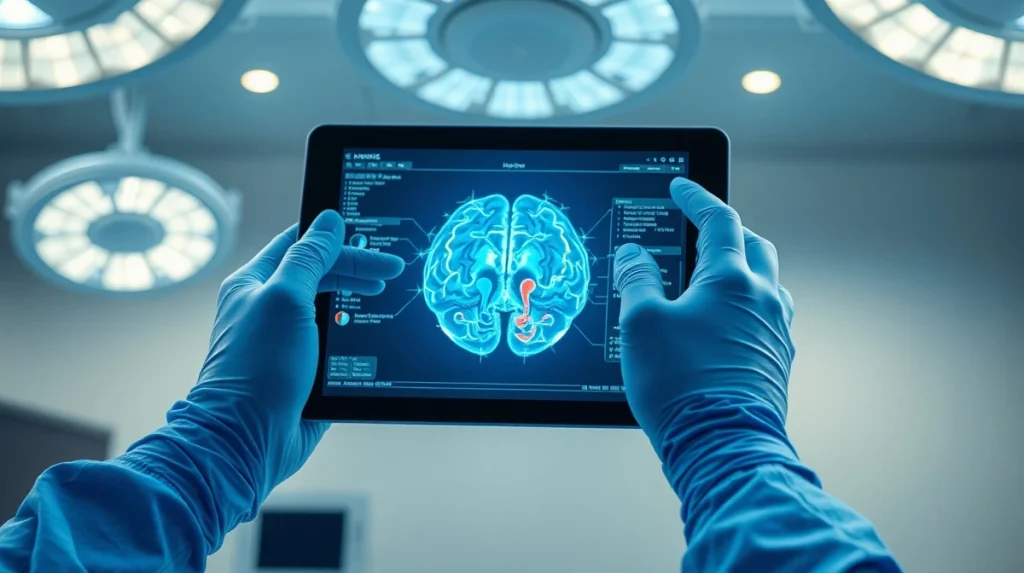
The rapid advancement of medical artificial intelligence is fundamentally transforming epilepsy surgery, creating unprecedented standardization in a field historically dependent on individual surgeon experience and institutional protocols. As of March 2026, AI-driven platforms now analyze complex neural data to identify epileptogenic zones with remarkable consistency, leading to more predictable surgical outcomes and establishing new global benchmarks for surgical care. This technological evolution addresses long-standing variability in surgical approaches, offering hope for the approximately 30% of epilepsy patients who are medication-resistant.
Medical AI Creates New Surgical Standards
Historically, epilepsy surgery outcomes varied significantly between medical centers. Surgeons relied on interpreting electroencephalogram (EEG) data, magnetic resonance imaging (MRI) scans, and clinical evaluations through highly individualized frameworks. Consequently, identification of the precise brain region requiring resection—the epileptogenic zone—lacked universal consistency. Today, however, deep learning algorithms process multimodal data, including high-density EEG, functional MRI, and magnetoencephalography, to generate reproducible maps of abnormal brain activity. These AI systems analyze patterns invisible to the human eye, providing surgeons with objective, data-driven targets. Multiple studies published in journals like Epilepsia and Brain throughout 2024 and 2025 demonstrated that AI-assisted planning reduces inter-rater variability among surgical teams by over 40%.
Also read: M Series ANC Token Presale Launches with Detailed Vesting
The Technical Foundation of AI Standardization
The standardization process begins with data aggregation. AI platforms are trained on thousands of historical surgical cases with known outcomes. These neural networks learn to correlate specific neuroimaging signatures with surgical success or failure. For instance, convolutional neural networks can detect subtle cortical dysplasias—focal malformations of brain development—that standard MRI might miss. Furthermore, these systems incorporate patient-specific factors like age, seizure semiology, and neuropsychological profiles to recommend optimal surgical corridors. This comprehensive analysis creates a standardized preoperative workflow that institutions worldwide can adopt. The table below illustrates key data points integrated by modern AI surgical platforms:
| Data Type | AI Analysis Function | Standardization Impact |
|---|---|---|
| High-resolution MRI | Detects subtle structural abnormalities | Creates consistent anatomical targeting |
| Long-term EEG monitoring | Identifies seizure onset patterns | Reduces interpretation variability |
| Diffusion tensor imaging | Maps critical white matter pathways | Standardizes approach to preserve function |
| Neuropsychological data | Predicts cognitive outcomes | Informs risk-benefit analysis uniformly |
Clinical Implementation and Global Impact
Major epilepsy centers began implementing these AI tools in 2023, with adoption accelerating through 2025. The Cleveland Clinic, Mayo Clinic, and University College London Hospitals now use AI platforms as standard components of their surgical evaluations. These systems do not replace surgeons but augment their decision-making with quantitative evidence. For example, when planning a temporal lobectomy—the most common epilepsy surgery—AI models simulate the potential impact of various resection margins on both seizure freedom and cognitive function. This allows surgeons to compare standardized outcome probabilities for different approaches. The global impact is significant, particularly in regions with less surgical experience. AI tools provide access to analytical capabilities once available only at elite institutions, potentially democratizing high-quality epilepsy care.
Also read: Pepeto Presale Attracts Investor Interest Amid Meme Coin Rally
Evidence from Recent Surgical Outcomes
Data presented at the 2025 American Epilepsy Society Annual Meeting revealed compelling results. A multicenter study of 1,200 patients showed that centers using AI-guided standardization achieved:
- 15% higher rate of seizure freedom at one-year post-surgery compared to non-standardized historical controls
- 20% reduction in surgical complications, including infections and neurological deficits
- 30% decrease in re-operation rates for incomplete initial resection
- More consistent postoperative neuropsychological outcomes across different surgeons
These improvements stem directly from reduced variability in how surgical candidates are selected and how resection boundaries are determined. The AI systems apply the same analytical criteria to every case, minimizing subjective judgment calls that previously led to inconsistent practices.
Overcoming Historical Challenges in Epilepsy Surgery
Epilepsy surgery has always presented unique challenges. The brain lacks clear visual markers for seizure origins, unlike tumors with defined borders. Before AI standardization, surgical planning resembled an art as much as a science, relying heavily on a surgeon’s accumulated experience. This experiential knowledge, while valuable, was difficult to transfer systematically. Fellowship training varied, and surgical protocols differed even within the same country. The introduction of AI creates a common language and methodological framework. Now, a surgeon in Tokyo can apply the same analytical principles as a colleague in Toronto when evaluating similar neural data. This harmonization facilitates international collaboration and multicenter research, accelerating the entire field’s progress.
The Role of Regulatory Bodies and Professional Societies
The movement toward standardization has received support from key medical organizations. The International League Against Epilepsy (ILAE) established a task force in 2024 to develop guidelines for validating AI tools in presurgical evaluation. Similarly, the U.S. Food and Drug Administration has cleared several AI algorithms as Class II medical devices for neurological image analysis. These regulatory approvals provide a framework for safe clinical implementation. Professional societies now incorporate AI literacy into continuing medical education, ensuring surgeons understand both the capabilities and limitations of these tools. This educational component is crucial, as blind reliance on AI outputs without clinical correlation remains a potential pitfall.
Future Directions and Ethical Considerations
As AI standardization matures, researchers are exploring next-generation applications. Closed-loop systems that integrate intraoperative neuromonitoring with AI predictions could allow real-time surgical adjustments. Furthermore, AI models are beginning to incorporate genetic data, potentially identifying patients with specific mutations who are optimal candidates for surgery. However, this progress raises important ethical questions. Standardization must not become algorithmic rigidity that ignores unique patient circumstances. Additionally, ensuring equitable access to these expensive technologies remains a challenge for healthcare systems worldwide. The neuroethics community emphasizes maintaining human oversight as the final arbiter of surgical decisions, using AI as a powerful advisory tool rather than an autonomous authority.
Conclusion
The growth of medical AI has catalyzed a crucial shift toward standardization in epilepsy surgery, replacing historical variability with data-driven consistency. By providing objective analysis of complex neural data, AI platforms help surgeons worldwide identify epileptogenic zones with unprecedented accuracy and uniformity. This technological advancement directly translates to improved surgical outcomes, including higher rates of seizure freedom and reduced complications. As these tools continue to evolve and gain broader adoption, they promise to establish new global standards of care for patients with drug-resistant epilepsy, ultimately making effective surgical treatment more accessible and predictable than ever before.
FAQs
Q1: How does AI actually help standardize epilepsy surgery?
AI analyzes preoperative data (like MRI and EEG) using consistent algorithms, reducing human interpretation variability. It provides objective, reproducible maps of seizure origins, ensuring different surgical teams evaluate the same case using identical analytical criteria.
Q2: Does AI replace the neurosurgeon in planning epilepsy surgery?
No. AI serves as a decision-support tool. The surgeon integrates AI-generated data with clinical examination and patient-specific factors to make the final surgical plan. The technology augments human expertise rather than replacing it.
Q3: What evidence shows that AI standardization improves outcomes?
Multicenter studies presented in 2024 and 2025 demonstrate measurable improvements, including a 15% higher seizure-freedom rate and a 20% reduction in complications at centers using AI-guided standardized protocols compared to previous methods.
Q4: Are there risks associated with standardizing surgery through AI?
Potential risks include over-reliance on algorithms, which might overlook rare patient presentations not well-represented in training data. Ethical guidelines emphasize that AI recommendations must always be interpreted within the full clinical context by experienced physicians.
Q5: Is this AI standardization available globally?
Currently, leading epilepsy centers in North America, Europe, and parts of Asia are adopting these tools. However, cost and infrastructure requirements create access disparities. Efforts are underway to develop more affordable, cloud-based solutions to broaden global access to standardized surgical planning.

This article was produced with AI assistance and reviewed by our editorial team for accuracy and quality.