Lighter Launches Revolutionary Mobile Trading App, Unlocking On-the-Go DeFi Access
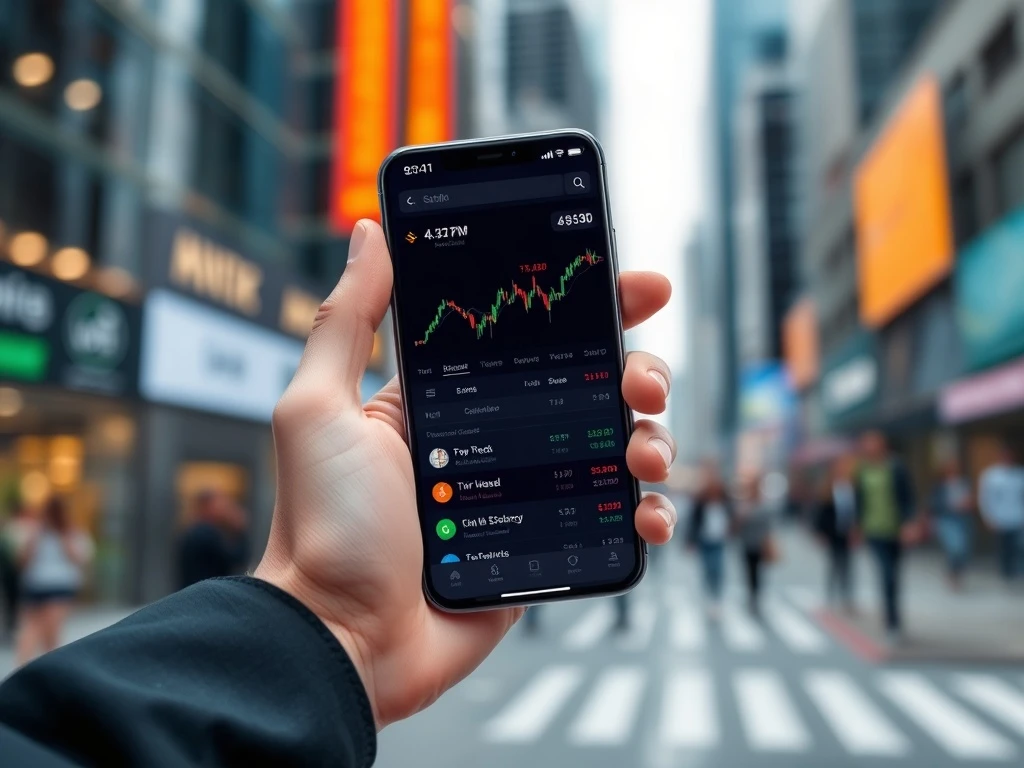
In a significant move for decentralized finance accessibility, the perpetual futures exchange Lighter has officially launched its comprehensive mobile trading application. This pivotal development, confirmed by industry reports, brings the platform’s full suite of trading products—including spot, perpetual futures, real-world assets (RWA), and pre-market assets—directly to users’ smartphones. Consequently, this launch marks a strategic expansion in the competitive landscape of mobile-first crypto trading.
Lighter Mobile Trading App Expands DeFi Accessibility
The new Lighter mobile trading app represents a major step in bridging the gap between sophisticated decentralized finance (DeFi) protocols and mainstream user convenience. Available for download on both iOS and Android operating systems, the application provides a unified gateway to diverse digital asset markets. Historically, advanced perpetual futures trading remained largely confined to desktop platforms due to interface complexity. However, Lighter’s development team has engineered a mobile experience that maintains functionality without sacrificing security or depth. The app’s release follows a broader industry trend where user demand for mobile control over crypto portfolios has surged exponentially. For instance, data from analytics firms shows mobile trading volume now frequently surpasses desktop activity for major centralized exchanges.
Core Features and Trading Product Suite
The application’s architecture supports four primary trading verticals. First, spot trading allows for the immediate purchase and sale of cryptocurrencies. Second, its flagship perpetual futures trading enables leveraged positions on asset prices without an expiry date. Third, access to real-world assets (RWA) provides exposure to tokenized versions of traditional assets like treasury bills or commodities. Finally, the pre-market assets feature lets users trade tokens before their official listing on major spot markets. This combination is relatively unique for a native mobile application from a decentralized exchange (DEX). A comparison with other leading mobile trading platforms highlights Lighter’s integrated approach:
| Platform | Type | Perpetual Futures on Mobile? | RWA Access? |
|---|---|---|---|
| Lighter App | Decentralized (DEX) | Yes | Yes |
| Uniswap Wallet | Decentralized (DEX) | No | Limited |
| Binance App | Centralized (CEX) | Yes | Yes |
| dYdX Mobile | Decentralized (DEX) | Yes | No |
This feature set directly addresses a growing user need for consolidated trading venues. Moreover, the integration of RWAs signals alignment with one of 2024’s most significant crypto trends, merging decentralized finance with traditional finance (TradFi).
Also read: Bitcoin Treasury Companies Face New Pressure as US-Iran Tensions Shift
Strategic Impact on the Decentralized Exchange Landscape
Lighter’s mobile launch carries substantial implications for the perpetual futures DEX sector. Primarily, it intensifies competition with established centralized exchanges (CEXs) that have long dominated mobile trading. By offering a non-custodial, on-chain alternative with a comparable user experience, Lighter challenges the convenience monopoly held by CEXs. Furthermore, the move pressures other decentralized perpetuals platforms to accelerate their own mobile development roadmaps. Industry analysts note that mobile accessibility is no longer a luxury but a necessity for retaining and growing a user base. The timing of this release is also strategic, coinciding with a period of renewed institutional interest in decentralized derivatives. Regulatory clarity in key jurisdictions, though evolving, has provided a more stable environment for such product expansions.
Security and User Experience Considerations
For any mobile trading application, especially in the decentralized sphere, security and usability present a critical balance. The Lighter app reportedly employs several robust security measures. These include secure enclave key storage on devices and the use of MPC (Multi-Party Computation) wallet technology for private key management. Simultaneously, the user interface (UI) prioritizes clarity for complex actions like setting leverage or managing cross-margin positions. Transitioning these advanced features to a small screen requires meticulous design. User onboarding flows and integrated educational tooltips are therefore essential components. Early feedback from beta testers, cited in community forums, praised the app’s intuitive navigation despite the sophisticated underlying mechanics. This positive reception suggests the development team successfully mitigated the common friction points associated with DeFi applications.
The Broader Trend of Mobile-First Crypto Adoption
The launch of the Lighter mobile trading app is not an isolated event but part of a macro shift. Global smartphone penetration continues to rise, making mobile devices the primary internet access point for billions. Consequently, financial applications must prioritize mobile design to achieve true mass adoption. The crypto industry has learned from the success of fintech apps like Robinhood, which demonstrated the power of a simple, engaging mobile experience. However, decentralized protocols face additional technical hurdles. They must interact seamlessly with blockchain networks, manage gas fees transparently, and ensure self-custody principles remain intact. Lighter’s technical approach, leveraging layer-2 scaling solutions for faster and cheaper transactions, is a direct response to these challenges. This infrastructure is vital for a smooth mobile experience where users expect near-instantaneous feedback.
Additionally, the inclusion of pre-market asset trading on mobile taps into the growing retail interest in early-stage token launches. This feature can democratize access to opportunities that were previously the domain of venture capital or sophisticated desktop traders. Nevertheless, it also introduces questions about price discovery and liquidity on mobile platforms. The app’s design must clearly communicate the risks associated with trading in less liquid, pre-listing environments. Providing this context is a hallmark of a platform focused on user protection and sustainable growth.
Expert Analysis and Market Context
Industry observers view mobile expansion as a logical and necessary evolution for DeFi protocols. “A decentralized exchange’s growth potential is now inextricably linked to its mobile experience,” noted a recent report from a blockchain analytics firm. “Users demand the flexibility to monitor positions and execute trades from anywhere.” The total value locked (TVL) in decentralized perpetual futures protocols has seen volatile but overall growth, indicating a solid product-market fit. Lighter’s move can be seen as an attempt to capture a larger share of this expanding market by removing the final barrier to entry: device dependency. Furthermore, the convergence of spot, derivatives, and RWA markets within a single app creates a powerful network effect. It encourages users to remain within the Lighter ecosystem for multiple financial needs, increasing platform loyalty and lifetime value.
Conclusion
The launch of the Lighter mobile trading app is a definitive milestone in the maturation of decentralized finance. By bringing a full spectrum of trading products—spot, perpetual futures, real-world assets, and pre-market assets—to iOS and Android devices, Lighter significantly enhances accessibility and convenience for its global user base. This strategic development not only intensifies competition with centralized exchanges but also sets a new standard for what users can expect from a DeFi mobile experience. As the industry continues its relentless shift toward mobile-first interaction, Lighter’s integrated and user-centric approach positions it as a formidable contender in the evolving landscape of on-chain trading. The success of this Lighter mobile trading app will likely influence how other decentralized protocols design and roll out their own mobile strategies in the coming years.
FAQs
Q1: What trading products are available on the new Lighter mobile app?
The Lighter mobile trading app provides access to four key product types: spot trading for immediate crypto purchases, perpetual futures for leveraged trading, real-world assets (RWAs) representing tokenized traditional assets, and pre-market trading for tokens before official exchange listings.
Q2: Is the Lighter app a decentralized or centralized exchange platform?
Lighter is a decentralized exchange (DEX). The mobile app is a non-custodial interface for its on-chain smart contracts, meaning users retain control of their private keys and funds throughout the trading process.
Q3: How does the Lighter mobile app ensure security for user funds?
The app employs industry-standard security measures designed for mobile devices. These typically include secure hardware-based key storage, MPC (Multi-Party Computation) technology to safeguard private keys, and requiring explicit user confirmation for all transactions.
Q4: Why is the addition of real-world asset (RWA) trading significant?
RWA trading is significant because it bridges decentralized finance with traditional financial markets. It allows crypto users to gain exposure to assets like government bonds or commodities directly from a DeFi app, representing a major step toward broader financial integration.
Q5: Can beginners use the Lighter app for perpetual futures trading?
While the app is designed for usability, perpetual futures trading involves leverage and significant risk. Beginners should thoroughly educate themselves on the mechanics of margin, funding rates, and liquidation before engaging with these advanced derivatives products on Lighter or any other platform.

This article was produced with AI assistance and reviewed by our editorial team for accuracy and quality.