Lighter Crypto Surges 16%: Whales Stake $2.3M as Buybacks Fuel Significant $2 Breakout
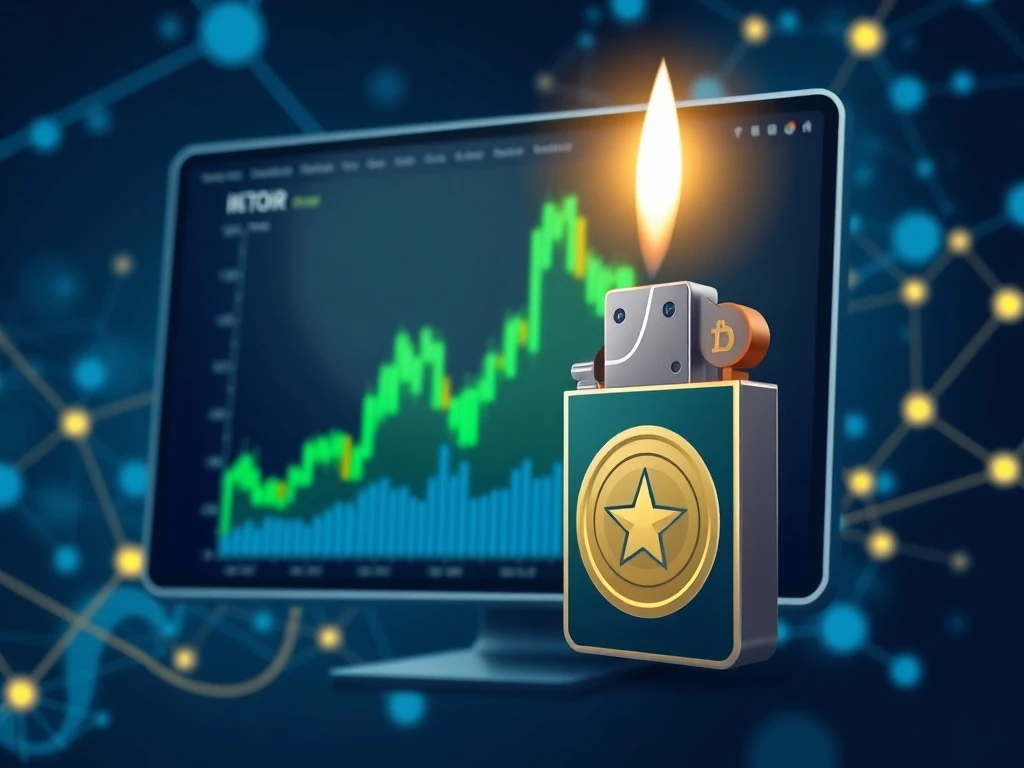
On January 27, 2026, the cryptocurrency market witnessed a significant rally in the altcoin Lighter (LIT), which successfully defended a key support level and surged approximately 16% in a single trading session. This price action, driven by a confluence of on-chain activity and derivatives market momentum, has placed the digital asset in a central position for a potential move toward the $2 resistance level. Market analysts are now scrutinizing the underlying data to assess the sustainability of this bullish impulse.
Lighter Price Action and Market Context
The LIT token found sturdy support at the $1.50 level after a brief dip to $1.53. Subsequently, buyers entered the market aggressively, propelling the price to a local high of $1.85 before a minor retracement. As of the latest data, Lighter trades around $1.81, marking a 16.4% increase on daily charts. Importantly, this price appreciation was accompanied by a 16% rise in trading volume, confirming genuine buyer interest rather than a low-liquidity pump. This movement occurs within a broader altcoin market that has shown selective strength, with investors increasingly differentiating between projects based on fundamental utility and tokenomics.
Also read: Crypto Listing Scams: Binance CEO Changpeng Zhao Issues Critical Warning to Investors
Analyzing the Derivatives Market Surge
Data from derivatives analytics platform CoinGlass reveals a substantial influx of capital into LIT futures contracts. Open Interest (OI), representing the total number of outstanding derivative contracts, climbed 16% to $145.7 million. Simultaneously, trading volume in the futures market spiked 28% to $178 million. When OI and volume rise together, it typically signals new money entering the market and the establishment of fresh positions, rather than just the churn of existing ones. Furthermore, futures netflow—the difference between capital inflows and outflows—jumped 237% to a positive $4.08 million. This metric strongly indicates buyer dominance in the leveraged trading arena. The Long/Short Ratio for LIT also climbed above 1.0 to 1.004, with top traders on Binance predominantly taking long positions, reflecting a bullish sentiment among sophisticated market participants.
Whale Accumulation and Strategic Staking
Beyond spot and futures trading, on-chain data points to significant activity from large holders, commonly referred to as whales. According to blockchain analytics, two identifiable whales deposited a combined $2,322,712 worth of LIT tokens into the network’s official staking pool. The larger of the two deposits amounted to $2,084,712, with the tokens held for approximately one month prior to staking. Staking involves locking tokens in a smart contract to support network operations like security or governance, in return for yield rewards. This action is widely interpreted as a signal of long-term conviction, as it reduces the immediately sellable supply of the token and aligns holder incentives with network health. The deliberate reduction in circulating supply can create scarcity, a fundamental economic driver for potential price appreciation.
The Impact of Aggressive Token Buybacks
Concurrently, the Lighter project’s treasury has been actively executing a token buyback program. Reports from DeFi analytics platforms indicate that the team has allocated a significant portion of its protocol fee revenue to repurchasing LIT tokens from the open market. Cryptolycus, a crypto analytics firm, reported that this program has removed over 2.4 million LIT tokens from circulation in less than a month. Buyback mechanisms function similarly to corporate share repurchases; by reducing the total supply of tokens available, each remaining token represents a larger share of the project’s ecosystem and value. When combined with staking-induced illiquidity, these buybacks substantially increase the risk of a supply shock—a scenario where available tokens are insufficient to meet rising demand, potentially leading to rapid price increases.
Technical Analysis and the Path to $2
From a chart analysis perspective, LIT’s price action has triggered several key technical signals. The token has flipped its short-term, 50-day Exponential Moving Average (EMA50) from resistance to support, a classic indicator of strengthening short-term momentum. However, the Relative Strength Index (RSI), a momentum oscillator, presents a more nuanced picture. While it has made a bullish crossover, it currently sits at 49, just below the neutral 50 threshold. An RSI reading below 50 generally remains within the bearish zone, suggesting buyers are attempting a takeover but have not yet secured definitive control. For a validated bullish continuation toward the $2 target and beyond to the $2.5 resistance zone, analysts note that the RSI must decisively break above 50 and the price must also reclaim the 20-day EMA. Failure to achieve this could see LIT retrace toward the $1.70 support, with the $1.49 level remaining the ultimate key support to watch.
Comparative Market Dynamics and Risk Assessment
It is key to contextualize LIT’s movement within the wider digital asset sector. While Bitcoin and Ethereum often set the macro trend, altcoins like Lighter can exhibit amplified volatility based on project-specific developments. The current activity—whale staking, buybacks, and rising futures interest—represents a microeconomic shift in LIT’s supply and demand dynamics. Nevertheless, traders must consider macroeconomic factors such as regulatory developments, overall crypto market liquidity, and shifts in global risk appetite, all of which can override project-specific positives. The concentration of activity among top traders also suggests this move is being driven by informed capital, though it raises the risk of a sharp reversal if these large players decide to exit their positions.
Conclusion
The 16% surge in Lighter (LIT) is underpinned by a tangible combination of defensive support holding, whale accumulation through staking, a proactive token buyback program, and bullish positioning in the derivatives market. These factors collectively strengthen the token’s upside momentum and improve its technical posture. The critical challenge now lies in converting this momentum into a sustained breakout above key technical levels to challenge the $2 price target. Market participants will closely monitor whether the RSI can break into bullish territory and if the reduced token supply from staking and buybacks meets sustained retail and institutional demand. As always in cryptocurrency markets, this bullish scenario remains contingent on the maintenance of broader market stability and continued positive project developments.
FAQs
Q1: What caused the 16% price surge in Lighter (LIT)?
The surge was driven by a successful defense of the $1.50 support level, a 16% jump in trading volume, increased capital flows into futures markets (with Open Interest up 16%), and significant on-chain activity including whale staking of $2.3 million and aggressive token buybacks by the project team.
Q2: How does staking by whales affect the LIT price?
When whales stake large amounts of LIT, they lock those tokens in a smart contract, removing them from the immediately tradable circulating supply. This reduction in available tokens can increase scarcity, which, coupled with steady or rising demand, is a fundamental driver for potential price appreciation. It also signals long-term confidence in the project.
Q3: What is the significance of the rising Open Interest and Volume in futures markets?
A simultaneous rise in Open Interest (total outstanding contracts) and trading Volume indicates new money and new participants are entering the market to establish positions. It reflects heightened interest and conviction, rather than just the closing of old trades. A positive netflow further confirms that more capital is flowing into long positions than out.
Q4: What are the key technical levels to watch for LIT’s move to $2?
Technically, traders are watching for the Relative Strength Index (RSI) to break decisively above the neutral 50 level and for the price to hold above key moving averages like the EMA20 and EMA50. A sustained break above the recent high of $1.85 could open the path toward testing the $2 resistance. The $1.49 level remains the major support to watch on any pullback.
Q5: How do token buybacks work, and why are they considered bullish?
A token buyback involves a project using its treasury funds (often from protocol fees) to purchase its own tokens from the open market. These purchased tokens are typically sent to a burn address or locked in a treasury, permanently or temporarily reducing the circulating supply. This is considered bullish because it reduces sell-side pressure and increases the scarcity and proportional value of each remaining token, similar to a stock buyback in traditional finance.

This article was produced with AI assistance and reviewed by our editorial team for accuracy and quality.