Ledger NYSE IPO: French Crypto Security Giant’s Bold $4 Billion Wall Street Gamble
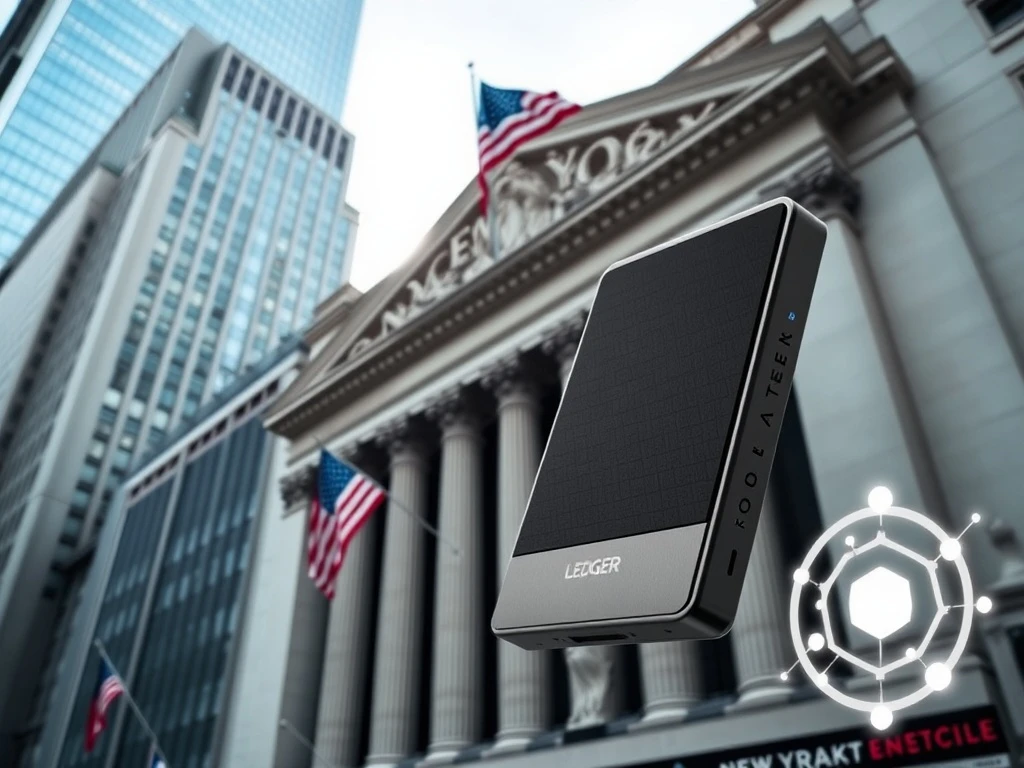
PARIS, FRANCE – January 2026: In a strategic move reshaping European crypto finance, Ledger, the French hardware wallet manufacturer, confirms preparations for a New York Stock Exchange initial public offering targeting a $4 billion valuation. This announcement follows BitGo’s successful listing and signals a significant migration of cryptocurrency infrastructure companies toward American capital markets. The planned 2026 IPO, supported by Goldman Sachs, Jefferies, and Barclays, represents a decisive moment for crypto security adoption within traditional finance.
Ledger NYSE IPO Strategy and Market Context
Ledger’s decision to pursue a New York listing reflects broader market dynamics. Since 2024, American regulatory clarity under the current administration has positioned the United States as the dominant capital market for cryptocurrency ventures. Consequently, European crypto companies increasingly view transatlantic listings as essential for accessing deeper liquidity pools and higher valuations. This trend mirrors historical patterns where technology firms migrated to NASDAQ during the dot-com era.
Also read: AI Trading Agents: The Revolutionary Path to Mastering Your Crypto Portfolio in 2025
The company’s valuation trajectory demonstrates remarkable growth. During its 2023 funding round, Ledger achieved a $1.5 billion valuation. The proposed $4 billion IPO target represents nearly triple that figure within three years. This acceleration correlates directly with rising cryptocurrency adoption and corresponding security concerns. Industry analysts note that hardware wallet sales typically increase following major exchange hacks or security breaches.
Crypto Security Market Dynamics and Competitive Sector
The cryptocurrency security sector has evolved significantly since Ledger’s 2014 founding. Initially focused on individual retail investors, the market now serves institutional clients requiring enterprise-grade solutions. This expansion creates substantial revenue diversification opportunities. Meanwhile, Chainalysis reports indicate cryptocurrency theft reached approximately $17 billion during 2025, creating persistent demand for secure storage solutions.
Also read: RunBot AI Trading Bot: Revolutionizing Automated Cryptocurrency Strategies with Machine Learning
Comparative Analysis: Ledger Versus BitGo
BitGo’s successful NYSE listing established a precedent for crypto security companies. The digital asset custodian achieved a post-listing valuation exceeding $2 billion, demonstrating investor appetite for regulated crypto infrastructure. However, Ledger’s hardware-focused model presents distinct characteristics. While BitGo provides institutional custody services, Ledger manufactures physical devices enabling self-custody. This fundamental difference influences their respective market positions and growth strategies.
Key market differentiators include:
- Product Diversification: Ledger expanded from hardware wallets to services including Ledger Live software and a crypto debit card
- Manufacturing Scale: The company produces millions of devices annually from its French facilities
- Enterprise Solutions: Recent developments target institutional clients requiring customized security implementations
- Geographic Reach: Ledger products distribute globally through retail partners and direct sales
Trust and Security Challenges in Hardware Wallet Adoption
Despite its market leadership, Ledger confronts persistent trust challenges. The 2020 data breach exposed information for 270,000 customers, while a 2023 ConnectKit vulnerability enabled a $500,000 theft. More recently, a 2026 supplier security incident required prompt mitigation. Paradoxically, these events sometimes increased sales as users sought more secure alternatives to software wallets and exchanges.
CEO Pascal Gauthier addressed this dynamic during a recent industry conference. “Security incidents across the ecosystem remind users about fundamental cryptocurrency principles,” Gauthier stated. “Our mission involves providing tools that empower individuals to control their digital assets securely. Market education remains equally important as technological innovation.”
The company’s response to security challenges includes:
- Enhanced security protocols for third-party integrations
- Transparent vulnerability disclosure processes
- Regular firmware updates addressing emerging threats
- Educational initiatives promoting security best practices
Financial Performance and Growth Indicators
Although Ledger remains privately held, available data suggests strong financial performance. Revenue reportedly reached several hundred million dollars during 2025, driven by hardware sales and service subscriptions. The company maintains manufacturing facilities in France, supporting European Union digital sovereignty initiatives while serving global markets.
Investment banking analysts project continued growth based on several factors:
| Growth Driver | Impact Assessment |
|---|---|
| Cryptocurrency Market Expansion | Increased user base directly correlates with hardware wallet demand |
| Regulatory Developments | Stricter custody requirements may mandate hardware solutions |
| Institutional Adoption | Traditional finance entry creates enterprise product opportunities |
| Technological Innovation | New device features and integrations expand addressable markets |
Strategic Implications for European Crypto Ecosystem
Ledger’s NYSE ambitions reflect broader European technology financing challenges. Despite producing innovative companies, European markets often fail to provide comparable valuation multiples to American exchanges. This discrepancy encourages capital migration, potentially weakening local ecosystems. However, successful listings may stimulate increased investment in European crypto ventures, creating a paradoxical reinforcement cycle.
French government officials have expressed support for Ledger’s international expansion while emphasizing domestic economic benefits. The company employs approximately 500 staff across its Paris headquarters and manufacturing sites. Continued French operations remain integral to Ledger’s identity despite its American financial ambitions.
Expert Perspectives on Crypto Hardware Economics
Industry analysts highlight the hardware wallet sector’s unique economics. Unlike software companies with near-zero marginal costs, hardware manufacturers face supply chain complexities and physical production constraints. However, successful hardware ecosystems create recurring revenue through accessory sales, software services, and enterprise solutions. This hybrid model potentially offers more diversified revenue streams than pure software approaches.
Market research indicates several emerging trends:
- Increasing integration between hardware wallets and decentralized applications
- Growing demand for institutional-grade security solutions
- Expansion into adjacent markets including digital identity management
- Technological convergence with traditional financial hardware devices
Conclusion
Ledger’s planned NYSE IPO represents a landmark event for cryptocurrency security and European technology finance. The $4 billion valuation target demonstrates growing institutional recognition of crypto infrastructure’s importance. While security challenges persist, market demand for reliable digital asset storage continues expanding. Ledger’s transition from Parisian startup to Wall Street contender illustrates cryptocurrency’s maturation within global financial systems. The 2026 listing will test investor appetite for hardware-focused crypto companies while potentially establishing new valuation benchmarks for the security sector.
FAQs
Q1: When does Ledger plan to go public on the NYSE?
Ledger targets a 2026 initial public offering on the New York Stock Exchange, according to current announcements and banking arrangements.
Q2: What valuation is Ledger seeking for its IPO?
The company aims for a valuation exceeding $4 billion, nearly triple its $1.5 billion valuation during its 2023 funding round.
Q3: How does Ledger’s business model differ from BitGo’s?
Ledger primarily manufactures hardware wallets for self-custody, while BitGo provides institutional custody services. Both companies operate in cryptocurrency security but address different market segments.
Q4: What investment banks are leading Ledger’s IPO?
Goldman Sachs, Jefferies, and Barclays are reportedly supporting Ledger’s public offering preparations and listing process.
Q5: How have security incidents affected Ledger’s business?
Paradoxically, security breaches across the cryptocurrency ecosystem often increase demand for hardware wallets. Ledger has experienced sales growth following major industry security incidents despite facing its own vulnerabilities.

This article was produced with AI assistance and reviewed by our editorial team for accuracy and quality.