Bitcoin Strategy Shift: Kiyosaki’s Stark Warning on 2026 Economic Risks
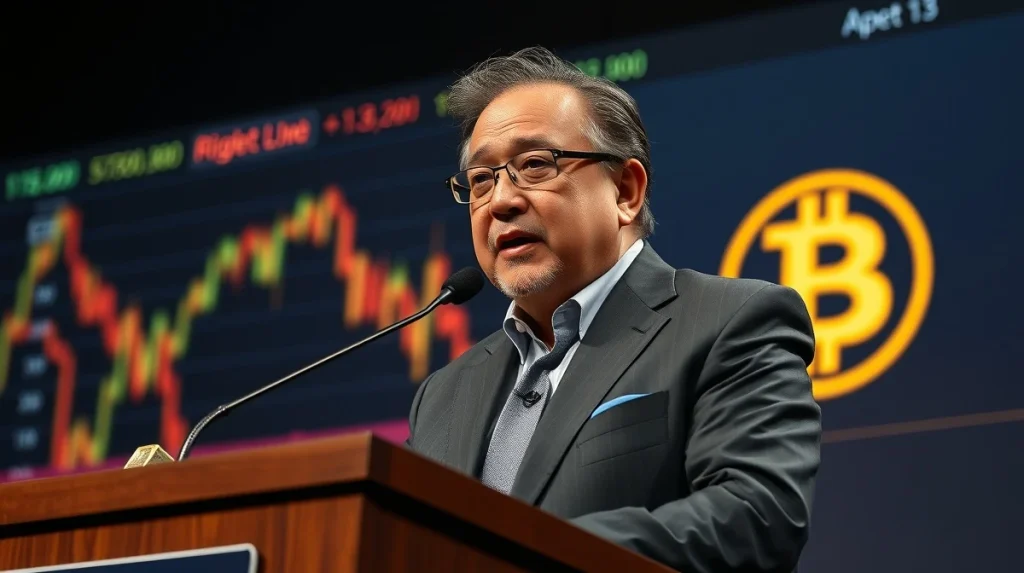
Prominent financial author Robert Kiyosaki has issued a stark warning about potential economic instability in 2026, urging investors to consider a strategic pivot toward assets like Bitcoin, gold, and silver. His recent public statements have ignited discussions among investors and analysts about portfolio resilience.
Kiyosaki’s Bitcoin Strategy and Economic Warning
Robert Kiyosaki, author of the bestselling personal finance book ‘Rich Dad Poor Dad,’ frequently shares his investment perspectives on social media. Recently, he expressed concerns about the global economic outlook for 2026. Consequently, he has advocated for a defensive investment strategy. This strategy emphasizes a shift away from traditional stocks and toward what he terms ‘real assets.’
Kiyosaki specifically highlights Bitcoin, gold, silver, and select real estate. He argues these assets can act as hedges against currency devaluation and systemic financial risk. Historically, during periods of high inflation or market stress, investors have sought refuge in tangible assets. For instance, gold has served as a store of value for centuries.
Context of the 2026 Economic Forecast
Kiyosaki’s warning arrives amid ongoing debates about global debt levels, geopolitical tensions, and monetary policy. However, it is crucial to distinguish between opinion and verifiable economic data. Mainstream financial institutions publish regular forecasts, but predictions inherently carry uncertainty.
Several factors currently shape the economic landscape. These include central bank policies, inflation rates, and global supply chain dynamics. Therefore, investors typically monitor a range of indicators rather than relying on a single prediction.
Expert Perspectives on Portfolio Diversification
Financial advisors consistently stress the importance of diversification. Dr. Sarah Johnson, a professor of finance whose research focuses on asset allocation, explains the principle. ‘A well-constructed portfolio spreads risk across different asset classes,’ Johnson stated in a 2025 journal article. ‘This can include stocks, bonds, commodities like gold, and, for some investors, a small allocation to alternative assets like cryptocurrencies.’
Johnson’s analysis, which is based on historical market data, does not endorse any specific prediction. Instead, it underscores a fundamental investing principle. Diversification aims to reduce the impact of a downturn in any single market.
The table below contrasts characteristics of the asset classes Kiyosaki mentions:
| Asset | Traditional Role | Key Considerations |
|---|---|---|
| Gold/Silver | Inflation hedge, safe haven | No yield, storage costs, price volatility |
| Bitcoin | Digital store of value, high growth potential | Extreme volatility, regulatory uncertainty, technological risk |
| Real Estate | Income generation, inflation hedge | Illiquidity, high transaction costs, interest rate sensitivity |
Historical Precedents and Market Cycles
Financial markets operate in cycles of expansion and contraction. Analysts study past events, such as the 2008 financial crisis or the 2020 market volatility, to understand investor behavior. During these periods, demand for gold often increased. Recently, Bitcoin has also shown moments of correlation with risk-off sentiment, though its behavior remains distinct.
It is important to note that past performance never guarantees future results. Every economic scenario possesses unique drivers. Therefore, prudent investment decisions rely on current data and personal financial goals, not solely on forecasts.
The Role of Cryptocurrency in Modern Portfolios
The inclusion of cryptocurrencies like Bitcoin in investment portfolios remains a subject of active debate. Proponents cite its decentralized nature and finite supply. Critics point to its volatility and evolving regulatory landscape. Major financial firms now offer Bitcoin-related investment products, signaling growing institutional acceptance.
For example, several spot Bitcoin exchange-traded funds (ETFs) received regulatory approval in early 2024. This development provided a new, regulated avenue for traditional investors to gain exposure. Market data shows significant capital flows into these instruments since their launch.
Conclusion
Robert Kiyosaki’s warning about 2026 economic risks highlights ongoing concerns about financial stability. His advocated Bitcoin strategy shift toward real assets reflects a specific, defensive investment philosophy. Ultimately, investors must conduct their own research, consult with qualified financial advisors, and build portfolios aligned with their individual risk tolerance and long-term objectives. Diversification across various asset classes remains a cornerstone of traditional financial planning, regardless of short-term market predictions.
FAQs
Q1: What is Robert Kiyosaki’s main investment warning for 2026?
Kiyosaki has publicly expressed concern about potential global economic instability in 2026. He suggests investors reduce exposure to traditional stocks and consider increasing holdings in assets like Bitcoin, gold, and silver.
Q2: Is there broad expert consensus supporting a 2026 economic crash prediction?
No. Economic forecasts vary widely among institutions and analysts. While some experts highlight risks like high debt levels, no specific prediction for a 2026 crash represents a consensus view. Investors should review multiple sources and data.
Q3: How does Bitcoin function as a potential hedge in a portfolio?
Some investors view Bitcoin as a digital store of value separate from traditional financial systems, similar to gold. Its fixed supply could, in theory, protect against currency devaluation. However, its high price volatility means it also carries significant risk and does not always move inversely to stock markets.
Q4: What are the risks of shifting a portfolio heavily into gold and silver?
Precious metals do not generate income (like dividends or interest), incur storage and insurance costs, and their prices can be volatile. Over-concentration in any single asset class increases portfolio risk and may lead to missed opportunities in other growing markets.
Q5: Where can investors find reliable economic data and analysis?
Investors can consult reports from central banks (like the Federal Reserve or European Central Bank), international organizations (like the IMF or World Bank), and reputable financial research firms. Academic economic journals and data from government statistical agencies also provide foundational information.
This article was produced with AI assistance and reviewed by our editorial team for accuracy and quality.