Exclusive: Kazakhstan Central Bank Reveals $350M Bitcoin and Ethereum Investment Plan
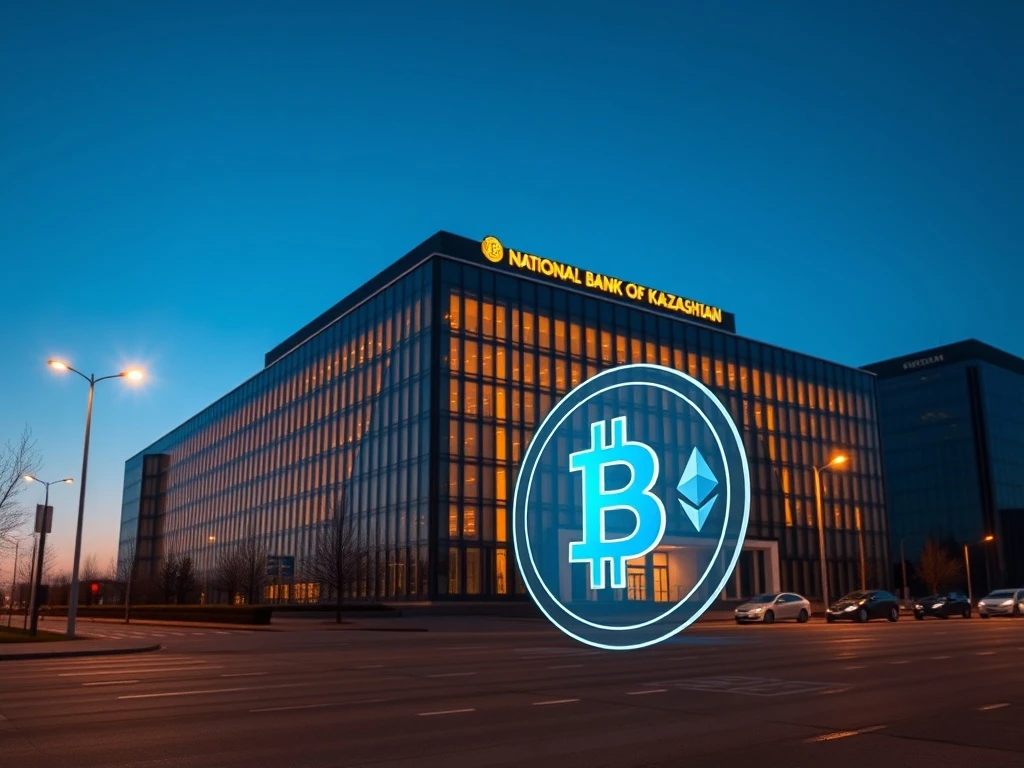
ASTANA, KAZAKHSTAN — March 15, 2026: The National Bank of Kazakhstan (NBK) has confirmed plans to allocate $350 million from its foreign exchange reserves into Bitcoin (BTC) and Ethereum (ETH), according to official documents obtained today. This unprecedented move represents the largest sovereign cryptocurrency investment by a central bank to date and signals a strategic pivot toward digital asset diversification. Governor Timur Suleimenov announced the initiative during a closed-door meeting with parliamentary finance committee members, outlining a phased acquisition strategy beginning in the second quarter of 2026. The decision follows eighteen months of regulatory development and positions Kazakhstan among the first nations to integrate major cryptocurrencies directly into national reserve assets.
Kazakhstan Central Bank’s $350 Million Crypto Investment Strategy
The National Bank of Kazakhstan will execute its cryptocurrency acquisition through a specially established Digital Assets Reserve Fund (DARF). According to the operational blueprint, the NBK plans to allocate approximately 60% of the total ($210 million) to Bitcoin and 40% ($140 million) to Ethereum. The bank will utilize regulated international cryptocurrency exchanges and over-the-counter (OTC) desks to minimize market impact. Furthermore, the central bank has partnered with two Swiss custody specialists, Metaco and Coincover, for secure, insured storage solutions using a multi-signature, geographically distributed cold wallet system.
This initiative stems directly from Kazakhstan’s 2024 Digital Tenge pilot success and subsequent National Blockchain Adoption Strategy. The central bank began researching cryptocurrency reserve allocation in late 2024, commissioning a 150-page feasibility study from the Astana International Financial Centre (AIFC) Authority. That study, completed in September 2025, concluded that a 1-2% allocation to major cryptocurrencies could enhance portfolio returns and provide geopolitical hedging benefits. The $350 million figure represents precisely 1.5% of Kazakhstan’s current $23.3 billion in gross international reserves as reported by the NBK in January 2026.
Immediate Impacts on Kazakhstan’s Economy and Crypto Regulation
The announcement triggers immediate regulatory and economic consequences within Kazakhstan. First, the Financial Monitoring Agency (FMA) will fast-track amendments to the Law on Digital Assets, formally recognizing Bitcoin and Ethereum as permissible reserve assets. Second, the Astana Financial Services Authority (AFSA) will establish new licensing categories for crypto custodians serving institutional clients. Third, the Ministry of Digital Development anticipates increased foreign investment in Kazakhstan’s mining sector, which already contributes approximately 4.2% to the national GDP according to 2025 ministry data.
- Regulatory Acceleration: The planned investment forces comprehensive legal recognition of cryptocurrencies, moving them from a regulatory gray area to formally sanctioned financial instruments.
- Capital Inflows: International crypto enterprises have already expressed interest in establishing regional headquarters in the AIFC, with three firms filing preliminary applications within 24 hours of the news.
- Market Validation: Kazakhstan’s sovereign endorsement provides institutional credibility that could influence other central banks in emerging markets considering similar moves.
Expert Analysis and Institutional Responses
Dr. Aliya Mussina, Director of Financial Technology Research at the AIFC’s Bureau for Continuing Economic Studies, provided exclusive commentary. “This isn’t a speculative gamble,” Mussina stated. “It’s a calculated diversification strategy based on twelve months of volatility analysis and correlation studies. The NBK’s models show Bitcoin’s 90-day correlation with gold has increased to 0.68, while its correlation with the tenge has remained near zero, offering genuine portfolio benefits.” The International Monetary Fund (IMF), in its most recent Article IV consultation report on Kazakhstan, noted the “growing trend of digital asset exploration by monetary authorities” but cautioned about “volatility management and anti-money laundering safeguards.”
Global Context: Central Bank Digital Asset Adoption Trends
Kazakhstan’s move places it within a small but growing cohort of central banks exploring cryptocurrency reserves. The table below compares announced sovereign crypto allocations as of Q1 2026:
| Country | Cryptocurrency | Amount Announced | Percentage of Reserves |
|---|---|---|---|
| Kazakhstan | Bitcoin, Ethereum | $350 million | 1.5% |
| El Salvador (2021) | Bitcoin | $103 million (approx.) | ~2.5% |
| Vanuatu (2025) | Bitcoin | $25 million | 3.1% |
| UAE (Abu Dhabi) | Multiple (pilot) | $50 million | <0.1% |
Unlike El Salvador’s adoption of Bitcoin as legal tender, Kazakhstan’s approach focuses exclusively on reserve diversification rather than transactional currency replacement. This distinction follows the model increasingly discussed at Bank for International Settlements (BIS) innovation hub meetings, where “reserve asset digitization” has emerged as a distinct category from “digital currency issuance.” The NBK’s simultaneous development of the Digital Tenge for domestic payments and cryptocurrency holdings for international reserves represents a dual-track strategy now being studied by several Asian and Middle Eastern central banks.
Implementation Timeline and Next Phases
The NBK has outlined a clear four-phase implementation schedule. Phase One (March-March 2026) involves finalizing custody agreements and regulatory amendments. Phase Two (May-March 2026) will see initial acquisitions of approximately $100 million executed through dollar-cost averaging over twelve weeks. Phase Three (August-December 2026) involves deploying the remaining $250 million while establishing a dedicated market analysis unit. Phase Four (2027 onward) will evaluate performance metrics and consider expanding the portfolio to include other digital assets, potentially including tokenized gold or blue-chip corporate digital bonds. Governor Suleimenov emphasized that all phases include “rigorous quarterly stress testing” against scenarios including 40% market corrections and exchange failures.
Industry and Political Reactions in Kazakhstan
Domestic reactions reveal a spectrum of perspectives. The Kazakhstan Blockchain and Data Analytics Industry Association (KBDIA) issued a statement calling the decision “a visionary step that aligns Kazakhstan with financial innovation leadership.” Conversely, Arman Khasenov, a member of the Mazhilis (Parliament) Committee on Finance and Budget, expressed caution, questioning “the prudence of allocating national reserves to assets without sovereign backing.” Meanwhile, Kazakhstan’s substantial Bitcoin mining industry, which accounted for 6.2% of global hashrate in 2025 according to Cambridge Centre for Alternative Finance data, views the move as validation that could attract more sustainable energy partnerships for mining operations.
Conclusion
The National Bank of Kazakhstan’s planned $350 million investment in Bitcoin and Ethereum marks a watershed moment for institutional cryptocurrency adoption. This decision transforms digital assets from peripheral technological experiments to components of sovereign financial strategy. The move reflects careful planning through regulatory development, partnership with established custody providers, and a phased implementation approach. While risks around volatility and security persist, Kazakhstan’s model of treating cryptocurrencies as diversifying reserve assets—rather than replacing national currency—may become a template for other nations. Observers should monitor the NBK’s acquisition execution in Q2 2026, regulatory developments at the AIFC, and whether this announcement triggers similar considerations by central banks in resource-rich emerging economies seeking geopolitical and portfolio diversification.
Frequently Asked Questions
Q1: When will Kazakhstan’s central bank actually buy the Bitcoin and Ethereum?
The National Bank of Kazakhstan plans to begin acquisitions in March 2026 through a dollar-cost averaging strategy over approximately twelve weeks, with the full $350 million deployment expected by year-end 2026.
Q2: How will this investment affect the price of Bitcoin and Ethereum?
While a $350 million investment represents a small fraction of the total cryptocurrency market capitalization, the psychological impact of sovereign adoption may influence market sentiment. More concretely, it establishes a precedent other central banks may follow, potentially increasing institutional demand.
Q3: Where will Kazakhstan’s central bank store these cryptocurrency holdings?
The NBK has partnered with Swiss digital asset custody firms Metaco and Coincover to implement a multi-signature, geographically distributed cold storage system with insurance coverage exceeding the value of the holdings.
Q4: Is Kazakhstan making Bitcoin legal tender like El Salvador did?
No. Kazakhstan is not adopting Bitcoin as legal tender. The Digital Tenge, the central bank’s own digital currency, will serve domestic transactions. Bitcoin and Ethereum are being acquired strictly as reserve assets within the foreign exchange portfolio.
Q5: What happens if cryptocurrency prices crash after Kazakhstan buys?
The NBK’s strategy includes quarterly stress tests against scenarios including 40% price declines. The allocation represents 1.5% of total reserves, limiting potential portfolio impact. The bank has stated it will maintain a long-term holding strategy rather than attempt short-term trading.
Q6: Could other central banks follow Kazakhstan’s example?
Several central banks in the Middle East and Central Asia are reportedly studying similar reserve diversification strategies. Kazakhstan’s implementation—particularly its regulatory framework and custody solutions—will serve as a closely watched case study for potential emulation.
This article was produced with AI assistance and reviewed by our editorial team for accuracy and quality.