Staggering Fall: Justin Bieber’s $1.3M Bored Ape NFT Plummets 99% to $12K
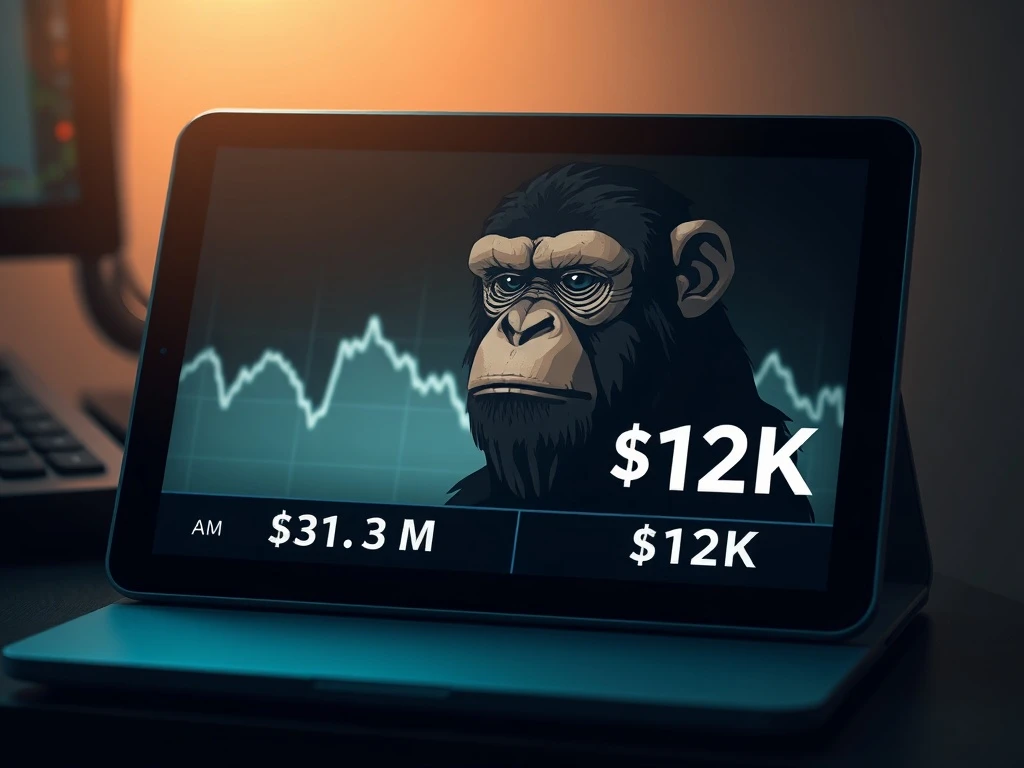
In a stark demonstration of the non-fungible token market’s extreme volatility, a Bored Ape Yacht Club digital asset once valued at $1.3 million now holds a mere fraction of its worth. This precipitous decline, centered on pop icon Justin Bieber’s high-profile purchase, encapsulates a broader sector-wide correction that has reshaped investor sentiment toward cryptocurrency collectibles. Consequently, this event provides a critical case study for understanding asset valuation, celebrity influence, and market cycles within the Web3 ecosystem.
Justin Bieber NFT Loss Highlights Market Reckoning
According to a report from Decrypt, Bored Ape Yacht Club NFT #3001, purchased by Justin Bieber for approximately 500 ETH ($1.3 million) in January 2022, now carries a market value of roughly 6 ETH, or about $12,000. This represents a loss of approximately 99% from the acquisition price. The asset itself is a common piece within the BAYC collection, lacking any rare or distinctive traits that typically command premium valuations. Industry analysts had noted at the time of purchase that Bieber paid a significant premium for a non-rare digital collectible, a decision that now underscores the risks of speculative buying during market peaks.
Also read: Crypto Clarity Act Gains Significant Backing as Armstrong Shifts Stance, Pressuring Congress
Furthermore, this transaction occurred near the zenith of the NFT market’s historic bull run. The Bored Ape Yacht Club collection, a flagship project for Yuga Labs, saw its floor price—the lowest available price for any NFT in the collection—peak at around $429,000 in April 2022. Since that high, the floor price has experienced a severe and sustained contraction. This decline mirrors a broader downturn across the entire NFT sector, which has faced collapsing trading volumes, shifting cultural interest, and a macroeconomic environment less favorable to speculative digital assets.
Anatomy of the Bored Ape Yacht Club Value Collapse
The devaluation of Bieber’s asset is not an isolated incident but rather a symptom of systemic forces. Several key factors have driven the BAYC floor price down from its all-time high. First, the initial frenzy of 2021 and early 2022 was fueled by a combination of celebrity endorsements, speculative fear of missing out (FOMO), and abundant liquidity in cryptocurrency markets. However, as macroeconomic conditions tightened with rising interest rates, risk capital retreated from highly speculative assets like NFTs.
Also read: XRP Price Prediction: Analyst Eyes $2 Target Before Potential Retest of Gaussian Channel Support
- Market Saturation: The subsequent flood of new NFT projects diluted investor attention and capital.
- Utility vs. Speculation: Many projects, including BAYC, promised future utility and ecosystem benefits that have been slow to materialize at scale, leading to investor impatience.
- Liquidity Crunch: The broader cryptocurrency bear market, marked by falling Bitcoin and Ethereum prices, reduced the overall wealth available for NFT purchases.
Moreover, the very nature of “floor price” as a metric can be misleading. It represents the lowest-priced item, often one with common attributes like Bieber’s Ape #3001. While rarer “one-of-one” traits or historically significant Apes may retain higher values, the floor price serves as a general barometer for collection health and mainstream accessibility. Its dramatic fall signals a market that has transitioned from widespread retail speculation to a more niche community of holders.
Expert Analysis on Celebrity and NFT Valuation
Financial analysts and blockchain experts have long cautioned about the influence of celebrity purchases on asset bubbles. When a high-profile figure like Justin Bieber buys an NFT at a peak price, it can create a temporary sentiment boost, attracting less-informed investors. This phenomenon, however, often lacks fundamental valuation support. Experts point to traditional finance principles: an asset’s value should derive from its cash flow, utility, or scarcity-driven demand. For many profile-picture (PFP) NFTs, demand was almost purely driven by speculative resale potential and social signaling, making them exceptionally vulnerable to sentiment shifts.
Data from blockchain analytics firms shows that celebrity-led NFT purchases in early 2022 frequently resulted in significant losses for those who bought in during the ensuing hype. The Bieber Bored Ape case is perhaps the most prominent example due to the sheer scale of the loss. This event now serves as a frequent reference point in discussions about market maturity, due diligence, and the separation of cultural hype from investment-grade asset characteristics in the digital realm.
The Ripple Effect of the NFT Market Crash
The downturn extends far beyond a single collection or celebrity portfolio. Trading volumes across major marketplaces like OpenSea and Blur have fallen dramatically from their 2022 highs. This has forced a industry-wide pivot. Projects are now focusing on building tangible utility, such as gaming integrations, physical experiences, and intellectual property rights for holders, rather than relying on aesthetic appeal alone. The market is undergoing a painful but necessary correction, shedding speculative excess to potentially build a more sustainable foundation.
Simultaneously, regulatory scrutiny around the world is increasing. Governments and financial watchdogs are examining whether certain NFTs constitute unregistered securities. This regulatory uncertainty adds another layer of risk for investors and projects alike. The era of easy money and rapid flipping appears to be over, replaced by a focus on technology, community, and long-term roadmaps. For legacy projects like Bored Ape Yacht Club, the challenge is to evolve from a status symbol into a durable brand with continuous value delivery to its community.
Conclusion
The staggering 99% loss on Justin Bieber’s Bored Ape NFT serves as a powerful landmark in the evolution of digital assets. It underscores the extreme volatility inherent in nascent markets and the dangers of speculative investment driven by hype rather than fundamentals. While the NFT sector is not obsolete, this event highlights a necessary market correction and a shift toward more substantive value creation. The story of Bored Ape #3001 will likely remain a cautionary tale, reminding future investors in cryptocurrency collectibles of the critical importance of research, risk assessment, and an understanding of market cycles.
FAQs
Q1: How much did Justin Bieber originally pay for his Bored Ape NFT?
Justin Bieber purchased Bored Ape Yacht Club #3001 in January 2022 for approximately 500 Ethereum, which was valued at about $1.3 million at the time of the transaction.
Q2: What is the Bored Ape Yacht Club floor price?
The floor price is the lowest listed sale price for any NFT in the Bored Ape Yacht Club collection. It peaked near $429,000 in April 2022 but has fallen significantly since, contributing to the devaluation of common assets like Bieber’s.
Q3: Why did the NFT market crash?
The NFT market decline resulted from a combination of factors: a broader cryptocurrency bear market, tightening macroeconomic conditions, market saturation from new projects, and a shift away from pure speculative trading toward demand for tangible utility.
Q4: Are all NFTs losing value?
While the overall market has contracted significantly, not all NFTs are performing equally. Assets with strong utility, active communities, or proven intellectual property may retain value better than purely speculative profile-picture collections. The decline has been most severe for assets with common traits and no additional utility.
Q5: What does this mean for the future of NFTs?
The market is likely maturing through this correction. The focus is shifting from short-term speculation to long-term projects that offer real-world utility, community benefits, and integration with other blockchain applications like gaming and decentralized finance. The era of easy flips may be over, but development continues.

This article was produced with AI assistance and reviewed by our editorial team for accuracy and quality.