Solving India’s EV Utilization Paradox: How Infrastructure-Agnostic Architecture Could Revolutionize Electric Vehicle Adoption
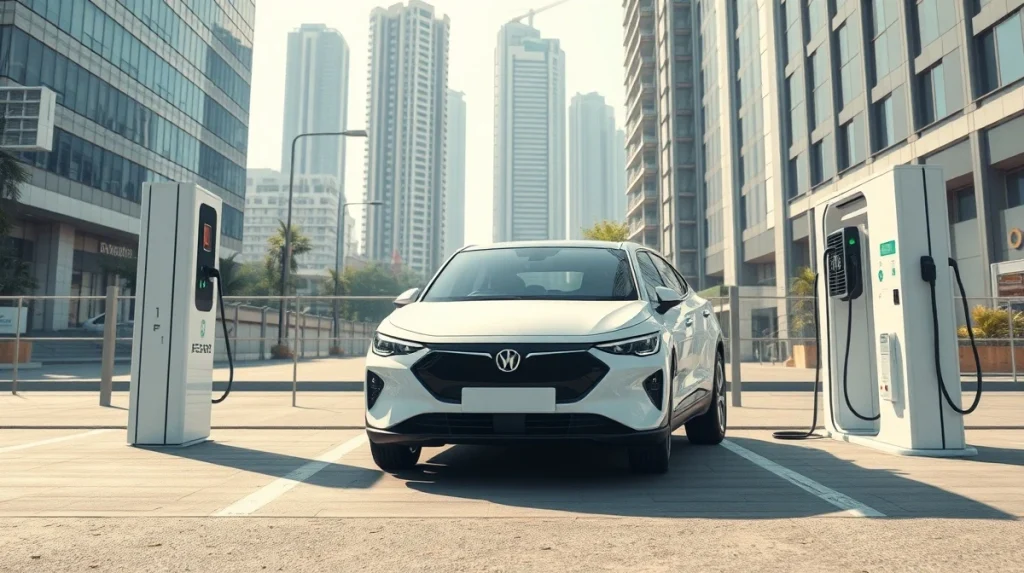
NEW DELHI, March 19, 2026 – India’s ambitious electric vehicle transition faces a critical hurdle: the “utilization paradox,” where charging infrastructure struggles to keep pace with growing EV adoption, creating a chicken-and-egg dilemma that threatens national sustainability goals. Industry experts now propose infrastructure-agnostic architecture as a potential solution to this complex challenge, aiming to accelerate EV penetration beyond urban centers.
Understanding India’s EV Utilization Paradox
The electric vehicle utilization paradox describes a self-reinforcing cycle where limited charging infrastructure discourages EV purchases, while low EV numbers make charging station investments economically unviable. This challenge particularly affects India’s diverse landscape, where regional disparities in development create uneven adoption patterns. According to recent industry reports, India had approximately 2.3 million registered electric vehicles as of early 2026, with the majority concentrated in just five metropolitan areas.
Also read: M Series ANC Token Presale Launches with Detailed Vesting
Meanwhile, the country’s public charging station count remains below 15,000 units nationwide. This imbalance creates practical barriers for potential EV owners concerned about range anxiety and charging accessibility. The paradox manifests differently across vehicle segments, with two-wheelers achieving faster adoption rates than four-wheelers due to simpler charging requirements and lower cost barriers.
The Infrastructure-Agnostic Architecture Solution
Infrastructure-agnostic architecture represents a design philosophy creating charging systems compatible with multiple power sources, connector types, and vehicle standards. This approach fundamentally differs from traditional single-standard charging infrastructure by incorporating modular components and adaptive interfaces. Proponents argue this flexibility could dramatically improve charging station utilization rates while reducing deployment costs.
Also read: Pepeto Presale Attracts Investor Interest Amid Meme Coin Rally
The architecture typically includes three key components: multi-standard charging connectors, intelligent power management systems, and modular expansion capabilities. These systems can accommodate various charging protocols including CCS, CHAdeMO, and Bharat DC-001 standards prevalent in the Indian market. Furthermore, they can integrate with diverse power sources including grid electricity, solar arrays, and battery storage systems.
Technical Implementation and Standards
Implementing infrastructure-agnostic architecture requires careful coordination between automotive manufacturers, charging equipment providers, and regulatory bodies. The Bureau of Indian Standards has been developing comprehensive guidelines for interoperable charging systems since 2023. These guidelines address critical technical specifications including voltage ranges, communication protocols, and safety requirements.
Several pilot projects across India have demonstrated promising results. A notable example in Bangalore deployed agnostic charging stations that served 40% more vehicles monthly compared to single-standard stations. The stations achieved this by accommodating both two-wheeler and four-wheeler charging needs simultaneously. Data from these pilots suggests utilization rates improved by 25-35% across different locations.
Comparative Analysis of Charging Approaches
The following table illustrates key differences between traditional and agnostic charging infrastructure:
| Parameter | Traditional Infrastructure | Agnostic Architecture |
|---|---|---|
| Compatibility | Single standard | Multiple standards |
| Deployment Cost | Higher per unit | Lower per vehicle served |
| Utilization Rate | Typically 15-25% | Target 40-60% |
| Future Proofing | Limited | High through modular design |
| Maintenance Complexity | Lower initially | Higher but manageable |
Real-World Implementation Challenges
Despite its theoretical advantages, infrastructure-agnostic architecture faces significant implementation barriers in the Indian context. The primary challenges include:
- Higher Initial Investment: Agnostic charging stations typically cost 20-30% more than single-standard alternatives, though proponents argue the higher utilization justifies this premium.
- Regulatory Hurdles: Multiple standards bodies and certification processes create bureaucratic complexity that slows deployment.
- Grid Integration Issues: India’s electrical grid faces stability challenges in many regions, requiring sophisticated power management systems.
- Skill Development: Maintenance and operation require technicians trained across multiple charging standards and technologies.
Industry analysts note that successful implementation requires coordinated policy support. The Faster Adoption and Manufacturing of Electric Vehicles (FAME) scheme, now in its third phase, includes provisions for interoperable charging infrastructure. However, implementation has been inconsistent across states, with some regions demonstrating more progress than others.
Economic and Environmental Impacts
Solving the utilization paradox through agnostic architecture could generate substantial economic benefits. Improved charging accessibility typically increases EV adoption rates, which in turn stimulates domestic manufacturing and creates employment opportunities across the value chain. The automotive components industry stands to benefit particularly from this transition.
Environmentally, accelerated EV adoption directly supports India’s climate commitments under the Paris Agreement. The transportation sector accounts for approximately 14% of India’s greenhouse gas emissions, with road transport representing the majority. Transitioning to electric mobility, particularly when powered by renewable energy, could significantly reduce this footprint.
Case Studies and Regional Applications
Several Indian states have begun experimenting with infrastructure-agnostic approaches with varying success. Delhi’s public charging network incorporates some agnostic elements, particularly in government-operated facilities. Meanwhile, Karnataka has implemented pilot programs in Bangalore and Mysore focusing on multi-standard charging for electric buses and commercial vehicles.
Rural applications present both challenges and opportunities. Limited grid connectivity in some areas makes solar-integrated agnostic charging stations particularly valuable. These systems can operate independently of the main grid while serving multiple vehicle types. Early implementations in Rajasthan and Gujarat demonstrate promising results for last-mile connectivity solutions.
Future Development Pathways
The evolution of infrastructure-agnostic architecture will likely follow several parallel tracks. Technological advancements in battery swapping, wireless charging, and vehicle-to-grid integration could complement traditional plug-in charging. Standardization efforts continue through organizations like the International Electrotechnical Commission and Society of Automotive Engineers, with Indian representatives participating actively.
Industry observers predict that by 2030, most new public charging installations in India will incorporate some agnostic elements. This transition will require continued policy support, private investment, and consumer education. The ultimate success metric will be whether charging infrastructure availability ceases to be a primary barrier to EV adoption across all vehicle segments and geographic regions.
Conclusion
India’s EV utilization paradox represents a significant but solvable challenge in the nation’s sustainable transportation transition. Infrastructure-agnostic architecture offers a promising pathway forward by increasing charging station utilization, reducing range anxiety, and creating more economically viable deployment models. While implementation challenges remain, coordinated efforts between government, industry, and consumers could accelerate progress toward national electric mobility targets. The success of this approach will ultimately determine how quickly and equitably India transitions to sustainable transportation systems.
FAQs
Q1: What exactly is the EV utilization paradox in India?
The EV utilization paradox refers to the cyclical problem where limited charging infrastructure discourages electric vehicle purchases, while low EV adoption makes charging station investments economically unviable, creating a barrier to widespread EV adoption.
Q2: How does infrastructure-agnostic architecture differ from regular charging stations?
Infrastructure-agnostic architecture incorporates multiple charging standards, connector types, and power source compatibilities into single stations, unlike traditional stations that typically support only one specific standard or vehicle type.
Q3: What are the main benefits of this approach for Indian consumers?
Consumers benefit from reduced range anxiety, increased charging accessibility across different vehicle types, potentially lower charging costs through higher station utilization, and future-proofed infrastructure that accommodates evolving vehicle technologies.
Q4: Which Indian states are leading in implementing this approach?
Delhi, Karnataka, Maharashtra, and Gujarat have implemented various pilot programs and initiatives exploring infrastructure-agnostic charging solutions, with Delhi and Bangalore showing particularly promising early results.
Q5: How does this approach support India’s climate and energy security goals?
By accelerating EV adoption through improved charging infrastructure, this approach reduces transportation sector emissions, decreases fossil fuel imports, and supports integration of renewable energy sources into the transportation ecosystem.

This article was produced with AI assistance and reviewed by our editorial team for accuracy and quality.