BRICS Digital Currencies: India’s Ambitious Plan to Revolutionize Cross-Border Trade by 2026
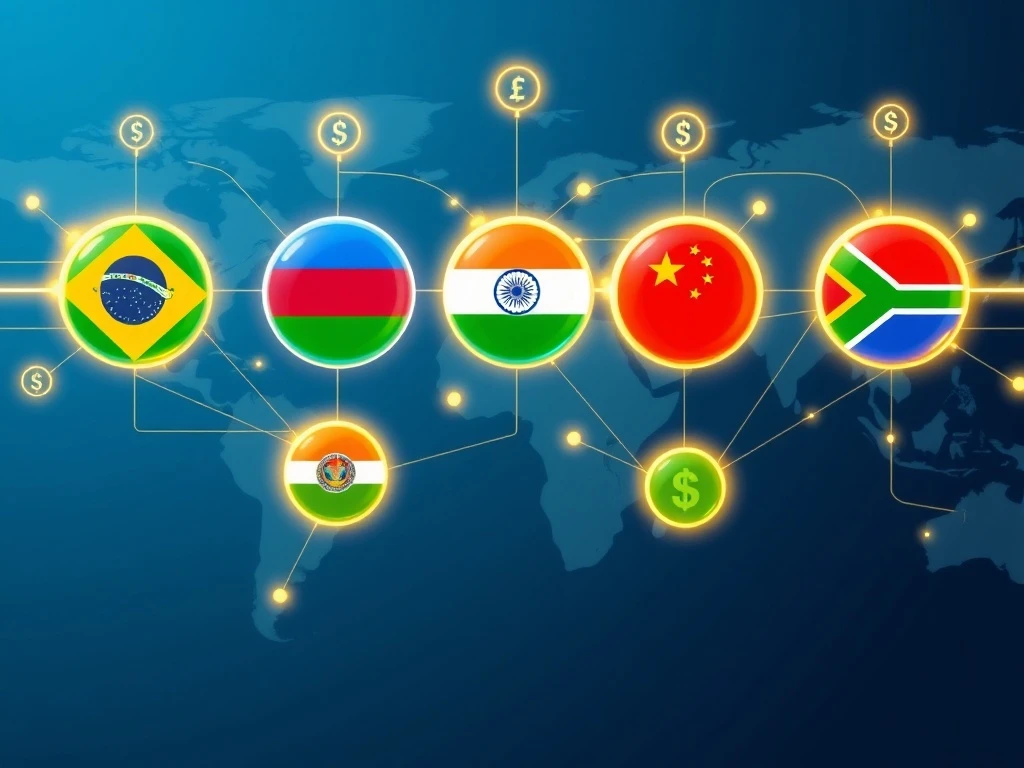
In a potentially transformative move for global finance, India’s central bank has proposed linking BRICS nations’ digital currencies to streamline cross-border trade and tourism payments, according to a Reuters report published on May 20, 2025. The Reserve Bank of India’s initiative could place CBDC interoperability on the agenda for the 2026 BRICS summit that India will host, marking the first formal consideration of sovereign digital asset integration within the influential economic bloc.
India’s Proposal for BRICS Digital Currencies Integration
The Reserve Bank of India reportedly recommends discussing central bank digital currency linkage among BRICS members. This proposal aims specifically to allow smoother trade and tourism payments between Brazil, Russia, India, China, and South Africa. According to anonymous sources cited by Reuters, the discussions remain at an early stage. Consequently, they would require substantial agreements on technology standards, governance frameworks, and settlement arrangements before implementation.
Also read: Crypto Clarity Act Gains Significant Backing as Armstrong Shifts Stance, Pressuring Congress
This initiative builds upon earlier BRICS payment discussions that gained momentum during the 2025 summit in Brazil. That gathering established a foundation for enhanced payment interoperability among member states. The current proposal represents a natural evolution of those conversations, reflecting growing interest in streamlining international settlement systems. For India specifically, the move aligns with its broader strategy to integrate the digital rupee into global transaction flows.
The Technical and Political Space of CBDC Interoperability
Linking sovereign digital currencies presents significant technical challenges that member nations must address collaboratively. Different CBDC architectures, security protocols, and regulatory frameworks currently exist across BRICS countries. China’s digital yuan operates on a centralized model with extensive pilot testing, while India’s e-rupee employs a more distributed approach. Brazil’s Drex and South Africa’s digital rand initiatives remain in development phases with varying technical specifications.
Also read: XRP Price Prediction: Analyst Eyes $2 Target Before Potential Retest of Gaussian Channel Support
Several key considerations will dominate the interoperability discussions:
- Technical Standards: Establishing common protocols for transaction validation and settlement
- Regulatory Alignment: Harmonizing anti-money laundering and know-your-customer requirements
- Settlement Mechanisms: Determining whether to use real-time gross settlement or deferred net settlement systems
- Currency Conversion: Creating efficient exchange mechanisms between different CBDCs
- Governance Structure: Developing decision-making processes for the linked system
Historical Context of BRICS Financial Cooperation
The proposal emerges against a backdrop of increasing BRICS financial collaboration over the past decade. Member nations established the New Development Bank in 2014 to fund infrastructure projects. They created the Contingent Reserve Arrangement in 2015 to provide liquidity protection. More recently, discussions about reducing dollar dependency in trade settlements have gained prominence, though officials consistently deny pursuing explicit de-dollarization.
Russia’s 2025 response to U.S. tariff threats clarified the bloc’s position on currency matters. Kremlin spokesperson Dmitry Peskov emphasized that BRICS cooperation focuses on mutual investment and economic coordination rather than creating dollar alternatives. Similarly, Brazil’s central bank downplayed speculation about a unified BRICS currency in May 2025, stating that such proposals remain theoretical rather than practical policy objectives.
Potential Impacts on Global Trade and Finance
If successfully implemented, linked BRICS digital currencies could substantially reduce transaction costs and processing times for cross-border payments. Traditional international transfers often take several days and involve multiple intermediaries, with fees typically ranging from 3% to 5% of transaction values. A connected CBDC system could potentially settle transactions within minutes at significantly lower costs, particularly benefiting small and medium-sized enterprises engaged in intra-BRICS trade.
The tourism sector represents another major beneficiary of streamlined payment systems. Travelers between BRICS countries currently face currency exchange fees and limited acceptance of home currencies abroad. An interoperable digital currency framework could allow tourists to use their home CBDCs more widely while visiting other member nations, simplifying transactions and reducing exchange-related expenses.
| Country | CBDC Name | Development Stage | Primary Use Cases |
|---|---|---|---|
| China | Digital Yuan (e-CNY) | Nationwide pilot | Retail payments, cross-border trials |
| India | Digital Rupee (e-Rupee) | Retail and wholesale pilots | Domestic payments, potential cross-border |
| Brazil | Drex | Testing phase | Wholesale and retail applications |
| South Africa | Digital Rand | Research and feasibility | Primarily wholesale focus |
| Russia | Digital Ruble | Pilot programs | Sanctions circumvention, domestic use |
India’s Digital Currency Strategy and Global Positioning
The Reserve Bank of India has actively developed the digital rupee since its initial announcement in 2021. The central bank launched wholesale and retail pilots in 2022 and 2023 respectively, achieving millions of users across various use cases. RBI Governor Shaktikanta Das previously expressed interest in linking the e-rupee with other CBDCs to expedite settlement processes, emphasizing efficiency and adoption rather than geopolitical currency objectives.
India’s proposal reflects its broader ambition to position the digital rupee as a significant player in international finance. The country has steadily increased its role in global payment systems, joining the Continuous Linked Settlement system for foreign exchange transactions in 2022. Additionally, India has expanded its bilateral local currency settlement agreements with trading partners, including the United Arab Emirates and Malaysia. The BRICS CBDC linkage proposal represents a logical extension of these efforts toward greater financial integration.
Comparative Analysis with Other Regional Initiatives
Several other regions and economic blocs are exploring similar CBDC interoperability initiatives. The European Central Bank’s digital euro project includes provisions for cross-border functionality within the Eurozone. Meanwhile, the Bank for International Settlements’ Project mBridge connects China, Thailand, Hong Kong, and the UAE in a multi-CBDC platform for wholesale transactions. The Eastern Caribbean Central Bank already operates a shared CBDC across multiple island nations, providing a working model for currency union digital money.
The BRICS proposal differs from these initiatives in several important respects. First, it involves sovereign nations with independent monetary policies rather than currency union members. Second, it encompasses economies at different development stages with varying financial infrastructures. Third, it operates within a geopolitical context where member states seek to enhance South-South cooperation while maintaining existing global financial relationships.
Implementation Timeline and Potential Challenges
The 2026 BRICS summit in India provides a natural deadline for preliminary discussions about CBDC linkage. However, actual implementation would likely require several additional years of technical development and regulatory coordination. Historical precedents suggest that complex international financial infrastructure projects typically need three to five years from agreement to operational deployment, assuming political will and technical resources remain consistent.
Several significant challenges could affect the proposal’s implementation timeline:
- Technical Heterogeneity: Different CBDC designs may require substantial adaptation for interoperability
- Regulatory Divergence: Varying financial regulations across jurisdictions could complicate harmonization
- Political Considerations: Geopolitical tensions between member states might affect cooperation
- Capacity Differences: Varying levels of digital infrastructure development could create implementation disparities
- External Pressures: Reactions from Western financial centers and institutions might influence the initiative
Conclusion
India’s proposal to link BRICS digital currencies represents a significant step toward reimagining cross-border payments for major emerging economies. While the initiative focuses primarily on efficiency rather than geopolitical currency competition, its successful implementation could substantially reduce transaction costs and processing times for trade and tourism between member nations. The proposal will likely dominate discussions at the 2026 BRICS summit, with technical working groups forming beforehand to address interoperability challenges. As central bank digital currencies continue evolving globally, the BRICS initiative provides an important test case for multi-country CBDC cooperation outside traditional currency unions and established financial networks.
FAQs
Q1: What exactly has India proposed regarding BRICS digital currencies?
India’s central bank has reportedly suggested discussing the linkage of BRICS nations’ central bank digital currencies to allow cross-border trade and tourism payments, with the proposal potentially appearing on the agenda for the 2026 BRICS summit.
Q2: How would linked BRICS digital currencies benefit member countries?
Connected CBDCs could reduce transaction costs, accelerate settlement times, simplify currency exchange for travelers, and potentially increase financial inclusion by providing more efficient payment infrastructure for businesses and individuals engaged in intra-BRICS transactions.
Q3: Is this proposal part of an effort to replace the U.S. dollar?
BRICS officials consistently deny pursuing dollar replacement as an objective, emphasizing instead efficiency improvements in payment systems. The proposal focuses on practical benefits rather than geopolitical currency competition, according to statements from member governments.
Q4: What are the main challenges to implementing linked BRICS digital currencies?
Key challenges include differing technical standards across CBDC projects, varying regulatory frameworks, governance structure decisions, settlement mechanism design, and the need for substantial international coordination among central banks with different priorities and capabilities.
Q5: When might linked BRICS digital currencies become operational?
If approved at the 2026 summit, technical implementation would likely require several additional years. Comparable international financial infrastructure projects typically need three to five years from agreement to deployment, suggesting a potential operational timeline around 2029-2030, assuming sustained political commitment and technical progress.

This article was produced with AI assistance and reviewed by our editorial team for accuracy and quality.