
Community Bitcoin Reserve: Illinois Pioneers Revolutionary State-Backed Crypto Savings Program
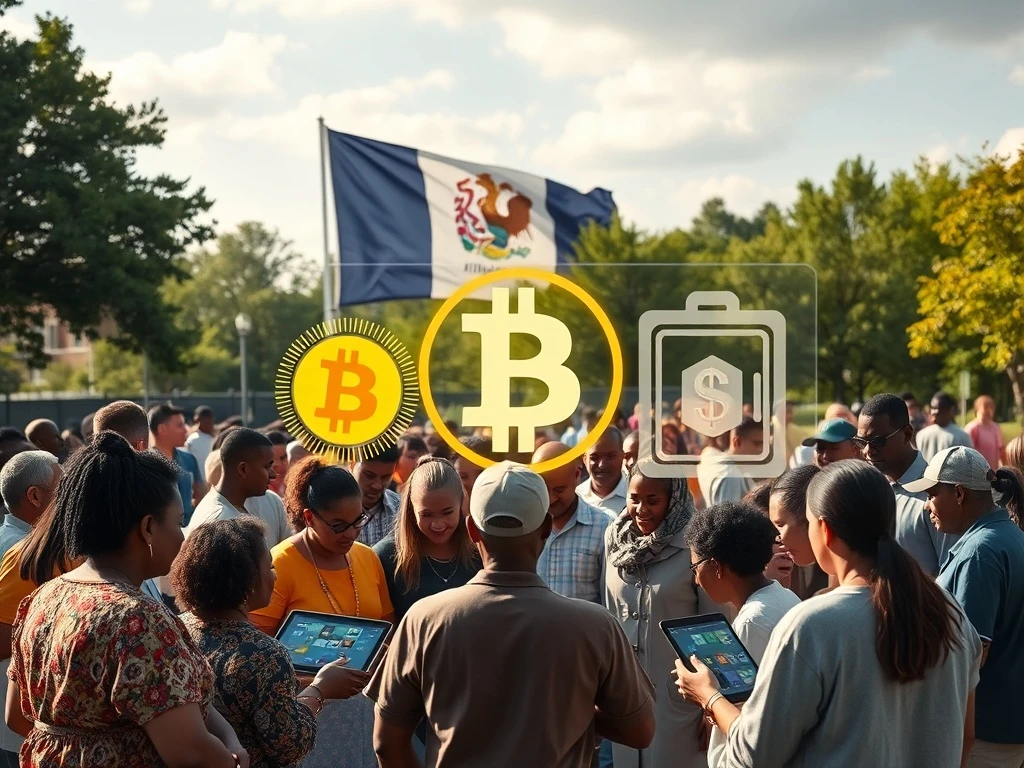
SPRINGFIELD, Illinois – February 5, 2026 – Illinois lawmakers have made history by proposing the nation’s first state-backed community cryptocurrency savings program. The groundbreaking Community Bitcoin Reserve Act, introduced as Senate Bill 3743, establishes a pioneering framework for financial inclusion. This legislation specifically targets underserved populations in districts like Altgeld Gardens, providing a sustainable path toward digital asset accumulation and economic resilience.
The Genesis of the Community Bitcoin Reserve Act
State Senator Patricia Jones formally introduced the Community Bitcoin Reserve Act on February 5, 2026. The bill represents a significant legislative milestone in the United States. It creates a structured, state-supported mechanism for communities to collectively save and hold Bitcoin. Consequently, this initiative aims to bridge the wealth gap exacerbated by traditional financial systems. The program will initially launch in the Altgeld Gardens district on Chicago’s South Side. This location was chosen due to its historical significance and current economic challenges.
Furthermore, the legislation outlines a clear governance model. A state-appointed board will oversee the reserve’s management. This board will include financial technology experts, community representatives, and regulatory compliance officers. The reserve will operate as a non-custodial collective savings pool. Participants maintain ownership of their proportional share of the Bitcoin holdings. The state provides the secure infrastructure and educational framework.
Addressing Financial Inclusion Through Digital Assets
The Community Bitcoin Reserve directly confronts systemic financial exclusion. Underserved communities often face barriers to banking services and investment opportunities. Traditional savings accounts offer minimal returns, especially in a high-inflation environment. Senator Jones’s proposal reframes Bitcoin as a potential long-term savings vehicle. The program includes mandatory financial literacy workshops. These workshops cover blockchain basics, key management, and risk assessment.
Moreover, the initiative connects to broader state economic development goals. Illinois has actively positioned itself as a hub for blockchain innovation. The ‘Blockchain Business Development Act’ of 2023 laid early groundwork. This new bill represents a logical evolution from business facilitation to direct public benefit. State officials cite successful international models, like El Salvador’s Bitcoin adoption, as partial inspiration. However, the Illinois model emphasizes education and voluntary participation over mandate.
Expert Analysis and Economic Implications
Financial technology analysts highlight the program’s novel risk-sharing structure. “This isn’t just about buying Bitcoin,” explains Dr. Aris Moore, a professor of FinTech at the University of Illinois. “It’s about democratizing access to a digital asset class within a protective, educational framework. The community pool mitigates individual volatility risk through dollar-cost averaging over time.” The state treasury will not directly fund Bitcoin purchases. Instead, it will facilitate payroll deduction options and small, matched contributions for low-income participants.
The table below outlines the proposed contribution structure for the pilot phase:
| Participant Income Bracket | Minimum Monthly Contribution | State Match (Max) | Vesting Period |
|---|---|---|---|
| Below 50% Area Median Income | $10 | $10 | 24 months |
| 50%-80% Area Median Income | $25 | $5 | 36 months |
| Above 80% Area Median Income | $50 | $0 | N/A |
Additionally, the program mandates secure, multi-signature storage solutions. Assets will be held with regulated, insured custodians. Regular, transparent audits will occur quarterly. This design directly addresses common criticisms of cryptocurrency, namely security and volatility concerns.
Legislative Journey and Regulatory Framework
Senate Bill 3743 now moves to the Illinois Senate’s Executive Committee. Bipartisan support appears cautiously optimistic. The bill includes several consumer protection clauses that have garnered wider approval. Key provisions mandate:
- Clear Risk Disclosures: All participants must acknowledge volatility warnings.
- Exit Flexibility: Participants can withdraw their share, minus a small fee, at any time.
- Fee Transparency: All management and custody fees are capped and publicly listed.
- Educational Requirement: Completion of a state-certified course is mandatory before joining.
Simultaneously, the bill directs state agencies to collaborate. The Department of Financial and Professional Regulation (IDFPR) will handle licensing for involved custodians. The Illinois Department of Innovation & Technology will audit the technical infrastructure. This multi-agency approach aims to create a robust oversight environment. It also sets a potential regulatory blueprint for other states considering similar programs.
Community Response and Pilot Program Goals
Initial reaction in Altgeld Gardens has been a mix of curiosity and cautious optimism. Local community leader Marcus Johnson stated, “We’ve been promised financial solutions before. This feels different because it’s about ownership and education, not a handout.” The pilot program aims to enroll 1,000 residents in its first year. Its success metrics will not be based solely on Bitcoin’s price. Instead, they will track financial literacy scores, regular savings habits, and participant satisfaction.
Critics, however, urge caution. Some economists warn of associating state programs with a speculative asset. In response, proponents argue the program is voluntary and educational. They stress it is one tool among many for building assets. The legislation explicitly prohibits using state pension funds or general revenue for Bitcoin purchases. This provision alleviates some fiduciary concerns for taxpayers.
National Context and Future Replication
Illinois’s move occurs within a shifting national landscape. Several states, including Wyoming and Texas, have passed pro-blockchain laws. None, however, have created a direct public savings vehicle like the Community Bitcoin Reserve. Observers believe this could trigger a wave of similar proposals if successful. The program’s design includes a detailed replication toolkit. This toolkit will be shared with other state legislatures after the two-year pilot.
Furthermore, the federal government is watching closely. The SEC and CFTC have ongoing jurisdictional discussions about digital assets. Illinois officials have engaged with both agencies during the bill’s drafting. Their goal is to ensure compliance with all existing federal securities and commodities laws. This proactive engagement may smooth the path for federal approval or future policy alignment.
Conclusion
The Illinois Community Bitcoin Reserve Act represents a bold, experimental step in public finance. It merges the emerging world of digital assets with the timeless goal of economic empowerment. By focusing on education, security, and voluntary participation, the program seeks to mitigate the risks of cryptocurrency. Its success in Altgeld Gardens could provide a scalable model for enhancing financial inclusion nationwide. Ultimately, this initiative highlights a growing recognition of blockchain technology’s potential to reshape traditional savings paradigms for underserved communities.
FAQs
Q1: What is the Illinois Community Bitcoin Reserve?
The Community Bitcoin Reserve is a state-facilitated program allowing residents, starting in Altgeld Gardens, to collectively save and hold Bitcoin. It provides a secure framework, education, and, for qualifying individuals, matched contributions to build digital asset savings.
Q2: Is the state of Illinois investing its own money in Bitcoin?
No. The state treasury is not purchasing Bitcoin. The program facilitates individual and matched contributions from participants. State funds are only used for administrative costs, education, and providing contribution matches for low-income enrollees.
Q3: How are the Bitcoin holdings kept secure?
The reserve will use regulated, insured third-party custodians with multi-signature wallet technology. This requires multiple approvals for any transaction. The system will undergo regular security audits by the state’s technology department.
Q4: Can participants lose money in this program?
Yes. Bitcoin is a volatile asset, and its value can decrease. The program requires participants to complete education that explicitly outlines this risk. The community pool structure aims to reduce risk through long-term, dollar-cost-averaged contributions.
Q5: Will this program expand beyond Altgeld Gardens?
The initial launch is a pilot in Altgeld Gardens. If deemed successful after a two-year review by the state legislature, the program may expand to other qualified underserved communities in Illinois. The bill includes criteria for future expansion.
