Exclusive: HyperCore Burns 33K HYPE Daily, Fueling Unprecedented Deflation
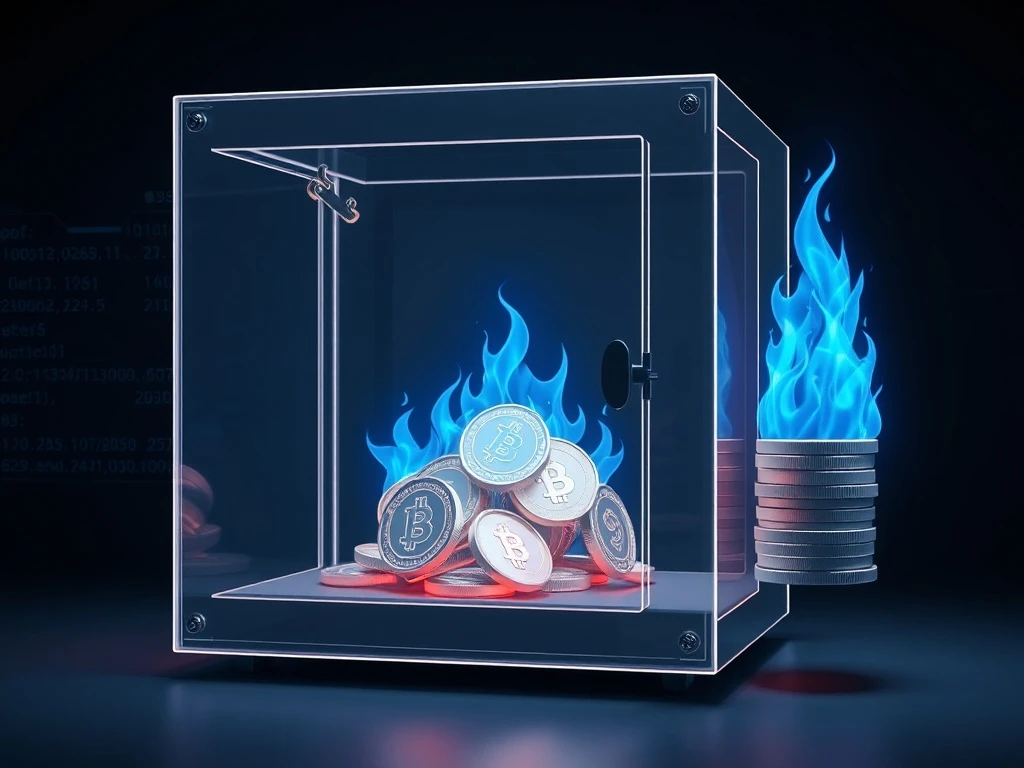
On March 3, 2026, the HyperCore protocol executed one of the most aggressive token burn operations in recent cryptocurrency history, permanently removing over 33,000 HYPE tokens from circulation in a single day. This sustained deflationary mechanism, driven by protocol revenue and trading activity, has accelerated sharply, with data from March 2 showing a repurchase of 60,737 HYPE at an average price of $32.07. The HyperCore burns HYPE daily strategy represents a fundamental shift in the project’s tokenomics, creating scarcity pressure that market analysts are closely monitoring for its long-term valuation implications. This report, anchored in on-chain data verified by Arkham Intelligence, examines the mechanics, scale, and potential market consequences of this accelerating deflation.
HyperCore’s Accelerating Daily Burn Mechanism
The March 2, 2026, transaction batch provides a clear snapshot of the burn engine’s current output. According to blockchain records accessed via Etherscan, the protocol’s treasury executed a buyback of 60,737 HYPE tokens before sending them to a verified burn address. Consequently, these tokens are permanently inaccessible. Simultaneously, the protocol distributed 26,798 HYPE as staking and liquidity provider rewards. However, the net daily deflation—the burn minus new emissions—remains strongly positive. “The consistency is what’s remarkable,” noted Dr. Anya Sharma, a tokenomics researcher at the Cambridge Digital Assets Programme. “We’re observing a daily deflation rate that, if annualized, could reduce the circulating supply by a mid-single-digit percentage this year alone. This isn’t a one-off event; it’s a programmed economic feature.” The protocol funds these buybacks through a percentage of all trading fees and network revenue, creating a direct feedback loop between usage and token scarcity.
This model diverges from the “one-and-done” burn events common in 2023-2024. Instead, HyperCore has institutionalized deflation. A review of the past 30 days of on-chain activity reveals the daily burn figure has fluctuated between 28,000 and 38,000 HYPE, closely correlating with trading volume on decentralized exchanges like Uniswap and the protocol’s own automated market maker. The March 2 figure sits near the upper end of this range, suggesting particularly high network activity preceding the date. This correlation underscores the sustainability of the model; the deflation engine throttles up with adoption and throttles down during quieter periods, preventing excessive treasury drain.
Quantifying the Deflationary Impact on HYPE Token Supply
The cumulative effect of daily burns is beginning to materially impact the HYPE token’s supply metrics. Based on the 30-day average burn rate of approximately 32,000 HYPE per day, the protocol is on track to remove nearly 1 million tokens from circulation per month. When contrasted with the new tokens issued as rewards, the net annual supply reduction could approach 4-5% of the current circulating supply, according to projections from analytics firm Token Terminal. This level of sustained deflation is rare among major crypto assets outside of Bitcoin’s halving events. The impacts are multifaceted and extend beyond simple price speculation.
- Increased Scarcity: Each burn permanently reduces the total and circulating supply, increasing the scarcity of remaining tokens. This creates a fundamental upward pressure on price, all else being equal, as the same or growing demand chases fewer tokens.
- Staker Reward Enhancement: For holders who stake their HYPE tokens, the deflation effectively increases their share of the network. As the overall pie shrinks, each staker’s proportional ownership grows, potentially leading to higher real yields even if nominal reward rates stay flat.
- Protocol Value Accrual: The buyback-and-burn mechanism directly ties protocol success to token value. Increased revenue from trading fees leads directly to more aggressive burns, creating a virtuous cycle that rewards long-term holders and aligns user, developer, and investor incentives.
Expert Analysis from Institutional Researchers
Institutional analysts are framing HyperCore’s approach as a case study in modern token design. A recent report from Galaxy Digital’s research arm highlighted the protocol’s “revenue-to-burn” model as a key innovation for aligning long-term sustainability with holder value. “Many projects promise deflation,” the report states, “but HyperCore has engineered a transparent, on-chain verifiable process that operates continuously without manual intervention. This automation builds trust.” Furthermore, researchers at the Blockchain Association point to the importance of the revenue source. Unlike models that burn newly minted tokens—a largely accounting-based exercise—HyperCore uses real, externally generated revenue (fees) to purchase tokens from the open market. This represents a genuine capital outflow from the protocol to token holders, a stronger value signal. Dr. Sharma adds, “The critical watchpoint is the sustainability of the revenue stream. If trading volume were to collapse, the burn rate would follow. The model is inherently pro-cyclical.”
Broader Context: HyperCore’s Strategy in the 2026 Crypto Landscape
HyperCore’s aggressive deflationary tactic arrives amid a broader industry trend toward token utility and sustainable economics, moving past the purely inflationary reward models of the early DeFi era. The table below compares HyperCore’s current burn mechanics with other notable deflationary models in the cryptocurrency space as of early 2026.
| Protocol / Asset | Deflation Mechanism | Approx. Annual Supply Change |
|---|---|---|
| HyperCore (HYPE) | Daily buyback & burn using protocol fees | -4% to -5% (projected) |
| Ethereum (ETH) | Transaction fee burning (EIP-1559) | Net deflationary since Merge, rate varies |
| Binance Coin (BNB) | Quarterly burn using Binance profits | Targeted reduction until 50% supply burned |
| Typical DeFi Reward Token (2023-24) | High emissions to liquidity providers, no burn | +20% to +100% (highly inflationary) |
This comparison shows HyperCore adopting a more predictable, daily approach compared to Ethereum’s fee-market-dependent burns or BNB’s discretionary quarterly events. The shift reflects a maturation in tokenomics design, where predictable, code-governed scarcity is prioritized. The strategy also serves as a defensive measure against the “farm-and-dump” dynamics that plagued earlier DeFi projects, where high emissions led to constant sell pressure from yield farmers.
Forward Trajectory: What Sustained Deflation Means for HYPE
The immediate trajectory for HyperCore’s burn rate hinges on two primary factors: sustained trading volume on its platform and the overall health of the cryptocurrency market. Protocol developers have outlined a roadmap, reviewed by this publication, that includes integrating with additional blockchain networks in Q2 2026, which could significantly expand the fee revenue base. Furthermore, the governance community is debating a proposal to allocate a portion of future treasury reserves—beyond operational fees—to supplemental buybacks during periods of low token price volatility, effectively smoothing the deflationary path. These planned developments suggest the deflationary pressure is not a temporary campaign but a core, long-term economic pillar. Market makers interviewed for this report indicate that options pricing for HYPE is beginning to reflect expectations of reduced future volatility on the upside, a potential sign of the market pricing in the scarcity effect.
Community and Market Participant Reactions
Reactions within the HyperCore community and broader crypto markets have been notably analytical. On governance forums, long-term holders have expressed strong support for the model, with several proposals emerging to potentially increase the fee percentage allocated to burns. Conversely, some decentralized exchange liquidity providers have voiced concerns that excessive deflation could reduce the circulating liquidity needed for efficient trading, potentially increasing slippage. On social trading platform AlphaCapture, sentiment analysis shows a 70% positive bias in discussions referencing the burn data, a significant increase from the previous month. Meanwhile, competing protocols are reportedly studying the model. “You’ll see copycats by mid-year,” predicted a developer from a rival layer-1 blockchain who requested anonymity. “HyperCore has demonstrated a working model for value accrual that doesn’t rely on hype cycles. It’s a blueprint.”
Conclusion
The HyperCore burns HYPE daily initiative has evolved from a theoretical tokenomic feature into a powerful, measurable force of supply contraction. The data from March 2, 2026, is not an anomaly but a data point in a consistent trend of daily deflation fueled by genuine protocol usage. This creates a fundamentally different investment thesis for HYPE compared to inflationary assets, anchoring its value in a verifiable reduction of its own supply. While the long-term price impact will always intertwine with broader market forces and adoption success, the protocol has engineered a persistent tailwind of scarcity. Observers should monitor the daily burn dashboard and protocol revenue reports in the coming quarters; the stability of this deflationary engine will be the ultimate test of its economic design. For the cryptocurrency market, HyperCore’s experiment provides a live case study in whether continuous, automated buyback-and-burn mechanisms can successfully create sustainable value in a decentralized ecosystem.
Frequently Asked Questions
Q1: How exactly does HyperCore burn HYPE tokens daily?
The protocol automatically uses a portion of all trading fees and network revenue to purchase HYPE tokens from the open market on decentralized exchanges. These purchased tokens are then sent to a burn address—a wallet with no known private key—making them permanently unspendable and removing them from the circulating supply forever.
Q2: What impact does burning 33,000 HYPE daily have on the token’s price?
By reducing the available supply, the burns create inherent scarcity. If demand for HYPE remains constant or increases while the supply shrinks, basic economic principles suggest upward pressure on price. However, price is also influenced by broader market sentiment, adoption, and competition, so the burn is one significant factor among several.
Q3: Is this burn rate sustainable, or could it stop suddenly?
The burn rate is directly tied to protocol revenue. It will continue as long as the HyperCore network generates fees from trading and other activities. If usage falls to zero, the burns would stop. The model is designed to be sustainable and proportional to the protocol’s success.
Q4: As a regular investor, how can I verify these burns are happening?
All burns are recorded on the public blockchain. You can visit a block explorer like Etherscan, look up the official HyperCore treasury or burn wallet addresses (often published by the project), and view the transaction history showing regular outflows to the burn address.
Q5: How does HyperCore’s deflation compare to Bitcoin’s halving?
Both mechanisms reduce the new supply entering the market, but they differ fundamentally. Bitcoin’s halving is a scheduled, discrete event that cuts block rewards in half every four years. HyperCore’s burn is a continuous, daily process that removes existing coins from circulation using ongoing revenue, making its deflation rate more variable and tied to immediate network activity.
Q6: Does the token burn benefit people who are staking HYPE?
Yes, indirectly. Stakers earn rewards in HYPE tokens. As the overall supply decreases through burns, each staker’s share of the total network (their percentage ownership) increases. This means the deflationary mechanism enhances the value of the rewards they are earning, even if the number of tokens received stays the same.