Hong Kong Crypto Regulation: Defending the ‘Same Risk, Same Regulation’ Framework as a Important Global Model at Davos 2025
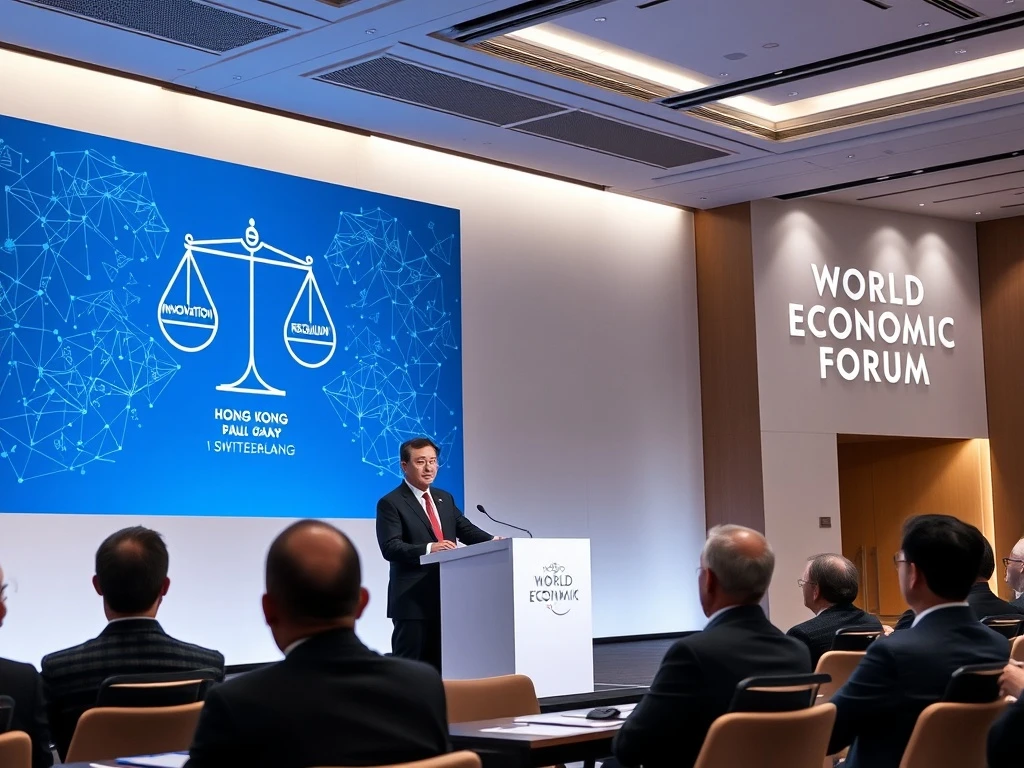
In a decisive closed-door workshop at the World Economic Forum in Davos, Switzerland, this January 2025, Hong Kong Finance Secretary Paul Chan delivered a strong defense of the city’s regulatory philosophy for digital assets, positioning its ‘same activity, same risk, same regulation’ framework as a critical model for the global financial system’s evolution. This stance arrives as jurisdictions worldwide grapple with balancing technological innovation against systemic risk, making Hong Kong’s experience-driven approach a significant case study for 2025.
Hong Kong’s ‘Same Risk, Same Regulation’ Crypto Framework Explained
Finance Secretary Chan articulated a principle now central to Hong Kong’s financial technology strategy. The ‘same activity, same risk, same regulation’ framework mandates that digital asset businesses face regulatory scrutiny based on the economic function and risk profile of their activities, not merely the underlying blockchain technology. Consequently, a virtual asset trading platform facilitating retail transactions must adhere to investor protection and market integrity standards comparable to a traditional securities exchange. This technology-neutral philosophy aims to prevent regulatory arbitrage and ensure a level playing field. It directly addresses a core challenge in digital finance: applying timeless financial regulations to novel technological expressions. The Hong Kong Monetary Authority (HKMA) and the Securities and Futures Commission jointly enforce this principle, creating a cohesive regulatory environment.
Also read: Litecoin Price Tests Critical Support: Will the $43 Floor Hold for a 2026 Breakout?
The Practical Implementation: Licensing and Pilots
Chan highlighted concrete measures translating principle into practice. Hong Kong’s mandatory licensing regime for Virtual Asset Trading Platforms (VATPs), operational since June 2023, requires platforms to meet strict criteria on custody, know-your-customer procedures, and financial reporting. Furthermore, the HKMA is advancing a pilot program for tokenized deposits, exploring how blockchain can streamline interbank settlements. Perhaps most anticipated for Q1 2025 is the forthcoming regulatory regime for stablecoin issuers, which will require licensing and sturdy reserve backing. These steps demonstrate a phased, evidence-based implementation of the ‘same risk’ doctrine, moving from theory to enforceable policy.
Tokenization Emerges as the Flagship Use Case
Beyond regulation, Hong Kong is aggressively promoting asset tokenization as the most tangible and scalable application of blockchain for the real economy. Secretary Chan noted the successful issuance of three batches of tokenized green bonds since 2023, raising a total of $2.1 billion. These bonds, conventional debt instruments issued on a blockchain, fund verified environmental projects while demonstrating efficiency gains in issuance and settlement. In a landmark move in October 2024, China Merchants Bank International Asset Management tokenized a $3.8 billion US dollar money market fund on the BNB Chain. This project illustrated tokenization’s potential to enhance liquidity and accessibility for traditional financial instruments. The HKMA’s ‘Fintech 2030’ strategy explicitly prioritizes tokenization under its DART framework (Data, AI, Resilience, Tokenization), outlining over 40 initiatives to expand the ecosystem through 2030.
Also read: Dogecoin RSI Hits Historic Bottom Zone: Can the Meme Coin Recover?
Global Collaboration and the BRICS Connection
Hong Kong’s tokenization vision extends beyond its borders, emphasizing global interoperability. A November 2024 pilot with Brazil’s Banco Inter, Chainlink, and the Central Bank of Brazil tested cross-border trade finance settlement between Hong Kong and Brazil. This collaboration between two major BRICS trading partners explored using blockchain for faster, more transparent, and cost-effective international settlements. Such experiments are vital for building the multi-currency, cross-jurisdictional infrastructure required for tokenized assets to achieve global scale. They position Hong Kong not just as a regional hub, but as a laboratory and connector for next-generation global finance.
Balancing Innovation with Financial Stability Guardrails
Throughout his Davos remarks, Chan consistently emphasized balance. He stated digital assets ‘should serve the real economy,’ but warned that ‘strong guardrails’ are essential to address risks to financial stability, market integrity, and investor protection. This reflects lessons from past market volatility and failures in the digital asset sector. The guardrails include stringent anti-money laundering (AML) and counter-financing of terrorism (CFT) rules aligned with the Financial Action Task Force (FATF) standards, strong cybersecurity requirements for licensed entities, and clear disclosure rules for tokenized products. The goal is to promote a sustainable, professional market that attracts institutional capital while mitigating the speculative excesses that have plagued the sector.
Context: Hong Kong’s Strategic Position and Challenges
Hong Kong’s assertive push into digital assets serves multiple strategic aims. As a Special Administrative Region of China, it operates as a testing ground for financial innovation while maintaining its common law system and global financial connectivity. The city faces intense competition from established hubs like Singapore and emerging centers in the Middle East. Its regulatory clarity, particularly compared to the uncertain sector in the United States, is a deliberate competitive advantage designed to attract firms, talent, and capital. However, challenges remain, including addressing geopolitical tensions, ensuring resilient enforcement of new rules, and maintaining the agility to adapt regulations as technology evolves. The industry’s call to soften proposed Crypto-Asset Reporting Framework (CARF) rules highlights the ongoing dialogue between regulators and market participants.
Expert Analysis: Why This Model Matters for 2025
Financial policy analysts view Hong Kong’s approach as a significant experiment in pragmatic crypto governance. Unlike blanket bans or overly permissive regimes, the ‘same risk’ model seeks to integrate digital assets into the existing financial regulatory perimeter. This reduces the likelihood of shadow banking systems developing outside regulatory oversight. For institutional investors, clear rules based on familiar risk principles lower the barrier to entry. The focus on tokenization of real-world assets (RWAs) like bonds and funds shifts the narrative from speculative cryptocurrencies to blockchain’s efficiency benefits for traditional finance. As global standard-setters like the International Monetary Fund and Bank for International Settlements develop their own frameworks, Hong Kong’s real-world implementation provides valuable, experience-driven data points.
Conclusion
Hong Kong’s defense of its ‘same activity, same risk, same regulation’ framework at the World Economic Forum underscores a mature, nuanced approach to governing the digital asset ecosystem. By tethering regulation to economic substance rather than technological novelty, promoting tokenization of real-world assets, and building guardrails for stability, Hong Kong is crafting a blueprint it hopes will ensure the city’s relevance in the future of finance. The success of this Hong Kong crypto regulation model will be closely watched by global policymakers throughout 2025, as it attempts to prove that innovation and investor protection are not mutually exclusive goals in the digital age.
FAQs
Q1: What does ‘same activity, same risk, same regulation’ mean for crypto?
It means Hong Kong regulators assess the economic function and risks of a digital asset business (like trading or lending) and apply regulatory requirements similar to those for a traditional financial firm conducting the same activity, regardless of the use of blockchain technology.
Q2: What is Hong Kong’s stance on stablecoin regulation?
Hong Kong plans to introduce a mandatory licensing regime for stablecoin issuers, expected to be operational in the first quarter of 2025. This will likely include requirements for high-quality reserve assets and regular audits to ensure stability and protect users.
Q3: How is Hong Kong using tokenization?
Hong Kong is actively tokenizing real-world assets, including government green bonds ($2.1 billion issued since 2023) and a major bank’s money market fund. The HKMA’s strategy prioritizes expanding this tokenization ecosystem to improve capital market efficiency and accessibility.
Q4: Why did Hong Kong discuss this at the World Economic Forum?
Davos is a key forum for shaping global economic policy. By presenting its framework there, Hong Kong positions itself as a thought leader in digital asset governance, influences international regulatory discussions, and signals stability to global investors and financial institutions.
Q5: How does Hong Kong’s approach differ from that of the United States?
As of early 2025, Hong Kong has established a unified licensing regime for exchanges and defined rules for tokenization. The U.S. approach is more fragmented, with multiple regulators (SEC, CFTC) asserting jurisdiction, often through enforcement actions, leading to greater regulatory uncertainty for the industry.

This article was produced with AI assistance and reviewed by our editorial team for accuracy and quality.