HEPA-Filtered Drying: The Essential Shield for Modern Laboratory Contamination Control
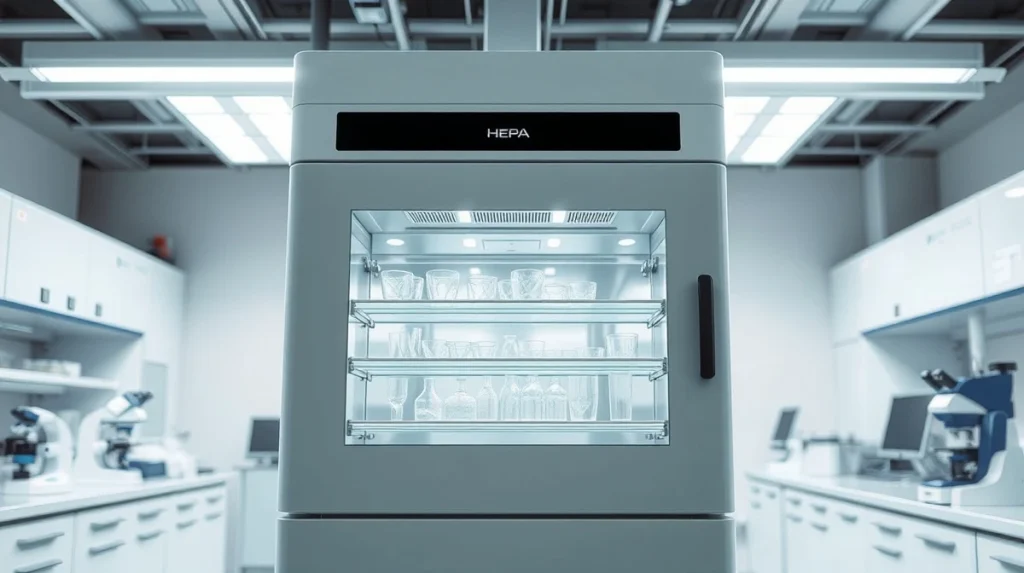
In laboratories worldwide, contamination control remains a relentless challenge, with one critical process often overlooked: drying. While rigorous cleaning protocols are standard, the introduction of airborne particles during the drying phase can compromise entire experiments. Consequently, HEPA-filtered drying has emerged as an essential component of modern contamination control strategies, particularly in sensitive environments like microbiology, pharmaceuticals, and diagnostics. This technology provides a controlled, particle-free environment for drying cleaned equipment, directly addressing a significant vulnerability in the laboratory workflow.
The Critical Vulnerability in Laboratory Drying
Traditional air drying or the use of non-filtered drying cabinets presents a substantial contamination risk. Ambient laboratory air contains millions of particles per cubic foot, including dust, skin cells, and microbial spores. When this air circulates over wet, sterile surfaces, these particles can settle and adhere. For instance, in cell culture work or polymerase chain reaction (PCR) preparation, even minute contaminants can lead to false results, ruined cultures, or costly production batches in biomanufacturing. Therefore, the drying step transforms from a passive activity into an active risk management point that demands technological intervention.
Also read: M Series ANC Token Presale Launches with Detailed Vesting
How HEPA-Filtered Drying Technology Works
HEPA-filtered drying cabinets function as sealed environments with integrated air handling systems. Air is drawn into the cabinet, passed through a High-Efficiency Particulate Air (HEPA) filter, and then circulated in a laminar flow over the items being dried. The HEPA filter, by definition, captures 99.97% of particles 0.3 microns in diameter. This process effectively removes airborne contaminants that could otherwise settle on clean glassware, plasticware, and instruments. Key components of these systems include:
- Sealed Chambers: Prevent ingress of unfiltered room air.
- Redundant Filtration: Often include pre-filters to extend HEPA filter life.
- Controlled Airflow: Laminar flow ensures even drying without creating turbulence that could reintroduce particles.
- Heated Air Circulation: Gentle, filtered warm air accelerates drying times, reducing the window of vulnerability.
The Impact on Different Laboratory Sectors
The adoption of this technology has tangible impacts across scientific disciplines. In clinical diagnostic labs, it reduces the risk of cross-contamination between patient samples. Pharmaceutical quality control labs utilize these dryers to prepare equipment for sterility testing, aligning with Good Manufacturing Practice (GMP) requirements. Furthermore, academic research laboratories benefit from increased experimental reproducibility. A 2024 review in the Journal of Laboratory Automation noted that implementing point-of-use HEPA drying reduced culture contamination incidents by an average of 40% in the labs studied, showcasing a direct correlation between controlled drying and operational success.
Also read: Pepeto Presale Attracts Investor Interest Amid Meme Coin Rally
Comparing Contamination Control Methods
Understanding where HEPA-filtered drying fits requires comparing it to other common methods. The table below outlines key differences:
| Drying Method | Contamination Risk | Drying Time | Typical Use Case |
|---|---|---|---|
| Air Drying on Open Racks | Very High | Slow (hours) | Non-critical washing |
| Non-Filtered Drying Cabinets | Moderate to High | Moderate | General labware |
| HEPA-Filtered Drying Cabinets | Very Low | Fast (accelerated) | Sensitive research, diagnostics, GMP |
| Autoclave Drying Cycles | Low (if sealed) | Slow (cycle-dependent) | Sterilized items post-autoclave |
Integration into Comprehensive Contamination Control Programs
Effective contamination control is a full system, not a single piece of equipment. HEPA-filtered drying serves as the final safeguard in a chain that includes validated cleaning agents, Type I water for rinsing, and proper handling procedures. Laboratories implementing this technology often do so as part of a risk-based approach mandated by standards like ISO 14644 for cleanrooms or ISO/IEC 17025 for testing laboratories. The equipment’s performance is typically verified through periodic air particle counts inside the chamber and microbiological settling plates, providing objective data for quality audits.
Economic and Operational Considerations
While the initial investment exceeds that of basic drying racks, the total cost of ownership analysis often favors HEPA-filtered systems. The reduction in failed experiments, repeated assays, and compromised production batches leads to significant cost avoidance. Moreover, faster drying times increase laboratory throughput and efficiency. Manufacturers have responded to market demand by offering a range of sizes, from benchtop units for small labs to large-capacity cabinets for core facilities, making the technology accessible across different budget scales.
Conclusion
HEPA-filtered drying has transitioned from a specialized luxury to a fundamental component of resilient laboratory contamination control. By addressing the critical vulnerability posed by the drying phase, this technology protects the integrity of sensitive research, ensures the accuracy of diagnostic results, and supports compliance with stringent manufacturing standards. As laboratories continue to pursue higher levels of precision and reliability, integrating controlled, particle-free drying environments will remain a non-negotiable standard for any operation where contamination is the enemy of progress.
FAQs
Q1: What size particles does a HEPA filter remove in these dryers?
HEPA filters are certified to remove at least 99.97% of airborne particles that are 0.3 microns in diameter. They are even more efficient at capturing both larger and smaller particles.
Q2: Can HEPA-filtered drying cabinets replace an autoclave for sterilization?
No. These cabinets are for drying clean items in a particle-free environment. They do not provide the heat, pressure, or time required to achieve sterilization, which kills all microbial life, including spores.
Q3: How often do the HEPA filters need to be replaced?
Replacement frequency depends on usage and air quality. Manufacturers typically recommend annual replacement, but monitoring pressure differentials across the filter provides a more accurate, performance-based schedule.
Q4: Are these cabinets only for glassware?
No. They are suitable for drying a wide range of clean laboratory items, including glassware, plasticware, silicone components, and certain metal instruments, provided they are compatible with the cabinet’s temperature settings.
Q5: What is the main difference between a laminar flow hood and a HEPA-filtered drying cabinet?
A laminar flow hood provides a continuous stream of HEPA-filtered air to protect a work surface during active procedures. A drying cabinet is a sealed chamber that uses HEPA-filtered air in a closed loop specifically to dry items without introducing new contaminants.

This article was produced with AI assistance and reviewed by our editorial team for accuracy and quality.