JitoSOL Liquid Staking ETPs: Hanwha’s Strategic Masterstroke Targets $4.44B Retirement Market
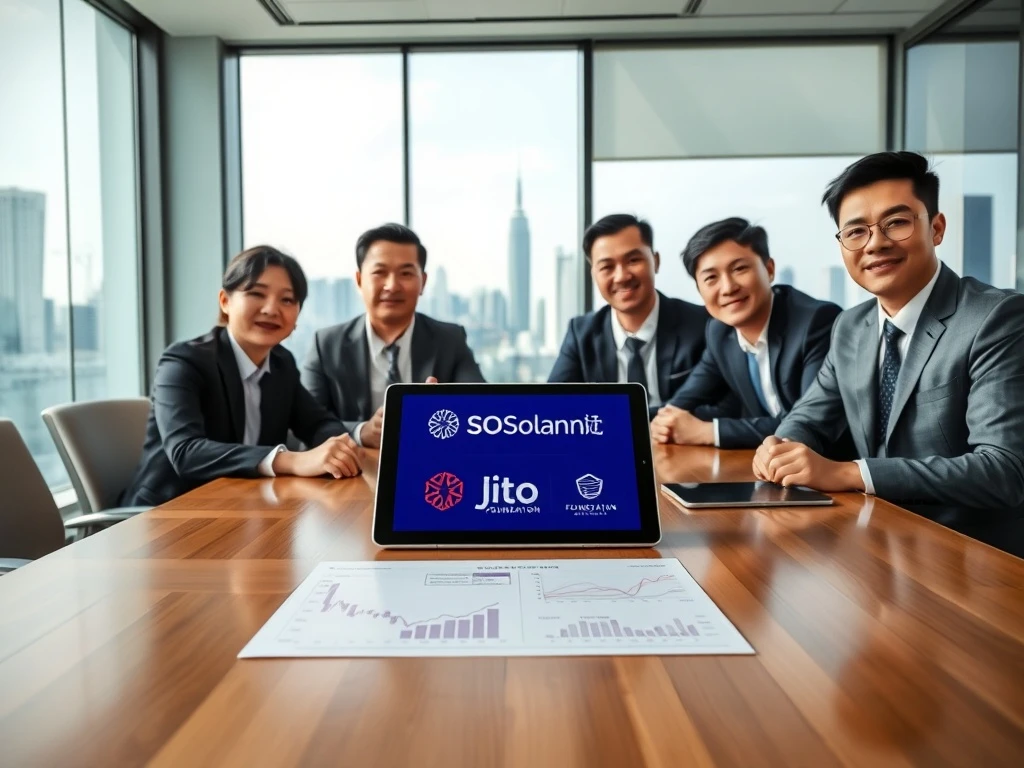
SEOUL, South Korea – December 2024 – In a landmark move bridging traditional finance and decentralized blockchain technology, Hanwha Asset Management has announced a strategic partnership with the Jito Foundation to develop regulated exchange-traded products (ETPs) based on JitoSOL, Solana’s leading liquid staking token. This collaboration specifically targets South Korea’s substantial retirement investment market, representing a calculated $4.44 billion assets under management (AUM) initiative that could reshape institutional crypto adoption in Asia.
JitoSOL Liquid Staking ETPs: A New Frontier for Institutional Investors
Hanwha Asset Management, one of South Korea’s largest financial institutions with over $100 billion in total assets, has formally entered the blockchain investment space through this partnership. Consequently, the agreement establishes a framework for creating regulated financial products that provide exposure to JitoSOL’s staking rewards while maintaining liquidity. Moreover, this development represents a significant validation of Solana’s ecosystem by traditional finance.
Also read: Bitcoin Mining Difficulty Plummets: Network Data Signals 14% Downward Adjustment
The partnership announcement follows months of regulatory preparation and market analysis. Specifically, Hanwha’s research division identified liquid staking derivatives as a high-potential asset class for retirement portfolios seeking yield in a low-interest-rate environment. Additionally, JitoSOL’s position as the dominant liquid staking token on Solana, with approximately $1.5 billion in total value locked, provides the necessary liquidity and stability for institutional-scale products.
South Korea’s Evolving Regulatory Landscape for Crypto ETPs
South Korea’s Financial Services Commission (FSC) has gradually established clearer guidelines for cryptocurrency investment products since 2023. Importantly, the regulatory framework now permits certain digital asset ETPs under specific conditions, including robust custody solutions, transparent pricing mechanisms, and investor protection measures. Furthermore, Hanwha’s established regulatory compliance infrastructure positions the firm advantageously in this evolving landscape.
Also read: BlockDAG's Stunning 79,900% Surge Targets $1 as Litecoin and Dogecoin Struggle
The timing coincides with broader Asian institutional adoption trends. For instance, Hong Kong approved its first spot Bitcoin and Ethereum ETFs in April 2024, while Singapore has developed comprehensive digital asset frameworks. Similarly, South Korean regulators have demonstrated increasing openness to regulated crypto investment vehicles, particularly those targeting qualified investors and retirement accounts with appropriate risk disclosures.
Expert Analysis: Why JitoSOL and Why Now?
Financial analysts point to several converging factors driving this development. First, Solana’s network performance improvements throughout 2024 have addressed previous reliability concerns, with 99.9% uptime over the past twelve months. Second, JitoSOL’s liquid staking mechanism solves the traditional staking liquidity problem by allowing investors to earn staking rewards while maintaining token liquidity for other DeFi activities or trading.
Industry experts highlight the strategic importance of this partnership. “Hanwha’s move represents a calculated institutional entry point,” explains Dr. Min-ji Park, blockchain researcher at Seoul National University. “By focusing on retirement investors through regulated ETPs, they’re addressing a massive market segment that values stability and regulatory compliance above speculative returns.”
The $4.44 Billion Retirement Investment Strategy
Hanwha’s targeted $4.44 billion AUM push corresponds to approximately 5% of South Korea’s corporate pension fund market. The strategy involves three primary product offerings:
- Conservative JitoSOL Income ETP: Designed for capital preservation with staking yield enhancement
- Balanced Growth ETP: Combining JitoSOL exposure with traditional fixed income
- Institutional Custom Mandates: Tailored solutions for large pension funds and insurance companies
Product development will proceed through clearly defined phases. Initially, Hanwha will launch a pilot program with select institutional clients in Q1 2025. Subsequently, broader retail availability through securities firms will follow regulatory approval. Finally, international expansion to other Asian markets with similar retirement investment structures represents the long-term roadmap.
Technical Architecture and Risk Management Framework
The JitoSOL-based ETPs will employ a multi-layered security architecture. Primarily, institutional-grade custody solutions will safeguard underlying assets through a combination of cold storage and insured custodial services. Additionally, real-time monitoring systems will track Solana network performance, validator health, and staking reward distributions.
Risk management protocols address several potential concerns:
| Risk Category | Mitigation Strategy | Implementation Timeline |
|---|---|---|
| Smart Contract Vulnerability | Third-party audits + insurance coverage | Pre-launch completion |
| Validator Slashing | Diversified validator selection + monitoring | Ongoing operational process |
| Liquidity Risk | Market maker agreements + reserve funds | Launch preparation phase |
| Regulatory Changes | Compliance team + regulatory liaison | Continuous monitoring |
Market Impact and Competitive Landscape
This development potentially disrupts South Korea’s investment product landscape. Traditional asset managers have predominantly offered conventional fixed income and equity products for retirement accounts. However, the search for yield in a prolonged low-interest environment has increased demand for alternative income sources. Consequently, JitoSOL’s current 6-8% annual staking yield presents an attractive enhancement to traditional bond portfolios.
Competitively, Hanwha gains first-mover advantage in South Korea’s regulated crypto ETP space. Meanwhile, other asset managers including Mirae Asset and Samsung Asset Management have reportedly explored similar offerings. Nevertheless, Hanwha’s specific focus on retirement investors through JitoSOL liquid staking ETPs creates a differentiated market position.
Global Context and Industry Trends
The partnership reflects broader institutional adoption patterns observed globally. For example, BlackRock’s digital asset division has expanded its cryptocurrency ETP offerings throughout 2024. Similarly, European financial institutions have launched various blockchain-based investment products. However, the Asian market presents unique characteristics, particularly regarding retirement investment structures and regulatory approaches.
Solana’s ecosystem development provides additional context. The network has demonstrated substantial growth in institutional activity, with enterprise adoption increasing approximately 300% year-over-year. Furthermore, liquid staking derivatives have emerged as a foundational DeFi primitive, with total value locked across all networks exceeding $50 billion globally.
Conclusion
Hanwha Asset Management’s partnership with the Jito Foundation to develop JitoSOL liquid staking ETPs represents a significant milestone in institutional cryptocurrency adoption. The strategic focus on South Korea’s retirement investment market through regulated products addresses both yield requirements and compliance considerations. As traditional finance increasingly intersects with blockchain technology, this $4.44 billion AUM initiative may establish new standards for institutional-grade digital asset products. Ultimately, the success of these JitoSOL-based ETPs could influence broader Asian institutional adoption patterns throughout 2025 and beyond.
FAQs
Q1: What exactly are JitoSOL liquid staking ETPs?
JitoSOL liquid staking ETPs are regulated exchange-traded products that provide investors with exposure to JitoSOL, a token representing staked SOL on the Solana network. These products allow investors to earn staking rewards while maintaining liquidity through traditional financial markets.
Q2: Why is Hanwha Asset Management targeting retirement investors specifically?
Retirement investors represent a substantial market segment in South Korea with specific yield requirements in a low-interest environment. These investors typically prioritize regulatory compliance and capital preservation, making regulated ETPs an appropriate vehicle for cryptocurrency exposure.
Q3: How does JitoSOL differ from simply staking SOL directly?
JitoSOL is a liquid staking derivative that represents staked SOL while remaining tradable and usable in DeFi applications. This solves the liquidity problem associated with traditional staking, where assets remain locked and unavailable for other purposes.
Q4: What regulatory approvals are required for these products?
The products require approval from South Korea’s Financial Services Commission and must comply with existing securities regulations. Hanwha will implement institutional-grade custody, transparent pricing, and investor protection measures to meet regulatory standards.
Q5: When will these JitoSOL ETPs become available to investors?
Hanwha plans a pilot program with select institutional clients in Q1 2025, followed by broader availability through securities firms pending regulatory approval. The complete rollout timeline depends on regulatory review processes and market conditions.

This article was produced with AI assistance and reviewed by our editorial team for accuracy and quality.