Crypto ATM Network Declines: Early 2026 Growth Stalls as Removals Accelerate
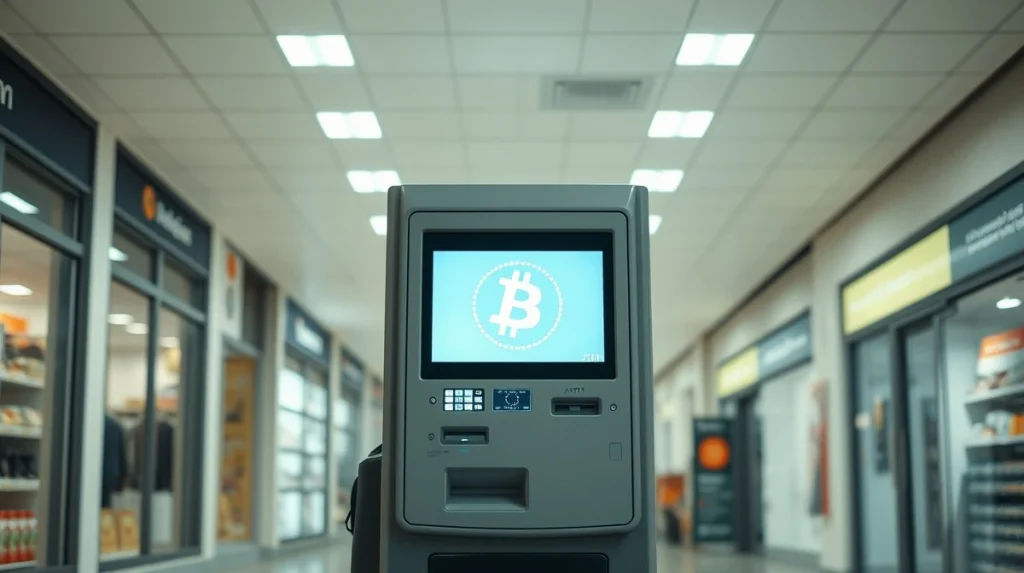
The global network of cryptocurrency ATMs shrank in the opening months of 2026, marking a notable shift after years of rapid expansion. Data from industry trackers shows new installations were outweighed by a larger number of machine removals worldwide. This net decrease occurred even as the total count briefly approached the symbolic 40,000-machine threshold. The trend highlights changing dynamics for a sector once defined by breakneck growth.
Crypto ATM Growth Hits a Wall
For most of the past decade, the crypto ATM sector expanded quickly. The number of machines globally grew from a few thousand to nearly 40,000. But that momentum has stalled. According to data from CoinATMRadar, a leading monitoring service, the net global count fell by over 2% in the first quarter of 2026. This decline followed a period of much slower growth throughout 2025.
Also read: Rootstock Staking Unlocks Bitcoin Yield: How Passive BTC Becomes Active Network Backing
Industry watchers note several factors. Regulatory pressure in key markets has increased operating costs. Some operators have exited the business. Profit margins for machine operators have also tightened with lower cryptocurrency transaction volumes and volatility. “We’re seeing a market correction,” said a representative from a major ATM operator who requested anonymity. “The low-hanging fruit is gone. Expansion now requires more capital and compliance work.”
North America’s Dominant Role
Despite the overall contraction, the geographic distribution of crypto ATMs remains heavily skewed. North America continues to host the vast majority of machines.
Also read: Bitcoin Price Prediction: PlanB's Defiant Analysis Says the Top Is Not In
- United States: Accounts for roughly 82% of all installed crypto ATMs globally.
- Canada: Holds about 7.5% of the global market share.
- Europe: Represents approximately 6% of the total network.
- Rest of World: Combined share is less than 5%.
This concentration means trends in the U.S. and Canada disproportionately impact global totals. Recent regulatory actions at the state level in the U.S., including stricter licensing requirements in states like California and New York, have directly led to some operators removing machines. Data from the Blockchain Advocacy Coalition shows that compliance costs for operators have risen by an average of 35% since 2024.
Operator Consolidation and Market Maturity
The slowdown suggests the market is maturing. The initial phase of widespread, often independent, deployment is giving way to consolidation among larger, more established companies. According to a March 2026 market report from FinTech Analytics, the top five crypto ATM operators now control over 60% of the U.S. market, up from around 45% two years ago.
This consolidation often involves removing duplicate or underperforming machines in saturated urban areas while cautiously adding units in new regions. The implication is a move toward quality over quantity. What this means for investors is a focus on companies with resilient compliance frameworks and sustainable unit economics, rather than pure growth metrics.
Regulatory Headwinds Intensify
Regulatory scrutiny is a primary driver behind the net removal of machines. Crypto ATMs have attracted attention from financial regulators concerned about money laundering and consumer protection. In February 2026, the Financial Crimes Enforcement Network (FinCEN) proposed new rules specifically targeting kiosks that deal in convertible virtual currency. These rules would mandate more detailed customer identification for transactions above a certain threshold.
Many state regulators have moved faster. Over a dozen states have enacted or proposed laws that increase licensing fees, mandate real-time transaction reporting, or set caps on transaction sizes. For smaller operators, the cost of adhering to this patchwork of regulations has become prohibitive. This suggests further consolidation is likely as smaller players sell their assets or shut down.
Consumer Demand and Use Case Evolution
The changing network size also reflects shifts in how people access cryptocurrencies. While ATMs provide critical physical on-ramps, especially for the unbanked, other methods have grown. Peer-to-peer platforms and simplified exchange onboarding have captured market share. A 2025 survey by the Crypto Consumer Research Group found that only 18% of new crypto buyers used an ATM for their first purchase, down from 31% in 2022.
But ATMs still serve a specific need. They offer immediacy and privacy that online exchanges cannot. Transactions are often settled within minutes, and many machines require only phone number verification for small amounts. This could signal a future where the network stabilizes at a smaller, more efficient size focused on serving niche demand rather than mass adoption.
Global Perspective and Future Outlook
The story varies by region. While North America saw a net reduction, some markets in Asia and Latin America reported modest growth. These regions started from a much smaller base. However, their growth was insufficient to offset losses in the core North American market.
The industry’s future likely depends on regulatory clarity and technological integration. Some operators are testing machines that handle a broader array of digital assets beyond just Bitcoin and Ethereum. Others are integrating with decentralized finance protocols to offer more services. Whether these innovations can reignite network growth remains an open question. For now, the data shows a sector in a corrective phase, prioritizing sustainability over unchecked expansion.
Conclusion
The global crypto ATM network has entered a period of contraction after years of growth. The first quarter of 2026 saw removals outpace new installations, pulling the total count back from the 40,000 milestone. This shift is driven by regulatory pressures, operator consolidation, and evolving consumer habits, particularly in the dominant North American market. The network’s future will hinge on adapting to a stricter regulatory environment and finding a sustainable role in a maturing digital asset ecosystem.
FAQs
Q1: How many crypto ATMs are there in the world?
As of March 2026, data indicates the global count is slightly below 39,000 machines. This is down from a peak near 40,000 reached in late 2025.
Q2: Why are crypto ATMs being removed?
Primary reasons include increased regulatory compliance costs, consolidation among operators leading to closure of duplicate machines, and lower profitability in some locations due to reduced transaction volumes.
Q3: Which country has the most cryptocurrency ATMs?
The United States hosts the vast majority, accounting for over 80% of the world’s crypto ATMs. Canada is a distant second.
Q4: Are crypto ATMs safe to use?
They can be, but users should be aware of typically high fees compared to online exchanges and should only use machines operated by reputable, licensed companies. Always verify the receiving address carefully.
Q5: Will the crypto ATM network start growing again?
Industry analysts believe growth may resume, but at a slower, more measured pace. Future expansion depends on regulatory developments, technological upgrades to machines, and demonstrating sustainable business models to operators.

This article was produced with AI assistance and reviewed by our editorial team for accuracy and quality.