Urgent: Geopolitical Tensions Spark Record $478M Polymarket Surge
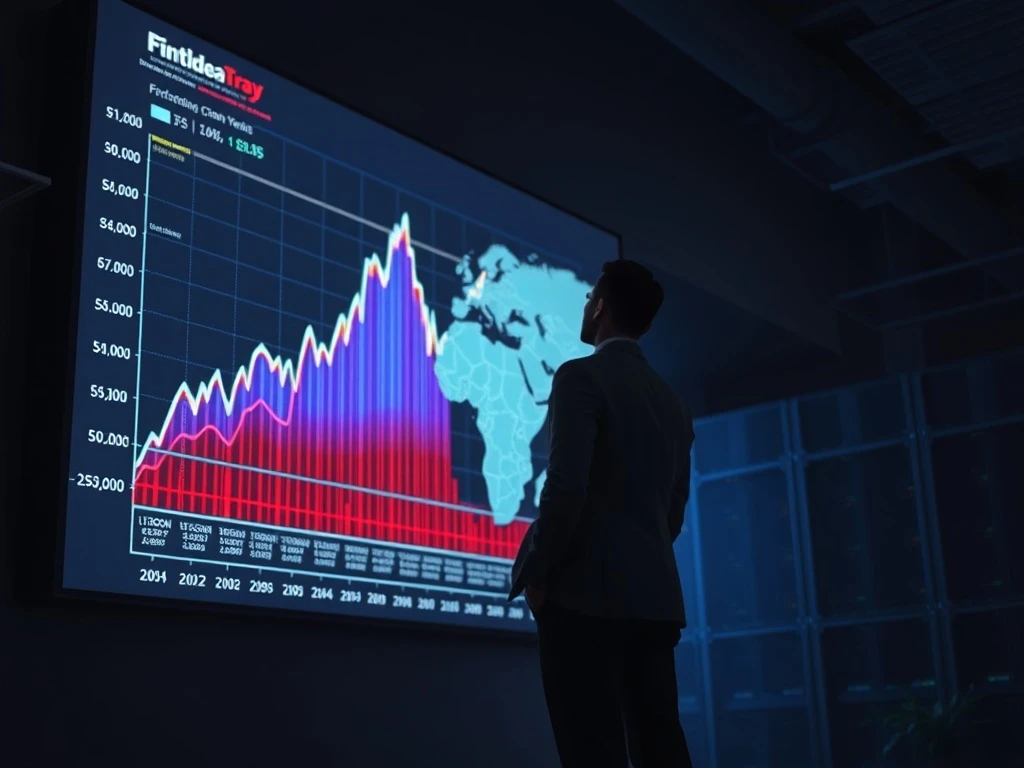
On April 14, 2026, escalating military actions in the Middle East triggered an historic financial event far from the conflict zone. A record $478 million trading surge on Polymarket, a blockchain-based prediction market, occurred as global traders rushed to bet on the outcome of reported strikes involving Iran. This volume, concentrated in a 24-hour window, shattered the platform’s previous single-day record and immediately raised red flags among regulators and analysts. Consequently, several blockchain wallets captured significant profits mere hours before official news agencies confirmed the events, spotlighting critical questions about market integrity and the opaque nature of decentralized finance during real-world crises.
Record Volume and the Iran Strike Prediction Market
The catalyst for the historic volume was a specific prediction market titled “Will Iran launch a direct strike against Israel before April 15?” According to data from Dune Analytics, over $469 million in volume flowed through this single contract. Trading activity began a sharp, suspicious uptick approximately 12 hours before major wire services like Reuters and the Associated Press moved their alerts. At its peak, the contract’s implied probability swung from 35% to 92% in under three hours. This market was one of several related to Middle Eastern geopolitics that saw heightened activity, but it accounted for the overwhelming majority of the day’s volume. Polymarket’s official communications channel confirmed the figures, stating the platform processed “more volume in one day than in the entire previous month.”
Also read: Crypto Clarity Act Gains Significant Backing as Armstrong Shifts Stance, Pressuring Congress
This event did not occur in a vacuum. Prediction markets have gained traction as alternative sentiment gauges, especially for geopolitical events where traditional intelligence is lagging. However, the scale and timing of this surge represent a new frontier. Dr. Lina Keller, a professor of computational finance at Stanford University, noted the significance in a statement to her institution’s news service: “We are observing prediction markets acting with a speed and specificity that rivals, and in this case potentially preceded, official intelligence channels. The $478M Polymarket surge is a data point that cannot be ignored; it demonstrates both the market’s potential for collective forecasting and its profound vulnerability to information asymmetry.”
Insider Wallet Activity and Market Integrity Concerns
Simultaneously, blockchain analytics firm Chainalysis identified a cluster of Ethereum wallets that executed large, profitable trades on the Iran contract. One wallet, labeled “0x8f7…a41c” by analysts, purchased $120,000 worth of “Yes” shares when the contract price was $0.32. The wallet then sold its entire position for approximately $340,000 after the price soared above $0.90, netting a profit of around $220,000. Crucially, this buy order was placed over 8 hours before the first public reports of missile launches appeared on social media monitoring tools. Chainalysis has flagged the wallet’s transaction pattern for further review, though the firm emphasizes that on-chain analysis alone cannot prove the origin of information.
Also read: XRP Price Prediction: Analyst Eyes $2 Target Before Potential Retest of Gaussian Channel Support
- Pre-Event Accumulation: At least five wallets showed atypical accumulation of “Yes” shares in the 6-12 hour window preceding public news breaks.
- Profit Realization: These same wallets began selling positions in a coordinated-looking manner as the contract price peaked, collectively realizing estimated profits exceeding $1.5 million.
- Regulatory Gray Zone: Polymarket operates on decentralized technology, complicating traditional insider trading enforcement. The Commodity Futures Trading Commission (CFTC) has previously issued actions against the platform for offering unregistered swaps.
Expert Analysis on Decentralized Market Oversight
The incident has drawn sharp commentary from financial regulatory experts. Michael Vargas, a former SEC enforcement attorney now with the Brookings Institution, provided context: “The fundamental challenge with a platform like Polymarket is jurisdictional and structural. Even if this was classic insider trading—trading on material non-public information about a geopolitical event—who is the insider? Who is the issuer of the security? The legal frameworks, like the SEC’s Rule 10b-5, aren’t designed for a global, pseudonymous prediction market on a blockchain.” Vargas points to the CFTC’s 2024 settlement with Polymarket as a sign of regulatory interest, but acknowledges the enforcement gap for real-time events. This analysis references the CFTC’s published settlement docket (CFTC Docket No. 24-10) as an external authority source.
Broader Context: Prediction Markets in Geopolitical Forecasting
The Polymarket surge is the most dramatic example yet of a growing trend. To understand its scale, the event can be compared to other major prediction market volumes and traditional market reactions. The table below illustrates how this event stands apart from recent precedent.
| Event / Market | Date | Volume / Movement | Notes |
|---|---|---|---|
| Polymarket: Iran Strike | March 2026 | $469M (single contract) | Record for any prediction market; preceded public news. |
| Kalshi: 2024 U.S. Election | Nov 2024 | $58M (total platform) | Regulated U.S. platform; post-debate surge. |
| FTX Oil Price Crash (2022) | Mar 2022 | ~$15M (estimated) | Platform now defunct; reaction to news. |
| S&P 500 VIX (Volatility Index) | Same Day | +18% | Traditional market fear gauge; reacted after news confirmation. |
This comparison shows the Polymarket activity was an order of magnitude larger than typical prediction market events and exhibited a leading, rather than lagging, relationship to news. Furthermore, it highlights the divergence between decentralized crypto-native markets and their regulated counterparts like Kalshi, a CFTC-designated contract market.
What Happens Next: Regulatory and Market Reactions
Immediate reactions are unfolding on two fronts. Firstly, members of the U.S. Senate Banking Committee have reportedly drafted letters to both the CFTC and SEC, requesting briefings on the event and its implications for market fairness and national security. Secondly, within the cryptocurrency industry, decentralized oracle networks like Chainlink are facing renewed scrutiny. These networks provide the external data (e.g., election results, sports scores) that settle prediction market contracts. Developers are now debating mechanisms for “truth decay” or delayed resolution in contracts involving rapidly unfolding real-world events to mitigate front-running.
Community and Industry Response
The reaction within the crypto community is mixed. Some advocates argue the event proves the efficiency of decentralized, crowd-sourced forecasting. Others, including prominent Ethereum developers, express concern that such incidents invite devastating regulatory crackdowns. On Polymarket’s own social channels, users are divided between those celebrating the platform’s liquidity and those accusing the team of failing to monitor for clear market manipulation. This internal tension underscores the growing pains of a technology striving for mainstream financial relevance while operating at the edges of established legal frameworks.
Conclusion
The record $478M Polymarket trading surge triggered by Middle East tensions is a landmark moment. It demonstrates the formidable power of prediction markets to aggregate global sentiment at lightning speed. However, the concurrent profits captured by unidentified wallets before official news breaks casts a long shadow, exposing critical vulnerabilities in market integrity. This event will likely accelerate regulatory scrutiny and force difficult conversations about transparency, oracle design, and the legal identity of participants in decentralized finance. Moving forward, the key takeaway is that prediction markets are no longer niche curiosities; they are powerful, unregulated financial instruments that can move hundreds of millions of dollars based on global crises. How regulators, platforms, and the crypto industry respond to this incident will shape the future of this entire asset class. Observers should monitor for official statements from the CFTC and any proposed legislation from congressional committees in the coming weeks.
Frequently Asked Questions
Q1: What exactly is Polymarket and how did it see $478M in volume?
Polymarket is a decentralized prediction market platform where users trade cryptocurrency on the outcome of real-world events. The $478 million in total volume on April 14, 2026, was primarily driven by a single contract betting on whether Iran would launch a direct strike, with trading exploding as geopolitical tensions escalated.
Q2: Why are regulators concerned about insider wallets in this event?
Blockchain analysts identified specific wallets that bought contracts predicting the strike hours before the news became public, then sold for large profits. This pattern resembles insider trading, but enforcing such laws on a global, pseudonymous, decentralized platform presents major legal and technical challenges.
Q3: What are the potential consequences for Polymarket after this surge?
The platform could face increased regulatory pressure, including potential new enforcement actions from the CFTC or SEC. It may also need to implement new compliance tools, like delayed contract resolution or enhanced wallet screening, to address integrity concerns.
Q4: How does this prediction market activity compare to the stock market’s reaction?
While traditional fear gauges like the VIX also spiked, the Polymarket surge was significantly larger in relative terms and, critically, its major move began *before* public news confirmation, suggesting it may have been reacting to non-public information.
Q5: Are prediction markets like this legal?
The legality is complex and varies by jurisdiction. In the U.S., Polymarket previously settled with the CFTC for offering unregistered swap contracts. Regulated prediction markets like Kalshi do exist, but they operate under strict CFTC oversight, which Polymarket’s decentralized model largely avoids.
Q6: How could this event affect ordinary cryptocurrency investors?
Increased regulatory scrutiny on one part of the crypto ecosystem often leads to broader market uncertainty and volatility. Furthermore, if regulations are tightened in response, it could limit access to or increase the cost of using various DeFi and prediction market applications for all users.

This article was produced with AI assistance and reviewed by our editorial team for accuracy and quality.