Galaxy Digital’s Bold $200M Share Buyback Signals Confidence Amid Crypto Stock Plunge
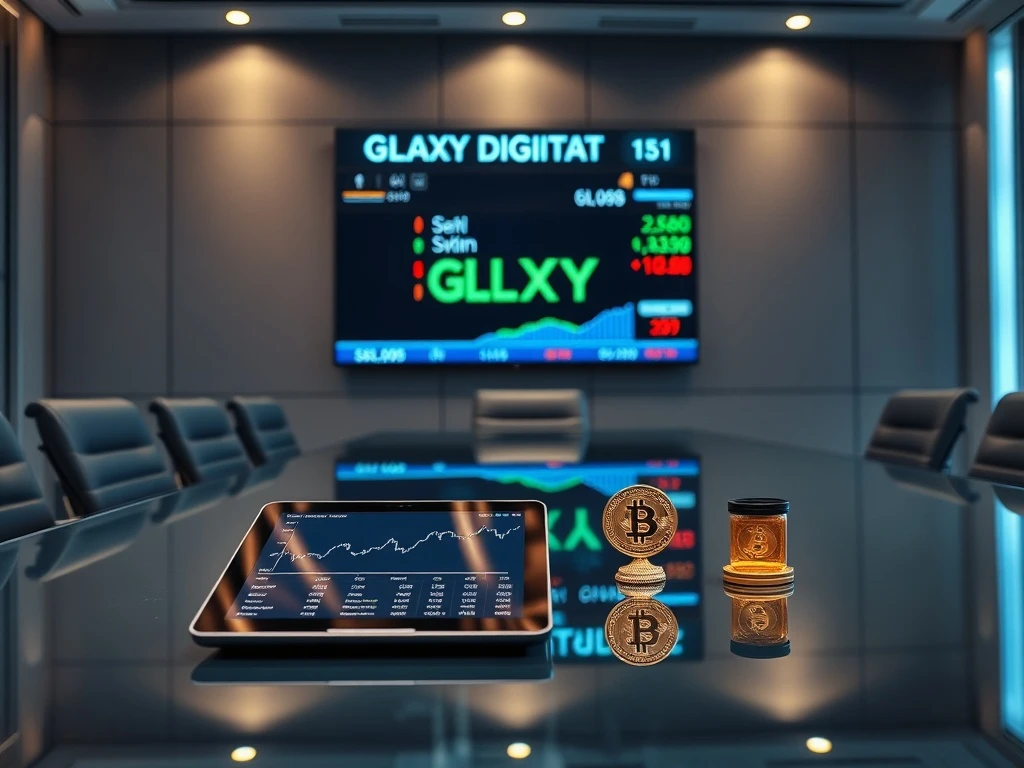
In a decisive move that counters prevailing market pessimism, Galaxy Digital Holdings Ltd. has authorized a substantial $200 million share repurchase program, directly challenging the recent steep declines in cryptocurrency-linked equities. Announced on March 14, 2026, this strategic initiative grants the financial services firm a 12-month window to buy back its Class A common stock, signaling management’s firm belief that the company’s shares are significantly undervalued. This development arrives just days after Galaxy reported substantial quarterly losses, creating a compelling narrative of corporate resilience during a sector-wide downturn.
Galaxy Digital’s $200 Million Buyback Program Details
Galaxy Digital’s board of directors formally approved the repurchase initiative, which permits the company to acquire up to $200 million worth of its Class A shares. According to the official corporate filing, the company may execute these purchases through multiple channels. These channels include open market transactions on the Nasdaq or Toronto Stock Exchange and privately negotiated deals. The program also allows for the use of pre-arranged Rule 10b5-1 trading plans, which help companies avoid insider trading allegations by scheduling buys in advance.
Also read: Circle Stock Plummets 10% Amid Analyst Downgrade and Drift Protocol Fallout
However, the authorization does not create a binding obligation. Galaxy management retains full discretion to suspend or terminate the program at any point based on market conditions, liquidity needs, or regulatory considerations. If the company conducts repurchases on the Toronto Stock Exchange, it must first obtain regulatory approval for a Normal Course Issuer Bid. For transactions on Nasdaq, the total number of shares bought cannot exceed 5% of the outstanding shares at the program’s commencement. Galaxy has not provided a specific timetable or disclosed the exact portion of the $200 million cap it intends to utilize.
Strategic Rationale Behind the Share Repurchase
Mike Novogratz, Galaxy’s Founder and Chief Executive Officer, framed the decision within a broader strategic context. He stated the company is “entering 2026 from a position of strength,” emphasizing the robustness of Galaxy’s balance sheet and its ongoing investment portfolio. This financial flexibility, according to Novogratz, allows the firm to return capital to shareholders when executives perceive a disconnect between the company’s intrinsic value and its market price. Share buybacks represent a direct method to achieve this, as reducing the number of outstanding shares can increase earnings per share and often signals executive confidence to the market.
Also read: XRP Price Prediction: Analyst's $1000 Target by 2030 Faces Scrutiny and Skepticism
The announcement follows Galaxy’s disclosure of a net loss of $482 million for the fourth quarter of 2025. For the entire 2025 fiscal year, the company recorded a net loss of $241 million. Management attributed these losses primarily to depressed digital asset prices and approximately $160 million in one-time, non-recurring costs. Despite this negative earnings report, the buyback news triggered a positive short-term market reaction. Shares of Galaxy (GLXY) surged approximately 17% in the 24 hours following the announcement, although they remained down roughly 25% for the month, according to data from Yahoo Finance.
Expert Analysis: Buybacks in Volatile Sectors
Financial analysts often interpret large-scale buyback programs during downturns as a strong signal. In volatile sectors like cryptocurrency, such actions can indicate that management views current headwinds as temporary rather than structural. By deploying capital to repurchase shares, Galaxy communicates its assessment that the market has overcorrected. This move also contrasts with raising capital through equity dilution, which would further pressure share prices. The decision reflects a calculated bet on both Galaxy’s specific business model and the long-term recovery of the digital asset ecosystem.
The Broader Crypto Stock Sell-Off: Market Context
Galaxy’s share price trajectory mirrors a severe and widespread correction across the entire cryptocurrency equity arena. This sell-off correlates directly with a sharp retreat in Bitcoin’s market value. After reaching highs above $97,000 in January 2026, Bitcoin’s price collapsed to a low near $60,300 by mid-March. This approximate 38% decline in the flagship cryptocurrency’s price dragged down companies with significant crypto exposure.
The contagion effect is evident across major industry players. A comparative analysis reveals the scale of the downturn:
- Coinbase Global Inc. (COIN): Shares fell approximately 36% over the past month.
- Circle Internet Group (CRCL): Declined about 34% monthly and nearly 65% over six months.
- MicroStrategy Inc. (MSTR): The corporate Bitcoin treasury leader, holding 713,502 BTC, dropped roughly 20% in a month and 68% over six months. The company reported a staggering $12.4 billion net loss in Q4 2025, largely due to Bitcoin impairment charges.
- Bitcoin Miners: Marathon Digital Holdings (MARA) fell 27% monthly, while Iris Energy (IREN) saw an 8% decline.
This synchronized decline underscores the high beta nature of crypto stocks—they tend to amplify the volatility of the underlying digital asset markets. Galaxy’s buyback, therefore, represents a contrarian stance against this powerful downward trend.
Corporate Profile: Galaxy Digital’s Diversified Operations
Understanding the buyback requires a look at Galaxy’s operational structure. The firm is not a monoline crypto business but a diversified financial services platform. Its operations span several key verticals within the digital asset ecosystem. These include global markets (trading and lending), asset management (including ETFs and funds), investment banking, mining and staking services, and proprietary trading. This diversification is a critical part of Novogratz’s “position of strength” argument, as revenue streams from fee-based services like asset management can provide stability during periods of low asset prices.
The company maintains dual listings on the Nasdaq (GLXY) and the Toronto Stock Exchange (GLXY), providing access to deep pools of North American capital. This structure allows it to execute the buyback across two major exchanges, maximizing flexibility. The firm’s ability to launch this program, despite recent losses, highlights its focus on maintaining a strong treasury and liquidity position, which it now deems better deployed in supporting its own equity than in other ventures.
Historical Precedent and Shareholder Value
Share repurchases are a common tool in traditional corporate finance, but their application in the nascent crypto industry is noteworthy. For shareholders, a buyback can be preferable to a dividend in certain tax jurisdictions and when management believes the stock is deeply discounted. By reducing the share count, each remaining share represents a larger ownership stake in the company’s future earnings and assets. The success of this strategy for Galaxy hinges on two factors: the accuracy of management’s valuation assessment and the future performance of the crypto markets that drive its core business revenues.
Potential Impacts and Market Implications
Galaxy’s bold move could have several ripple effects. Firstly, it may establish a benchmark for other crypto-native firms with strong balance sheets, potentially encouraging similar value-supporting actions. Secondly, it provides a tangible data point for investors gauging insider sentiment; executives are effectively investing company cash into their own stock. Finally, it could help stabilize Galaxy’s share price by creating consistent buy-side demand over the next year, acting as a floor during periods of extreme market selling.
The program also arrives amid other notable corporate actions in the crypto space. For instance, the Optimism Collective recently passed a governance proposal to initiate buybacks of its OP token from treasury funds. While structurally different—involving a decentralized autonomous organization and a token rather than a corporate share—the parallel theme of entities using treasury assets to support their core equity during downturns is striking. This may indicate a maturation in the sector’s approach to capital management.
Conclusion
Galaxy Digital’s authorization of a $200 million share buyback program represents a significant strategic gambit during a period of intense pressure on cryptocurrency-related equities. By choosing to deploy capital to repurchase its own shares, Galaxy’s leadership, led by Mike Novogratz, is sending a clear message of confidence in the company’s long-term value proposition and financial resilience. This move directly counters the narrative of weakness following its recent quarterly losses, reframing them as a byproduct of temporary market conditions rather than operational failure. As the broader crypto market seeks a bottom, Galaxy’s aggressive $200 million share buyback will be closely watched as a bellwether for corporate confidence and a potential catalyst for sector stability.
FAQs
Q1: What exactly did Galaxy Digital announce?
Galaxy Digital announced its board approved a program to repurchase up to $200 million worth of its Class A common shares over the next 12 months, starting March 2026.
Q2: Why is Galaxy buying back shares after reporting a loss?
Management, including CEO Mike Novogratz, believes the stock is undervalued by the market. The buyback is a way to return capital to shareholders and signal confidence in the company’s long-term strength, despite short-term market-driven losses.
Q3: How does this relate to the price of Bitcoin?
Crypto-linked stocks like Galaxy’s often trade in correlation with Bitcoin. Bitcoin’s sharp decline from ~$97,000 to ~$60,300 precipitated a sector-wide stock sell-off, making Galaxy’s buyback a contrarian move against that trend.
Q4: Will this buyback definitely happen?
No. The $200 million is an authorization, not an obligation. Galaxy can execute repurchases at its discretion, and the program may be suspended or discontinued based on market conditions and corporate needs.
Q5: Are other crypto companies doing buybacks?
Yes, there are parallel actions. For example, the Optimism Collective passed a proposal to buy back OP tokens. However, Galaxy’s program is a notable example from a major, publicly traded corporation in the space.

This article was produced with AI assistance and reviewed by our editorial team for accuracy and quality.