Federal Reserve Interest Rate Decision: Vital Stability as FOMC Holds Steady in 2025
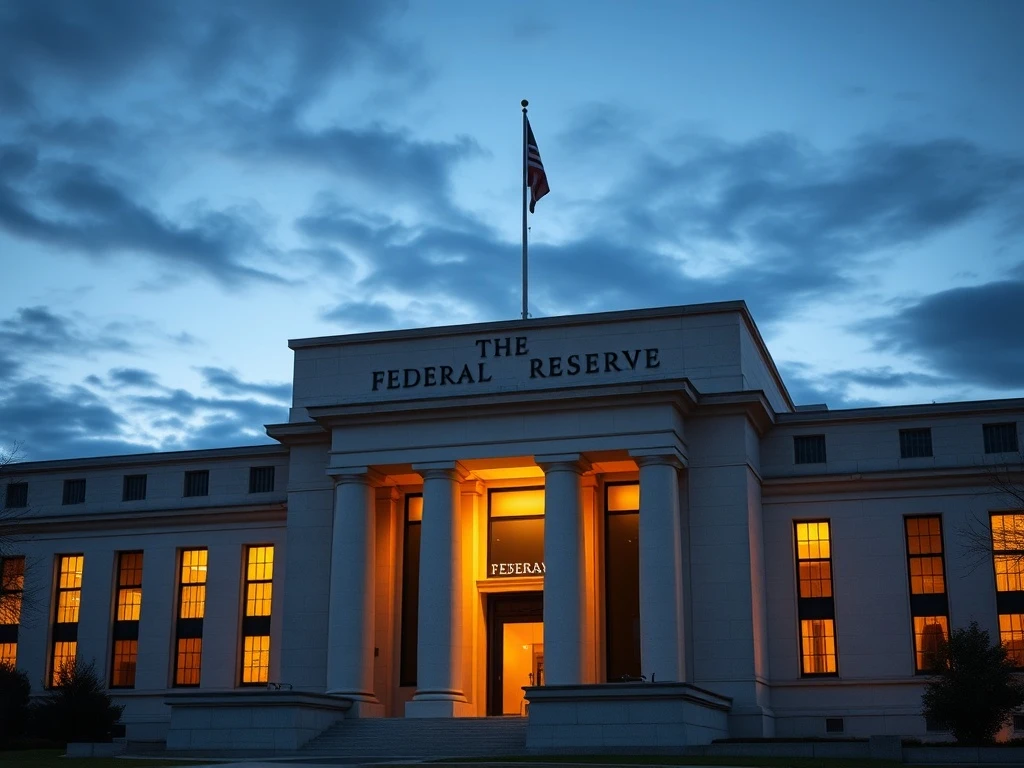
WASHINGTON, D.C. – March 19, 2025: The United States Federal Reserve delivered a decisive decision today that financial markets had widely anticipated. Consequently, the Federal Open Market Committee announced it would maintain its benchmark interest rate within the current 3.50% to 3.75% range. This significant stability follows months of careful economic monitoring and represents a significant moment in post-pandemic monetary policy normalization.
Federal Reserve Interest Rate Decision: Analyzing the Steady Course
The Federal Open Market Committee concluded its two-day policy meeting with a unanimous vote to maintain the federal funds rate. This benchmark interest rate serves as the foundation for borrowing costs throughout the American economy. Moreover, the decision marks the third consecutive meeting without rate adjustments. Financial analysts had overwhelmingly predicted this outcome, with futures markets pricing in a 94% probability of unchanged rates according to CME Group data.
Also read: Bitcoin Spot ETFs Shatter Positive Streak With $296 Million Outflow
Federal Reserve Chair Jerome Powell emphasized data dependency during the subsequent press conference. “Our decisions remain firmly guided by incoming economic indicators,” Powell stated. “Today’s action reflects our assessment that current policy remains appropriately restrictive.” The central bank continues balancing its dual mandate of maximum employment and price stability. Recent Consumer Price Index data showed inflation moderating to 2.8% annually, approaching the Fed’s 2% target.
Economic Context and Historical Perspective
Understanding today’s decision requires examining the remarkable monetary policy journey since 2020. The Federal Reserve implemented emergency rate cuts during the pandemic, bringing rates near zero. Subsequently, aggressive tightening began in 2022 to combat surging inflation. This hiking cycle represented the most rapid monetary policy tightening in four decades. The current pause suggests policymakers believe they have reached a sufficiently restrictive stance.
Also read: Bitcoin Strategy Divide: GameStop's 4,710 BTC Hold Contrasts With Nation's Massive Sell-Off
Several key economic indicators influenced this steady policy decision:
- Labor Market Resilience: Unemployment remains at 4.1%, near historic lows
- Inflation Progress: Core PCE inflation has declined from 5.6% to 3.2%
- GDP Growth: The economy expanded at 2.4% in Q4 2024
- Consumer Spending: Retail sales showed moderate but consistent growth
Federal Reserve officials reference the “Taylor Rule” framework when determining appropriate rate levels. This monetary policy guideline suggests rates should respond to deviations in inflation and output gaps. Currently, the actual federal funds rate aligns closely with Taylor Rule prescriptions, supporting the pause decision.
Expert Analysis and Market Implications
Financial markets responded positively to the anticipated announcement. Major stock indices showed modest gains following the release. Treasury yields remained relatively stable across the curve. “The Fed’s steady hand provides significant predictability for businesses and investors,” noted Dr. Sarah Chen, Chief Economist at the Peterson Institute. “This decision signals confidence in the current policy trajectory while maintaining optionality for future adjustments.”
The banking sector particularly benefits from interest rate stability. Regional banks face fewer immediate pressures on their net interest margins. Commercial real estate markets also receive breathing room as financing costs stabilize. Mortgage rates, which closely follow 10-year Treasury yields, may experience reduced volatility. Homebuyers could see more predictable borrowing costs in coming months.
International implications merit consideration as well. The steady US policy reduces pressure on emerging market currencies. Many central banks globally reference Federal Reserve actions when setting their own policies. The European Central Bank and Bank of England face similar balancing acts with their respective economies.
Monetary Policy Framework and Forward Guidance
The Federal Reserve’s statement included subtle but important language changes. References to “additional policy firming” were removed entirely. Instead, the committee noted it “does not expect it will be appropriate to reduce the target range until it has gained greater confidence that inflation is moving sustainably toward 2 percent.” This forward guidance provides markets with clearer expectations about future policy direction.
The Summary of Economic Projections revealed interesting insights about committee thinking:
| Indicator | 2025 Projection | 2026 Projection |
|---|---|---|
| GDP Growth | 2.1% | 2.0% |
| Unemployment Rate | 4.2% | 4.1% |
| PCE Inflation | 2.6% | 2.2% |
| Core PCE Inflation | 2.8% | 2.3% |
These projections suggest committee members anticipate continued gradual progress toward inflation targets. The median projection shows one rate cut potentially occurring later in 2025. However, individual committee members expressed diverse views in their “dot plot” submissions. This diversity reflects ongoing debates about appropriate policy timing.
Technical Implementation and Balance Sheet Policy
The Federal Reserve continues implementing monetary policy through its ample reserves framework. The interest rate on reserve balances remains the primary tool for controlling the federal funds rate. The overnight reverse repurchase agreement facility continues operating at reduced levels. Balance sheet runoff proceeds according to previously announced plans, with up to $95 billion in assets rolling off monthly.
Quantitative tightening gradually reduces the Federal Reserve’s securities holdings. This process removes liquidity from the financial system. The current pace appears sustainable given financial market conditions. Money market functioning remains smooth with appropriate liquidity levels. Repo markets operate normally without significant stress indicators.
Conclusion
The Federal Reserve interest rate decision represents a carefully calibrated pause in monetary policy normalization. This steady course reflects confidence in current policy settings while acknowledging ongoing inflation concerns. The Federal Open Market Committee maintains data-dependent flexibility for future adjustments. Financial markets receive vital stability from this predictable policy approach. Ultimately, today’s decision supports continued economic expansion while working toward sustained price stability.
FAQs
Q1: What is the federal funds rate and why does it matter?
The federal funds rate is the interest rate banks charge each other for overnight loans. It serves as the foundation for most other interest rates in the economy, influencing everything from mortgage rates to business loans and savings account yields.
Q2: How does the Federal Reserve decide when to change interest rates?
The Federal Open Market Committee evaluates numerous economic indicators including inflation data, employment figures, GDP growth, consumer spending, and global economic conditions. They aim to balance maximum employment with price stability.
Q3: What does “steady” interest rates mean for consumers?
Steady rates provide predictability for borrowers and savers. Mortgage rates may stabilize, credit card interest may not increase further, and savings account yields could maintain current levels. This stability supports financial planning.
Q4: How does this decision affect stock and bond markets?
Generally, steady rates reduce uncertainty, which markets typically welcome. Bond prices may stabilize as yield volatility decreases. Stocks often respond positively to predictable monetary policy, though sector impacts vary.
Q5: When might the Federal Reserve consider cutting interest rates?
The committee indicated it needs “greater confidence that inflation is moving sustainably toward 2 percent” before considering rate cuts. Most projections suggest potential cuts later in 2025 if inflation continues moderating as expected.
Q6: How does US monetary policy affect other countries?
Federal Reserve decisions influence global capital flows, currency exchange rates, and emerging market debt costs. Many central banks consider US policy when setting their own rates, creating international monetary policy linkages.

This article was produced with AI assistance and reviewed by our editorial team for accuracy and quality.