Critical Decision: Fed Weighs 2026 Rate Cuts Against Persistent Inflation
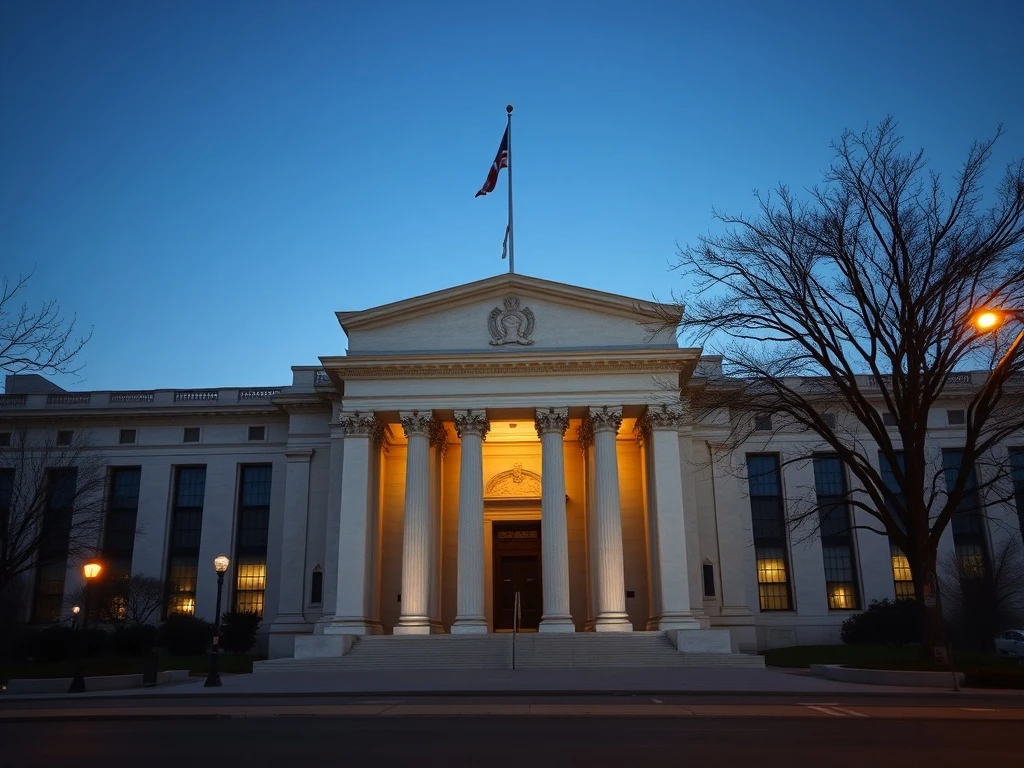
WASHINGTON, D.C. — March 15, 2026: The Federal Reserve stands at a critical monetary policy crossroads this spring, confronting a complex economic space that pits slowing growth against stubbornly persistent inflation. The Federal Open Market Committee (FOMC) faces mounting pressure to decide between initiating long-awaited interest rate cuts or holding its benchmark rate firm at the current 5.00–5.25% range. This central decision, expected at the April 29–30 meeting, will shape the trajectory of the U.S. economy, influence global markets, and define Chair Jerome Powell’s legacy. The core debate centers on whether recent disinflation progress justifies easing policy to support employment, or if premature action risks reigniting the price pressures that plagued the early 2020s.
The Fed’s 2026 Policy Dilemma: Data Divergence
Conflicting economic signals create the Fed’s current quandary. The Consumer Price Index (CPI) rose 2.8% year-over-year in February 2026, marking the third consecutive month above the Fed’s 2% target but down from the 3.5% peak in late 2025. Conversely, the unemployment rate ticked up to 4.1% in February, the highest reading since November 2023, while GDP growth slowed to an annualized 1.5% in Q4 2025. “We’re seeing classic late-cycle dynamics,” explains Dr. Claudia Stein, Chief Economist at the Brookings Institution. “The labor market is cooling, but service-sector inflation remains entrenched. The Fed must determine which signal carries more weight for medium-term stability.” This data divergence forces policymakers to choose between their dual mandate priorities: maximum employment and price stability.
Also read: American Bitcoin Holdings Surge to 7,000 BTC as Trump Family Doubles Down on Crypto Strategy
Historical context sharpens the dilemma. The current policy rate represents the most restrictive stance since 2007, following 11 hikes between March 2022 and July 2023. Markets have priced in at least two 25-basis-point cuts for 2026, creating significant anticipation. However, the Fed’s own December 2025 Summary of Economic Projections (SEP) showed committee members split, with the median projection suggesting three cuts but a substantial minority favoring fewer or none. The upcoming meeting will reveal whether recent data has shifted this balance.
Potential Impacts of a Policy Shift
The consequences of the Fed’s choice will ripple across every sector of the economy. A decision to cut rates would provide immediate relief to borrowers, while holding firm would maintain pressure on inflation but risk exacerbating economic slowdown. Financial markets have exhibited heightened volatility in recent weeks as traders attempt to handicap the outcome.
Also read: Binance Oil and Gas Futures Launch with 100x Utilize: A High-Stakes Gamble for Traders
- Consumer Finance: Mortgage rates, currently averaging 6.2% for a 30-year fixed loan, could drop below 6% with a cut, potentially revitalizing a stagnant housing market. Auto loans and credit card APRs would also decline, boosting discretionary spending.
- Business Investment: Corporate borrowing costs for expansion and equipment would fall, supporting capital expenditure. However, some analysts warn that premature easing could signal concern about deeper economic weakness, potentially dampening business confidence.
- Federal Debt: The U.S. government’s interest expense, which surpassed $1 trillion annually in 2025, would see modest relief with lower rates on new Treasury issuance, though the impact on the massive existing debt stock would be minimal.
Expert Perspectives on the Path Forward
Leading economists and former policymakers offer divergent views on the optimal path. Former Fed Vice Chair Lael Brainard, now a senior fellow at the Peterson Institute for International Economics, advocates for a cautious cut. “With inflation expectations well-anchored and real rates remaining restrictive due to falling inflation, the Fed has room to provide some insurance against a sharper downturn,” Brainard stated in a March 10 policy brief. In contrast, Harvard economist and former Treasury Secretary Lawrence Summers maintains a hawkish stance. “Core services inflation excluding housing—the Fed’s preferred supercore measure—remains at 4.1%,” Summers noted in a recent Financial Times op-ed. “Cutting before this demonstrably returns to target risks repeating the stop-go policies of the 1970s.”
The International Monetary Fund (IMF), in its January 2026 World Economic Outlook update, advised advanced economy central banks to “proceed cautiously” with normalization, warning that premature pivots could undermine hard-won credibility. This external pressure adds another layer to the Fed’s deliberative process.
Historical and Global Context for Rate Decisions
The current situation finds parallels in previous Fed tightening cycles, though unique modern factors complicate comparisons. The 1994–1995 cycle saw the Fed hold rates steady for a year after reaching a peak, successfully engineering a soft landing. The 2004–2006 cycle, however, involved a prolonged pause before cuts began in response to the emerging housing crisis.
| Policy Cycle | Final Rate | Pause Duration | Economic Outcome |
|---|---|---|---|
| 1994–1995 | 6.00% | 12 months | Soft Landing |
| 2004–2006 | 5.25% | 15 months | Recession (2007) |
| 2015–2018 | 2.50% | 9 months | Expansion (then pandemic) |
| 2022–2023 | 5.25% | 8 months and counting | TBD (2026) |
Globally, central banks face similar dilemmas but with different constraints. The European Central Bank (ECB) recently signaled potential cuts for March 2026, while the Bank of Japan continues its gradual normalization from negative rates. These divergent paths create exchange rate volatility that the Fed must consider, as a stronger dollar from relatively higher U.S. rates could hurt exports but further dampen import inflation.
The Forward-Looking Policy Framework
The Fed’s decision will hinge not on backward-looking data alone, but on its forecast for inflation and employment through 2026–2027. The March 2026 FOMC meeting minutes revealed heightened attention to inflation expectations measures, particularly the University of Michigan’s 5–10 year outlook, which remained stable at 2.9%. “If expectations remain anchored, the Fed has more flexibility,” notes Goldman Sachs chief economist Jan Hatzius. “But any sign of de-anchoring would force their hand toward holding.” Upcoming data releases, including the March employment report (April 4) and CPI reading (April 10), will provide critical inputs before the late-April decision.
Market and Political Reactions
Financial markets have exhibited nervous anticipation. The CME FedWatch Tool currently shows a 65% probability of at least a 25-basis-point cut in April, up from 40% a month ago. Treasury yields have fluctuated within a 20-basis-point range as positions adjust. Meanwhile, political pressure has intensified ahead of the November 2026 midterm elections. Congressional leaders from both parties have made public statements, with progressives urging relief for homeowners and small businesses, while fiscal hawks warn against reigniting inflation. The Fed maintains its operational independence, but Chair Powell’s communications will carefully address these crosscurrents.
Conclusion
The Federal Reserve’s impending decision represents the most consequential monetary policy choice of the decade. Between initiating Fed rate cuts to support a softening economy or holding firm to ensure inflation’s defeat, the committee must balance near-term growth risks against long-term price stability. The outcome will depend on the evolution of key data in coming weeks, particularly wage growth and service-sector inflation. Regardless of the direction, the Fed’s communication strategy will prove as important as the policy move itself, as markets and the public seek clarity on the path ahead. Investors, businesses, and consumers should prepare for potential volatility while recognizing that the Fed’s ultimate goal remains a sustainable expansion with stable prices—a destination that may require dealing with this difficult crossroads with deliberate care.
Frequently Asked Questions
Q1: When will the Federal Reserve announce its next interest rate decision?
The Federal Open Market Committee (FOMC) is scheduled to announce its next policy decision on Wednesday, April 30, 2026, at 2:00 PM Eastern Time, following its two-day meeting on April 29–30.
Q2: What are the main factors the Fed is considering regarding potential rate cuts?
The Fed is primarily weighing progress on inflation (particularly in services), labor market conditions, inflation expectations, and financial stability indicators. Recent data shows inflation above target but cooling, while unemployment has risen slightly to 4.1%.
Q3: How would a Fed rate cut affect mortgage rates and the housing market?
A rate cut would likely push 30-year fixed mortgage rates below their current 6.2% average, reducing monthly payments for new borrowers. This could stimulate home buying activity but might also increase prices in supply-constrained markets.
Q4: What is the difference between the Fed’s policy rate and the rates consumers pay?
The Fed sets the federal funds rate target, which influences but doesn’t directly determine consumer rates. Banks set mortgage, auto, and credit card rates based on this benchmark plus their costs, risks, and competitive factors.
Q5: How does the current situation compare to the Fed’s inflation fight in the 1980s?
While both periods involved high inflation, today’s situation differs significantly. The 1980s required extreme rates (over 19%) to break entrenched expectations, while current policy has been more measured, and inflation expectations remain better anchored.
Q6: What should investors watch in the weeks before the Fed’s decision?
Key indicators include the March jobs report (April 4), CPI inflation data (April 10), retail sales (April 15), and the Fed’s Beige Book (April 16). Also watch speeches by Fed officials for clues about their leanings.

This article was produced with AI assistance and reviewed by our editorial team for accuracy and quality.