Federal Reserve investigation sparks global crypto regulation shifts as markets face unusual challenges
January 2026 has brought seismic shifts across global financial markets, with a Federal Reserve investigation, cryptocurrency exchange withdrawals, and international regulatory actions creating unusual challenges for digital asset markets worldwide. These developments signal a critical inflection point for both traditional finance and emerging blockchain technologies.
Federal Reserve investigation raises constitutional questions
The United States Department of Justice has initiated a criminal investigation into Federal Reserve Chairman Jerome Powell, marking an extraordinary escalation in tensions between the executive branch and the nation’s central bank. This investigation centers on allegations of fund misallocation during Federal Reserve office building renovations, claims that Chairman Powell has vehemently denied as politically motivated.
Also read: AAVE Exchange Balances Surge to 2.23M, Signaling Intensifying Sell Pressure
Federal Reserve independence represents a cornerstone of modern monetary policy, established over decades to insulate economic decisions from short-term political pressures. The current investigation follows years of public tension between the Trump administration and the Federal Reserve regarding interest rate policies. Chairman Powell has maintained that the Federal Reserve sets rates based on economic assessments rather than presidential preferences.
Historical context of central bank independence
Central bank independence became institutionalized following the high inflation periods of the 1970s and 1980s. Research consistently demonstrates that independent central banks achieve better inflation control without sacrificing economic growth. The Federal Reserve Act of 1913 established the central bank’s operational independence, though the President appoints its leadership with Senate confirmation.
Also read: BYDFi Simplifies Crypto: How the Exchange Is Opening Trading to Everyone in 2026
Previous administrations have occasionally criticized Federal Reserve policies, but criminal investigations remain exceptional. Legal experts note that while the Department of Justice operates independently, the timing and nature of these allegations raise questions about separation of powers. The investigation’s outcome could establish important precedents for future executive-central bank relations.
Coinbase pauses Argentine operations amid market volatility
Major cryptocurrency exchange Coinbase has suspended Argentine peso services just one year after entering the South American market. This strategic pause allows the company to reassess product sustainability in Argentina’s challenging economic environment. Argentine users face restrictions on peso-based USDC transactions and local bank withdrawals through January’s end.
Argentina represents a complex market for cryptocurrency operations due to several structural factors:
- Currency volatility: The Argentine peso has experienced significant devaluation against major currencies
- Regulatory uncertainty: Frequent policy changes create operational challenges
- Banking integration: Limited infrastructure for fluid fiat-crypto conversions
- Economic instability: High inflation rates and capital controls complicate operations
Ana Gabriela Ojeda, a Latin American cryptocurrency industry analyst, explains that such operational pauses typically reflect local currency complexities rather than cryptocurrency skepticism. She emphasizes that structural financial system challenges in volatile markets often necessitate strategic reassessments by international exchanges.
NFT Paris cancellation signals broader market contraction
Organizers have cancelled NFT Paris, a major non-fungible token conference scheduled for February 2026, citing unsustainable market conditions. This decision follows drastic cost-cutting measures and months of operational adjustments. The cancellation reflects broader challenges facing the NFT sector after its 2022 market peak.
Current NFT market metrics demonstrate significant contraction:
| Metric | Value | Change from Peak |
|---|---|---|
| Total Market Capitalization | $3.1 billion | -92% from 2022 high |
| 24-Hour Trading Volume | $4.2 million | -97% from 2022 high |
| Active Collections | ~1,200 | -85% from 2022 high |
Market analysts attribute this decline to several factors including speculative excess correction, reduced retail participation, and shifting investor priorities toward yield-generating decentralized finance applications. The NFT Paris organizers have committed to full ticket refunds while evaluating future event viability.
Wyoming launches Frontier Stable Token on Solana blockchain
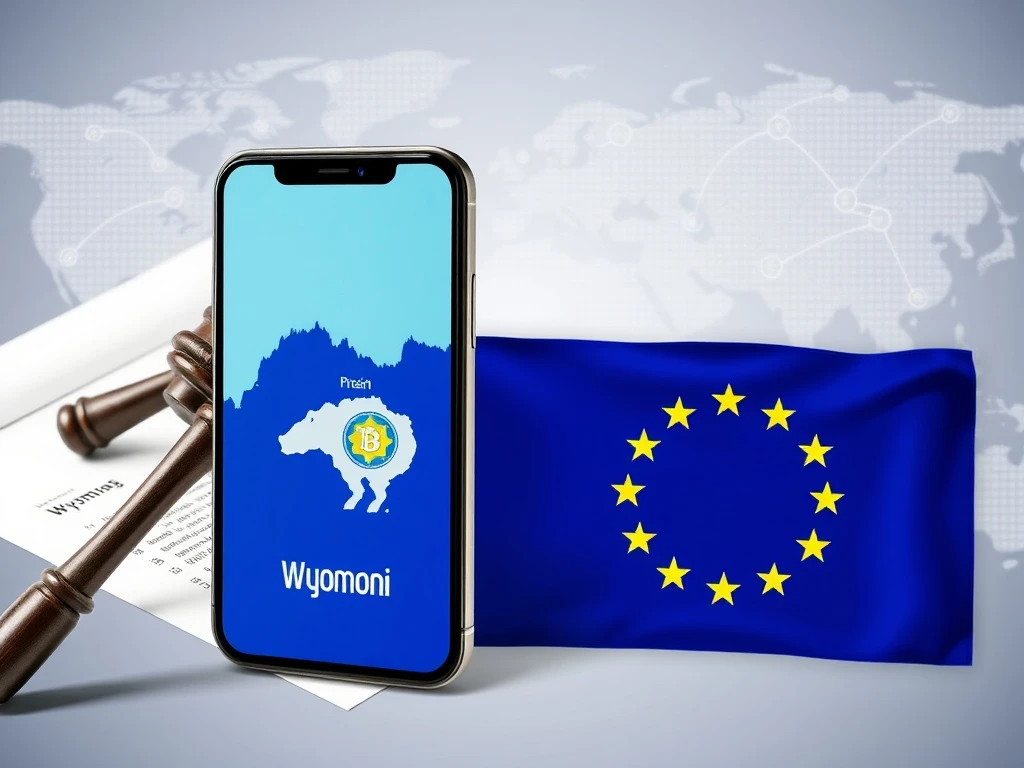
Wyoming has officially launched the Frontier Stable Token (FRNT), becoming the first U.S. state to issue a blockchain-based stablecoin available to the general public. This initiative represents Wyoming’s continued leadership in digital asset innovation, building upon its established regulatory framework for blockchain businesses.
The FRNT stablecoin offers several distinctive features:
- Full dollar backing: Each token maintains 1:1 U.S. dollar reserves
- Multi-chain availability: Initial launch on Solana with bridging to six additional networks
- Regulatory clarity: Operates within Wyoming’s established digital asset laws
- Exchange listing: Available for trading on Kraken cryptocurrency exchange
State officials frame FRNT as advancing financial innovation while providing transaction efficiency. Proponents highlight potential benefits including reduced transfer fees compared to traditional payment systems and enhanced financial inclusion. The Bank of North Dakota has announced similar “Roughrider” coin plans, suggesting growing state-level interest in digital currency initiatives.
Italian regulators issue stern warning to financial influencers
Italy’s Commissione Nazionale per le Società e la Borsa (CONSOB) has issued formal guidance clarifying legal responsibilities for financial influencers promoting investment products. This regulatory action follows European Securities and Markets Authority (ESMA) guidelines establishing that standard disclaimers cannot exempt influencers from legal obligations regarding financial promotions.
CONSOB emphasizes critical distinctions between product categories:
- Consumer products: Shoes, watches, and similar items
- Financial products: Cryptocurrencies, stocks, and investment instruments
The regulator specifically notes that promoting volatile assets like cryptocurrencies carries significant legal responsibilities, as investors can experience total capital loss. Italian authorities will monitor influencer content for compliance with existing financial promotion regulations, potentially pursuing enforcement actions against violators.
Moldova aligns cryptocurrency regulations with EU MiCA framework
Moldovan Finance Minister Andrian Gavrilita has announced plans to harmonize national cryptocurrency regulations with the European Union’s Markets in Crypto-Assets (MiCA) framework. This alignment represents a strategic decision to maintain regulatory compatibility with Moldova’s largest trading partner while addressing growing cryptocurrency adoption among citizens.
The Moldovan regulatory approach incorporates several key elements:
- Multi-agency collaboration: Finance Ministry, National Bank, and anti-money laundering authorities
- Payment restriction: Cryptocurrencies will not receive legal payment instrument status
- Consumer protection: Framework emphasizing investor awareness and risk disclosure
- EU alignment: Strategic compatibility with European regulatory standards
Minister Gavrilita characterizes cryptocurrency primarily as a speculative domain while acknowledging citizens’ rights to operate within regulated parameters. This balanced approach reflects Moldova’s cautious integration of digital assets within its financial ecosystem.
Conclusion
January 2026 has demonstrated interconnected developments across traditional finance and digital asset markets. The Federal Reserve investigation raises fundamental questions about central bank independence, while cryptocurrency markets face operational challenges in Argentina and structural contractions in NFT sectors. Wyoming’s stablecoin initiative illustrates state-level innovation, contrasting with tightening European influencer regulations and Moldova’s strategic EU alignment. These collective developments signal a maturation phase for digital asset markets amid evolving global regulatory landscapes. Market participants must work through increasing complexity while regulatory frameworks continue developing across jurisdictions.
FAQs
Q1: What specific allegations does the Federal Reserve investigation involve?
The Department of Justice alleges fund misallocation during Federal Reserve office building renovations. Chairman Powell denies these allegations, characterizing them as politically motivated responses to interest rate decisions.
Q2: Can Argentine users access any Coinbase services during the pause?
Argentine users maintain access to cryptocurrency-to-cryptocurrency trading services but cannot conduct transactions involving Argentine pesos. Peso-based services including deposits, withdrawals, and USDC conversions remain suspended.
Q3: What happens to purchased tickets for the cancelled NFT Paris event?
NFT Paris organizers have committed to full refunds for all purchased tickets. The organization continues evaluating whether to reschedule the event or pursue alternative formats in future years.
Q4: How does Wyoming ensure FRNT stablecoin value stability?
The Frontier Stable Token maintains full U.S. dollar backing through reserved assets. Wyoming’s regulatory framework requires transparent reserve reporting and regular audits to verify adequate backing for all issued tokens.
Q5: What legal consequences might financial influencers face under Italian regulations?
Influencers promoting financial products without proper compliance may face administrative sanctions, financial penalties, and potential civil liability for investor losses. CONSOB emphasizes that standard disclaimers cannot exempt promoters from legal responsibilities.

This article was produced with AI assistance and reviewed by our editorial team for accuracy and quality.