Federal Reserve Independence Under Siege: Global Central Banks Rally Behind Powell as Political Pressure Sparks Crypto Volatility
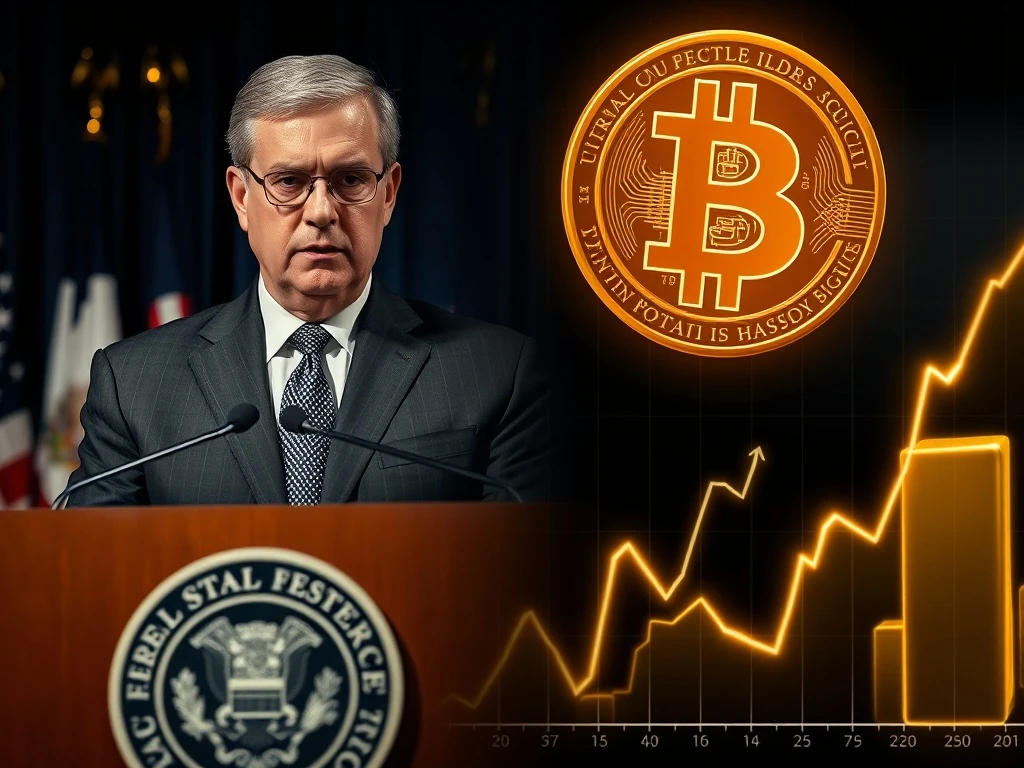
In a powerful display of institutional solidarity, central bank governors from eleven major economies have issued a joint statement defending the independence of the U.S. Federal Reserve and its Chair, Jerome Powell, against mounting political pressure—a move that financial analysts warn could inject significant volatility into global markets while potentially accelerating a long-term shift toward alternative assets like Bitcoin and gold. The historic statement, released on Tuesday, underscores a deepening rift between the Federal Reserve and the Trump administration, following the opening of a criminal investigation into Powell concerning a multi-billion dollar headquarters renovation.
Global Central Banks Unite to Defend Federal Reserve Independence
The coordinated statement represents a rare public intervention in the domestic affairs of another nation’s central bank. Signatories include the most influential monetary authorities in the world: European Central Bank President Christine Lagarde, Bank of England Governor Andrew Bailey, and Bank of Canada Governor Tiff Macklem. Furthermore, the leaders of the central banks of Sweden, Denmark, Switzerland, Norway, Australia, South Korea, and Brazil added their signatures. Senior officials from the Bank for International Settlements, often called the “central bank for central banks,” also endorsed the message. Consequently, this collective action highlights the perceived global stakes of the Fed’s operational autonomy.
Also read: Bitcoin Stalls Below $70K as Ethereum Consolidates: Why LILPEPE Captures Market Attention
Historically, central bank independence is a cornerstone of modern monetary policy. It allows institutions to make decisions based on economic data—like inflation and employment—free from short-term political cycles. This principle aims to ensure long-term price stability and encourage investor confidence. The joint statement explicitly warned that political pressure “risks undermining financial and economic stability worldwide,” signaling deep concern that the controversy could spill over into international markets. This development follows public criticism from Senator Elizabeth Warren, who accused former President Trump of improperly targeting Powell.
The Catalyst: A Criminal Investigation and Political Tensions
The immediate catalyst for this global response is a criminal investigation launched by U.S. authorities into Chair Powell regarding a $2.5 billion renovation project at the Federal Reserve’s headquarters. While details remain limited, the probe has intensified existing tensions. Simultaneously, the Trump administration has reportedly lined up several loyal allies as potential successors to Powell, many of whom have publicly advocated for more aggressive interest rate cuts. For instance, Kevin Hassett, a senior Trump adviser seen as a leading candidate, has attempted to distance himself from direct political influence, but the administration’s posture is clear.
Also read: Little Pepe (LILPEPE) Analysis: Can a New Meme Coin Challenge Dogecoin and Shiba Inu?
Moreover, the administration has already moved to increase its influence within the Fed’s board. Last year, Stephen Miran, a close Trump ally, secured an appointment to the Board of Governors. During his first policy meeting in December, Miran notably pushed for an immediate 0.5% interest rate cut, marking an early and clear signal of a more dovish, politically-aligned stance entering the central bank’s deliberations. This internal shift, combined with external pressure, creates a complex challenge for the Fed’s traditional policymaking framework.
Market Implications: Volatility and a Flight to Alternative Assets
Financial markets typically react negatively to perceptions of eroded central bank independence. According to analysts, the current situation sends mixed but potent signals to digital asset and traditional markets. Farzam Ehsani, CEO of cryptocurrency exchange VALR, explained the dual-edged impact in a note to Crypto News Insights. “Central bank independence is traditionally considered a pillar of macroeconomic stability,” Ehsani stated. “Any attempt at political influence directly affects investor confidence in the dollar and conventional policy.”
Ehsani further elaborated on the specific implications for cryptocurrencies: “For crypto, weaker confidence in dollar policy can drive sustained interest in decentralized assets like Bitcoin, which are designed to be free from central control. However, sudden political shocks also increase near-term volatility and can trigger short-term outflows from all risk assets, including crypto.” This analysis suggests a turbulent path where short-term sell-offs could coincide with stronger long-term fundamental narratives for decentralized finance.
Observers are already noting shifts in traditional safe-haven flows. Ray Youssef, CEO of the crypto app NoOnes, pointed to recent market movements: “We’ve seen the dollar weaken while gold and silver have risen, indicating investors are rotating into perceived safe havens.” Youssef added a nuanced view on monetary policy, stating, “A potential politically-motivated rate cut could increase system liquidity and theoretically support crypto prices. But for now, the market remains fragile, with Bitcoin often seeing selling pressure during U.S. trading hours despite clear longer-term institutional interest.” This pattern underscores the market’s cautious and reactive stance.
| Scenario | Short-Term Impact | Long-Term Impact |
|---|---|---|
| Intensified Pressure | High volatility in USD, equities, and crypto; possible risk-off outflow. | Erosion of trust in fiat systems; stronger narrative for Bitcoin as “digital gold.” |
| Fed Resists & Holds Independence | Market stabilization; reaffirmation of traditional monetary policy credibility. | Status quo maintained; slower adoption of crypto as a monetary hedge. |
| Political Appointees Force Dovish Shift | Initial market rally on liquidity hopes; currency depreciation. | Higher inflation expectations; increased attractiveness of hard-capped assets like Bitcoin. |
Expert Analysis on Crypto and Macro Stability
The connection between central bank credibility and cryptocurrency valuation is becoming a critical area of study. When faith in traditional monetary stewards wanes, the value proposition of assets with predetermined, algorithmic monetary policies strengthens. This is not merely speculation; data shows correlations between central bank balance sheet expansion and Bitcoin’s price appreciation over multi-year cycles. The current crisis of confidence, therefore, provides a real-time test of this hypothesis. Additionally, investment firms like VanEck have suggested that clearer policy frameworks could eventually make quarters more “risk-on,” but the present ambiguity has the opposite effect.
Beyond cryptocurrencies, the situation reaffirms the role of precious metals. Gold’s recent price strength amid dollar weakness is a classic response to uncertainty. Analysts now watch to see if Bitcoin begins to correlate more closely with gold in such environments—a sign it is being treated as a true macro hedge rather than a purely speculative tech asset. The simultaneous interest in both assets suggests a broad-based search for sovereignty outside the traditional banking system.
Historical Context and the Path Forward
Attacks on central bank independence are not without precedent, but a global defense of another central bank is extraordinary. Past episodes, like attempts to influence the Bank of England or the European Central Bank, have typically been met with internal resistance and market punishment. The global nature of this response reflects the dollar’s unique role as the world’s reserve currency. Instability at the Fed creates ripple effects for every nation that holds dollar reserves or trades in global markets priced in USD.
The coming months will be vital. Key factors to watch include:
- The progression of the criminal investigation into Chair Powell and its political usage.
- FOMC meeting minutes and votes, watching for dissent from Trump-appointed governors.
- Market metrics like the DXY (U.S. Dollar Index), gold prices, and Bitcoin’s volatility index.
- Institutional flow data into Bitcoin ETFs and gold-backed funds.
Ultimately, the standoff presents a fundamental question about the future of money and trust. As digital asset proponents argue, the very need for this defense highlights a systemic vulnerability that decentralized networks are built to address.
Conclusion
The global rally behind Federal Reserve Chair Jerome Powell marks a central moment for international finance, emphasizing the fragile trust underpinning the global monetary system. While political pressure creates immediate headwinds and volatility for all financial markets, including cryptocurrencies, it also reinforces the long-term investment thesis for decentralized assets like Bitcoin. As central banks themselves warn of worldwide stability risks, investors are increasingly scrutinizing both traditional safe havens and digital alternatives. The outcome of this struggle for Federal Reserve independence will likely shape capital flows, monetary policy credibility, and the adoption trajectory of cryptocurrency for years to come.
FAQs
Q1: Why are global central banks defending the U.S. Federal Reserve?
They are defending the principle of central bank independence, which is considered essential for global economic and financial stability. Since the U.S. dollar is the world’s primary reserve currency, political interference at the Fed creates uncertainty that impacts all interconnected economies.
Q2: How does political pressure on the Fed affect Bitcoin?
It creates a dual effect. In the short term, it can cause high volatility and risk-off selling across all speculative assets, including crypto. In the long term, it can weaken confidence in traditional fiat money managed by central banks, strengthening the narrative for Bitcoin as a decentralized, politically-neutral alternative store of value.
Q3: What is the criminal investigation against Jerome Powell about?
U.S. authorities have opened an investigation related to a $2.5 billion renovation project at the Federal Reserve’s headquarters. Specific allegations have not been fully detailed publicly, but the probe has become a focal point for political tensions between the Fed and the executive branch.
Q4: Are gold and Bitcoin reacting similarly to this news?
Currently, both are seeing increased interest as potential hedges against monetary instability. Gold has shown a clearer, immediate price rise. Bitcoin’s reaction is more complex due to its volatility and dual nature as both a risk-on tech asset and a potential “digital gold.” Long-term, many analysts believe they could become more correlated in such crises.
Q5: What happens if the Fed loses its independence?
If the Fed is perceived as bending to political pressure, particularly to cut rates aggressively outside of economic data, it could lead to a loss of credibility, higher long-term inflation expectations, a weaker U.S. dollar, and increased market volatility. This environment could accelerate the search for alternative financial systems and assets.

This article was produced with AI assistance and reviewed by our editorial team for accuracy and quality.