Ethernet Magnetic Transformer Market: Critical Analysis of Steady Growth and Technical Evolution Through 2026
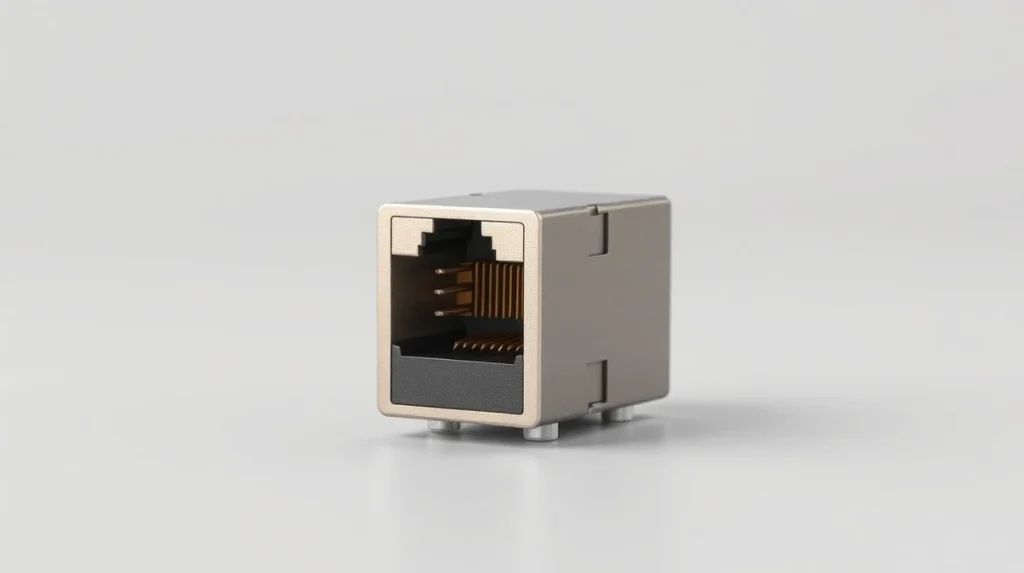
As global network infrastructure expands, the Ethernet magnetic transformer market continues its steady growth trajectory through 2026, driven by increasing demand for reliable data transmission and Power over Ethernet (PoE) adoption. These essential components, often overlooked in network discussions, provide critical signal isolation and impedance matching in virtually every Ethernet-connected device. According to industry analysis, the market demonstrates consistent expansion despite broader economic fluctuations, reflecting the fundamental role these components play in modern connectivity.
Ethernet Magnetic Transformer Market Fundamentals and Current Environment
The Ethernet magnetic transformer serves as a fundamental interface between the physical layer transceiver and the network cable. This component provides three essential functions: electrical isolation to protect equipment from voltage surges, common-mode noise rejection to improve signal integrity, and impedance matching between the cable and transceiver circuitry. Market analysis indicates sustained demand across multiple sectors including enterprise networking, industrial automation, telecommunications infrastructure, and consumer electronics.
Also read: M Series ANC Token Presale Launches with Detailed Vesting
Current market dynamics reveal several key trends. First, the proliferation of Internet of Things (IoT) devices continues to drive volume demand for compact, cost-effective transformer solutions. Second, the transition to higher-speed Ethernet standards, particularly 2.5GBASE-T and 5GBASE-T for enterprise applications, requires transformers with enhanced high-frequency performance. Third, industrial applications demand components with extended temperature ranges and enhanced reliability specifications.
Technical Specifications and Performance Requirements
Modern Ethernet magnetic transformers must meet increasingly stringent technical requirements. For standard 10/100/1000BASE-T applications, transformers typically provide 1500Vrms isolation voltage and must maintain proper impedance matching across the entire Ethernet frequency spectrum. Higher-speed applications demand enhanced performance in several areas:
Also read: Pepeto Presale Attracts Investor Interest Amid Meme Coin Rally
- Insertion loss: Must remain below specified limits across the operating frequency range
- Return loss: Critical for maintaining signal integrity at multi-gigabit speeds
- Common-mode rejection: Essential for reducing electromagnetic interference
- Isolation capacitance: Lower values improve high-frequency performance
Additionally, Power over Ethernet (PoE) applications introduce further complexity. Transformers must handle both data signals and DC power transmission simultaneously, requiring careful design to prevent saturation from the DC bias current. The latest PoE standards, including IEEE 802.3bt (Type 4) delivering up to 90W, place additional demands on transformer design and materials selection.
Market Growth Drivers Through 2026
Several factors contribute to the steady growth projected for the Ethernet magnetic transformer market through 2026. Enterprise network upgrades represent a significant driver, particularly as organizations transition to Wi-Fi 6E and Wi-Fi 7 access points that require multi-gigabit Ethernet backhaul. Similarly, the expansion of fiber-to-the-premises (FTTP) deployments increases demand for network interface devices containing Ethernet transformers.
Industrial automation represents another growth area. The Industrial Internet of Things (IIoT) and Industry 4.0 initiatives require resilient network connectivity in challenging environments. Consequently, industrial-grade Ethernet transformers with extended temperature ranges (-40°C to +85°C or wider) and enhanced reliability specifications continue to see increased adoption.
Telecommunications infrastructure development, particularly 5G network deployment, creates additional demand. Small cell installations and distributed antenna systems frequently utilize Ethernet for fronthaul and backhaul connections, requiring transformers that can operate reliably in outdoor environments with minimal maintenance.
Supply Chain Considerations and Strategic Sourcing
Network equipment manufacturers face ongoing challenges in transformer sourcing and supply chain management. The global semiconductor shortage that began in 2020 highlighted vulnerabilities in component supply chains, prompting many manufacturers to reassess their sourcing strategies. Current approaches emphasize several key elements:
| Strategy Element | Implementation |
|---|---|
| Dual/Multi-Sourcing | Qualifying multiple suppliers for critical components |
| Inventory Management | Maintaining strategic buffer stocks for key items |
| Supplier Relationships | Developing closer technical collaboration with key suppliers |
| Design Flexibility | Creating designs that can accommodate multiple transformer footprints |
Additionally, environmental regulations continue to influence transformer design and manufacturing. Restrictions on hazardous substances, particularly in European markets, require careful materials selection. Similarly, energy efficiency requirements for network equipment create demand for transformers with lower core losses, particularly in always-on devices like switches and routers.
Regional Market Variations and Manufacturing Trends
The Ethernet magnetic transformer market exhibits distinct regional characteristics. Asia-Pacific dominates production, with China, Taiwan, and South Korea serving as major manufacturing centers. However, quality concerns and geopolitical considerations have prompted some network equipment manufacturers to diversify their supply chains, increasing procurement from Southeast Asian and Eastern European suppliers.
North American and European markets demonstrate different dynamics. While these regions contain relatively little transformer manufacturing capacity, they host numerous network equipment design centers and headquarters. Consequently, technical specifications and quality requirements often originate in these markets, even when manufacturing occurs elsewhere.
Manufacturing technology continues to evolve, with several notable trends. Automated production lines increasingly handle winding and assembly processes, improving consistency and reducing labor costs. Advanced testing equipment provides more comprehensive performance verification, particularly for high-speed applications. Additionally, materials science advancements have yielded improved ferrite cores with lower losses and better high-frequency characteristics.
Competitive Arena and Innovation Directions
The competitive environment features both large, diversified component manufacturers and specialized transformer producers. Larger companies typically offer broad product portfolios covering multiple connector types and performance grades, while smaller specialists often focus on particular market segments or custom solutions. Innovation continues across several fronts:
- Miniaturization: Developing smaller transformers for space-constrained applications
- Integration: Combining transformers with other components like RJ45 connectors
- Performance enhancement: Improving high-frequency characteristics for multi-gigabit applications
- Cost reduction: Optimizing designs and manufacturing processes for high-volume applications
Research and development efforts also address emerging requirements. The increasing adoption of single-pair Ethernet (SPE) for industrial and automotive applications requires new transformer designs optimized for different impedance characteristics and power delivery capabilities. Similarly, developments in silicon photonics and optical Ethernet interfaces may influence future transformer requirements, though magnetic components will likely remain essential for copper-based Ethernet implementations.
Conclusion
The Ethernet magnetic transformer market maintains steady growth through 2026, supported by fundamental trends in network infrastructure development and digital transformation. While these components represent a mature technology, ongoing evolution in Ethernet standards, application requirements, and manufacturing processes ensures continued innovation and market development. Network equipment manufacturers must balance technical requirements, supply chain considerations, and cost factors when sourcing these essential components. As connectivity becomes increasingly pervasive across all sectors of the economy, the reliable performance of Ethernet magnetic transformers remains vital to network functionality and data integrity.
FAQs
Q1: What primary function does an Ethernet magnetic transformer serve?
An Ethernet magnetic transformer provides electrical isolation between network equipment and cables, prevents common-mode noise interference, and matches impedance between the cable and transceiver circuitry.
Q2: How does Power over Ethernet (PoE) affect transformer design?
PoE requires transformers to handle both data signals and DC power simultaneously, necessitating designs that prevent magnetic saturation from the DC bias current while maintaining proper signal integrity.
Q3: What market factors are driving Ethernet transformer demand through 2026?
Key drivers include enterprise network upgrades to multi-gigabit speeds, expansion of IoT and industrial automation networks, telecommunications infrastructure development, and increasing PoE adoption across multiple sectors.
Q4: How have supply chain issues affected transformer sourcing?
The global semiconductor shortage highlighted supply chain vulnerabilities, prompting manufacturers to implement strategies including dual-sourcing, increased inventory buffers, closer supplier relationships, and more flexible designs.
Q5: What technical trends are influencing Ethernet transformer development?
Major trends include miniaturization for space-constrained applications, performance enhancement for multi-gigabit Ethernet, integration with other components, and adaptation to emerging standards like single-pair Ethernet.

This article was produced with AI assistance and reviewed by our editorial team for accuracy and quality.