Ethereum Network Fees Plunge to Historic Lows, Unlocking New Potential for Users
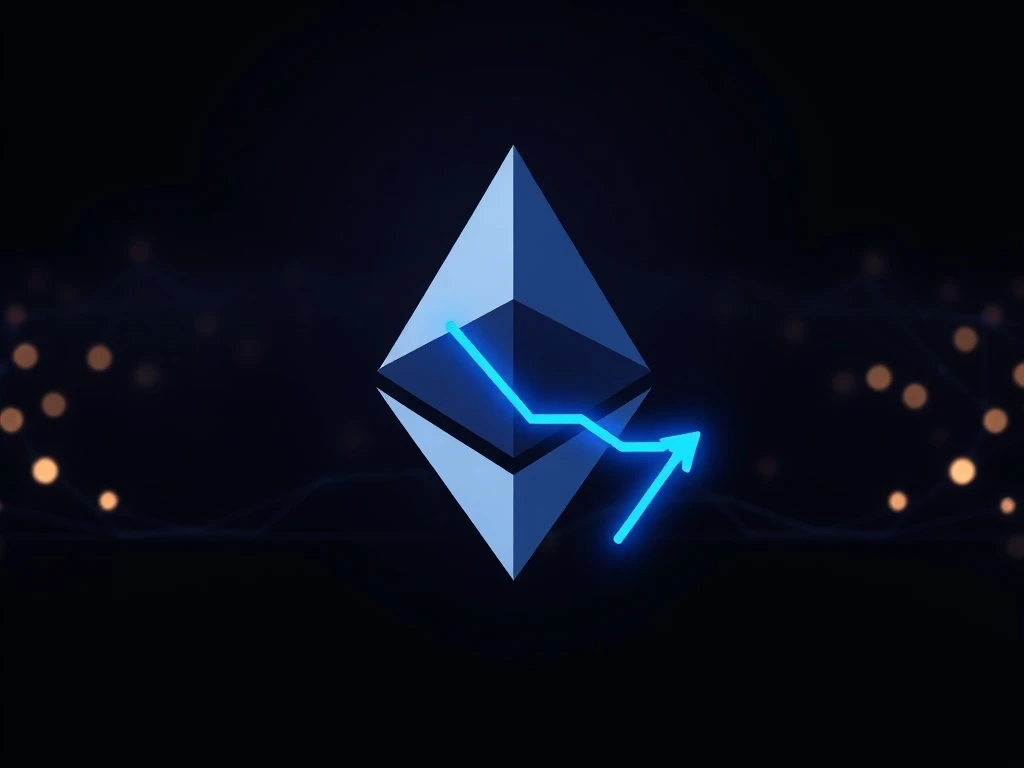
In a significant shift for the world’s leading smart contract platform, Ethereum network fees have plummeted to levels not witnessed since May 2017. According to on-chain analytics firm Glassnode, this dramatic reduction in transaction costs, commonly called gas fees, marks a pivotal moment for Ethereum’s usability and accessibility. This development, observed globally in early 2025, follows years of scalability challenges and high costs that often priced out everyday users. Consequently, the ecosystem now enters a new phase of potential growth and innovation.
Ethereum Network Fees Reach a Seven-Year Low
Glassnode’s latest data reveals that the average cost to execute a standard transaction on the Ethereum mainnet has fallen below 5 Gwei. For context, this fee level translates to just a few cents per transaction. This is a stark contrast to the peak periods of 2021 and 2022, where fees regularly exceeded 100 Gwei during popular NFT mints or DeFi activity surges. The metric, tracked meticulously by blockchain analysts, serves as a critical health indicator for network congestion and user cost burden. Therefore, this sustained low provides a tangible data point showing improved network conditions.
Also read: Bitcoin Strategy Divide: GameStop's 4,710 BTC Hold Contrasts With Nation's Massive Sell-Off
Several interconnected factors have driven this decline in Ethereum network fees. First, the successful implementation of proto-danksharding with EIP-4844 has significantly increased data availability for Layer 2 rollups. Second, a broader market trend of reduced speculative trading and on-chain activity has decreased competition for block space. Third, the maturation and mass migration of users to Layer 2 scaling solutions like Arbitrum, Optimism, and Base have diverted volume away from the mainnet. Finally, continued optimizations in client software and MEV-Boost relay infrastructure have made block production more efficient.
A Timeline of Ethereum’s Fee Evolution
Understanding the gravity of this low requires historical context. In May 2017, Ethereum was a nascent platform before the initial coin offering (ICO) boom. Fees were minimal as usage was limited. The subsequent years saw exponential growth:
Also read: Bitcoin Volatility Dips Below Major Stocks as European Nation Sells Billions in Crypto Reserves
- 2017-2020: Gradual fee increases correlated with DeFi’s “Summer” and the rise of ERC-20 tokens.
- 2021-2022: Periods of extreme fee volatility, with peaks during NFT mania and complex DeFi transactions, sometimes costing hundreds of dollars.
- September 2022: The Merge transitioned Ethereum to Proof-of-Stake, setting the stage for future scalability but not immediately reducing fees.
- 2023-2024: Incremental upgrades and the accelerating adoption of Layer 2 networks began to relieve mainnet pressure.
- Early 2025: The confluence of these factors results in fees returning to their 2017 baseline.
The Direct Impact on Users and Developers
For the average Ethereum user, low network fees fundamentally change the experience. Interacting with decentralized applications (dApps), swapping tokens on a decentralized exchange (DEX), or minting an NFT becomes economically feasible again without relying solely on Layer 2s. This reduction lowers the barrier to entry, potentially attracting a new wave of users who were previously deterred by high costs. Moreover, developers can prototype and deploy contracts more frequently without prohibitive gas expenses, fostering a more innovative and experimental environment.
From a macroeconomic perspective, analysts note that sustainably low fees could alter the value proposition of competing blockchains that marketed themselves primarily as low-cost alternatives. However, experts like those at Glassnode caution that fee markets are cyclical. A resurgence in a major on-chain trend, such as a new viral dApp or asset class, could increase demand for block space and push fees higher again. The true test will be Ethereum’s resilience during the next wave of high demand.
The Role of Layer 2 Scaling Solutions
The growth of Layer 2 rollups is arguably the most significant contributor to lower mainnet fees. These solutions, including Optimistic and Zero-Knowledge (ZK) rollups, batch thousands of transactions off-chain before submitting a single proof to Ethereum. This process dramatically reduces the data load on the mainnet. The following table illustrates the fee difference for a standard token swap:
| Network | Approx. Fee (Early 2025) | Transaction Speed |
|---|---|---|
| Ethereum Mainnet | $0.10 – $0.50 | ~15 seconds |
| Arbitrum One (L2) | $0.01 – $0.05 | ~1 second |
| Optimism (L2) | $0.01 – $0.05 | ~1 second |
| zkSync Era (L2) | <$0.01 | ~1 second |
As shown, while mainnet fees are now low, Layer 2s still offer superior cost efficiency for high-frequency users. This creates a healthy, multi-layered ecosystem where the mainnet acts as a secure settlement layer, and L2s handle the volume. The success of this model is a primary reason for the current low fee environment on the base layer.
Broader Implications for the Blockchain Industry
This milestone in Ethereum network fees carries weight beyond its own ecosystem. It demonstrates that persistent scalability research and community-driven upgrades can yield tangible results. Other smart contract platforms will likely observe Ethereum’s trajectory as a case study in managing growth and technical debt. Furthermore, institutional entities evaluating blockchain for enterprise use have consistently cited high and unpredictable transaction costs as a major adoption hurdle. A period of stable, low fees could make Ethereum a more compelling candidate for pilot projects and real-world asset (RWA) tokenization.
Regulatory bodies monitoring the space may also interpret low fees as a sign of maturing technology. However, network security remains paramount. Ethereum’s security budget, funded largely by transaction fees and ETH issuance, must remain sufficient to deter attacks. Analysts are closely watching whether the reduction in fee revenue is offset by other factors, such as the overall growth in the total value secured or the efficiency of Proof-of-Stake.
Conclusion
The decline of Ethereum network fees to their lowest point since May 2017 represents a critical inflection point. Driven by successful scalability upgrades, especially EIP-4844, and the mass migration of activity to Layer 2 solutions, this change enhances the network’s usability and accessibility. While the cyclical nature of blockchain demand means fees may fluctuate again, the underlying architectural improvements provide a stronger foundation for sustainable growth. For users, developers, and the entire Web3 landscape, low Ethereum network fees unlock new potential for innovation and adoption, reaffirming the network’s central role in the decentralized future.
FAQs
Q1: What does “Ethereum network fees hit lowest level since May 2017” actually mean?
It means the cost (in Gwei) required to process a transaction or execute a smart contract on the Ethereum blockchain has fallen to a point last seen over seven years ago, making interactions significantly cheaper for users.
Q2: Why are Ethereum gas fees so low right now?
Primary reasons include reduced on-chain speculative activity, the successful implementation of the EIP-4844 upgrade which helps Layer 2s, and a massive shift of user transactions to Layer 2 scaling solutions like Arbitrum and Optimism.
Q3: Will Ethereum fees stay low forever?
Unlikely. Fee markets are dynamic. A sudden surge in demand for block space from a new popular dApp or market event could increase fees. However, the long-term trend is toward greater scalability and efficiency.
Q4: Do low fees make Layer 2 solutions obsolete?
No. Layer 2 networks still offer fees that are often 10-100 times lower than the mainnet, along with faster transaction speeds. They remain essential for high-volume applications and are a core part of Ethereum’s scaling roadmap.
Q5: How do low fees impact Ethereum’s security?
Security is funded by fees and ETH issuance. Prolonged ultra-low fee revenue requires monitoring, but the shift to Proof-of-Stake is more energy-efficient, and the value of staked ETH (over $100 billion) currently provides a very high security budget.

This article was produced with AI assistance and reviewed by our editorial team for accuracy and quality.