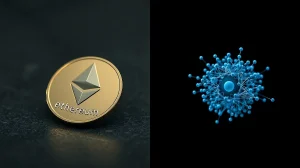
Ethereum ERC-8004 Unleashes AI Agent Revolution: ETH Holds Steady Amid Major Protocol Upgrade

Ethereum developers have frozen development on the innovative ERC-8004 standard, setting the stage for a midweek mainnet deployment that could fundamentally transform how artificial intelligence agents interact on the world’s second-largest blockchain network. According to official communications from the Ethereum Foundation and key development teams, the protocol upgrade will go live around Thursday at 9 AM ET, January 29, 2026, potentially creating what project leaders describe as “a global market where AI services can interoperate without gatekeepers.” This Ethereum ERC-8004 implementation arrives as ETH demonstrates remarkable price stability, trading near $3,025 with aggregated open interest climbing to approximately $17.05 billion, signaling cautious optimism among institutional and retail traders alike.
Understanding Ethereum’s ERC-8004 Standard
The Ethereum ERC-8004 standard represents a significant evolution in blockchain infrastructure specifically designed for artificial intelligence applications. Unlike previous Ethereum upgrades that required core network changes, this new standard operates at the smart contract layer, providing developers with a standardized framework for registering and validating AI agents directly on-chain. The protocol addresses critical gaps in existing AI communication frameworks by enabling discovery mechanisms and reliability verification that current systems like MCP and Agent2Agent lack. Importantly, this upgrade maintains backward compatibility while introducing new functionality that could accelerate AI integration across decentralized applications.
Also read: Ethereum's $2,500 Challenge: Market Data and the Rise of Pepeto
Marco De Rossi, head of AI at MetaMask, confirmed that development on the standard has been frozen, indicating that the technical specifications are complete and ready for implementation. The timing aligns with Ethereum’s official communications, which have emphasized the protocol’s imminent launch throughout January 2026. Industry analysts note that this strategic positioning allows Ethereum to establish itself as the foundational settlement layer for what many predict will become a multi-trillion dollar AI agent economy. The standard’s design specifically enables AI agents to discover each other, verify capabilities, and establish trust relationships without centralized intermediaries.
Technical Architecture and Implementation Details
ERC-8004 introduces several innovative technical components that distinguish it from previous smart contract standards. The protocol establishes a registry system where AI agents can publish their capabilities, performance metrics, and verification credentials. Each registered agent receives a unique on-chain identifier that other agents and smart contracts can reference during interactions. The standard also implements reputation scoring mechanisms that track agent performance over time, creating transparent reliability metrics that participants can evaluate before engaging in transactions or delegating tasks.
Also read: Crypto Listing Scams: Binance CEO Changpeng Zhao Issues Critical Warning to Investors
Implementation requires no changes to Ethereum’s consensus mechanism or gas fee structure, making adoption relatively straightforward for existing developers. The standard leverages existing Ethereum Virtual Machine capabilities while introducing new smart contract templates that developers can customize for specific AI applications. Early documentation suggests the protocol will support various AI agent types, including autonomous trading bots, content generation systems, data analysis tools, and complex decision-making algorithms. This flexibility positions Ethereum to capture diverse segments of the rapidly expanding AI market.
Comparative Analysis with Existing Frameworks
| Framework | Primary Function | Discovery Mechanism | Trust Verification |
|---|---|---|---|
| ERC-8004 | AI Agent Registration & Validation | On-chain Registry | Performance-based Reputation |
| MCP (Model Context Protocol) | AI Communication | Limited/Off-chain | Basic Authentication |
| Agent2Agent | Task Coordination | Manual Configuration | Pre-established Trust |
The table above illustrates how ERC-8004 addresses specific limitations in current AI interaction frameworks. While MCP facilitates communication between AI models and Agent2Agent coordinates task execution, neither provides reliable mechanisms for discovering new agents or verifying their reliability in decentralized environments. ERC-8004 fills these critical gaps by establishing standardized on-chain processes that enable autonomous agent discovery and trust establishment. This architectural approach could significantly reduce integration barriers for AI developers entering the blockchain space.
Market Impact and ETH Price Analysis
Ethereum’s price action during the ERC-8004 announcement period reveals nuanced market sentiment. At press time, ETH traded near $3,025, showing marginal daily gains after rebounding from a dip toward the $2,900 support zone earlier in the week. Technical indicators present a mixed picture: the Relative Strength Index (RSI) remains neutral without strong bullish pressure, yet trading volume increased noticeably during the recent price recovery. This volume-price relationship suggests buyers actively entered the market during periods of weakness, establishing support levels that could provide foundation for future upward movement.
Aggregated Open Interest data reveals particularly interesting dynamics. The metric climbed to approximately $17.05 billion, recovering substantially from recent lows observed in December 2025. This recovery indicates traders are rebuilding positions, though apply ratios suggest cautious rather than aggressive positioning. Derivatives market participants appear to be preparing for potential volatility around the protocol launch while maintaining risk management discipline. The combination of recovering open interest and moderate price movement suggests the market has partially priced in the upgrade’s potential while awaiting concrete evidence of adoption and utility.
- Current ETH Price: $3,025 (marginal daily gain)
- Weekly Range: $2,900 – $3,100
- Aggregated Open Interest: $17.05 billion
- RSI Position: Neutral territory (no overbought conditions)
- Volume Trend: Increased during recent rebound
Institutional Positioning and Developer Sentiment
Institutional analysis of the ERC-8004 upgrade reveals divided perspectives among major market participants. Some quantitative funds view the standard as a long-term infrastructure improvement that could enhance Ethereum’s competitive positioning against emerging layer-1 blockchains with native AI capabilities. Other institutions remain skeptical about immediate adoption rates, noting that previous Ethereum standards sometimes required years to achieve meaningful usage. Developer communities, however, demonstrate more uniformly positive sentiment, with early testing indicating the standard significantly reduces integration complexity for AI applications.
GitHub activity related to ERC-8004 implementation has increased approximately 300% since the development freeze announcement, suggesting strong developer interest. Several prominent decentralized applications have already announced integration plans, including prediction markets, automated trading platforms, and content generation services. This early adoption could create network effects that accelerate standard implementation across the broader Ethereum ecosystem. The timing proves particularly strategic as competing blockchains also announce AI-focused initiatives, positioning Ethereum to capture first-mover advantages in standardized AI agent interaction.
Broader Implications for Blockchain and AI Convergence
The ERC-8004 standard arrives during a decisive moment in blockchain and artificial intelligence convergence. Industry analysts project the AI agent economy could reach $15 trillion by 2030, with blockchain infrastructure playing increasingly vital roles in verification, coordination, and value transfer between autonomous systems. Ethereum’s positioning as a settlement layer for this emerging economy leverages its established security, developer ecosystem, and decentralized governance advantages. The standard could potentially unlock new use cases including:
- Autonomous decentralized organizations managed by AI agents
- AI-powered smart contracts that adapt to changing conditions
- Decentralized AI marketplaces with transparent performance metrics
- Cross-chain AI agent coordination through bridge protocols
- Verifiable AI training and inference on blockchain networks
These applications represent just initial possibilities, as developer creativity often produces unexpected innovations following new technical capabilities. The standard’s design intentionally maintains flexibility for future enhancements, with working groups already discussing potential extensions for multi-agent collaboration, privacy-preserving verification, and cross-chain interoperability. This forward-looking approach positions ERC-8004 as a foundational layer rather than a complete solution, inviting continued innovation across the Ethereum development community.
Conclusion
Ethereum’s ERC-8004 standard represents a strategic infrastructure investment that could significantly enhance the network’s relevance in the rapidly evolving artificial intelligence environment. The protocol’s midweek deployment establishes standardized mechanisms for AI agent discovery and verification while maintaining Ethereum’s core architectural principles. Market response remains cautiously optimistic, with ETH price stability around $3,025 and recovering open interest suggesting measured confidence in the upgrade’s long-term potential. As the blockchain and AI convergence accelerates, Ethereum’s ERC-8004 implementation positions the network as a potential settlement layer for autonomous digital economies, though actual adoption rates will ultimately determine the standard’s real-world impact on developer activity, network usage, and capital flows.
FAQs
Q1: What exactly is Ethereum’s ERC-8004 standard?
ERC-8004 is a new smart contract standard specifically designed to enable artificial intelligence agents to register, discover, and verify each other directly on the Ethereum blockchain. It provides standardized templates for AI agent interaction without requiring changes to Ethereum’s core protocol.
Q2: When will ERC-8004 be deployed on Ethereum mainnet?
Development has been frozen, with mainnet deployment expected around Thursday at 9 AM ET, January 29, 2026, according to announcements from the Ethereum Foundation and development teams.
Q3: How does ERC-8004 differ from existing AI frameworks like MCP?
While frameworks like MCP handle AI communication and Agent2Agent coordinates tasks, ERC-8004 specifically addresses discovery mechanisms and reliability verification that existing systems lack, creating standardized on-chain processes for AI agent interaction.
Q4: What impact might ERC-8004 have on Ethereum’s price and adoption?
The standard could enhance Ethereum’s positioning in the AI economy long-term, though immediate price impact appears limited with ETH trading near $3,025. Adoption will depend on developer implementation and actual usage of AI agent capabilities.
Q5: Does ERC-8004 require changes to how Ethereum currently operates?
No, the standard operates at the smart contract layer without requiring modifications to Ethereum’s consensus mechanism, gas structure, or core protocol, maintaining full backward compatibility with existing applications.

This article was produced with AI assistance and reviewed by our editorial team for accuracy and quality.