Breaking: ETH Crashes 12% on Iran-Israel Conflict; Machi Big Brother Liquidated
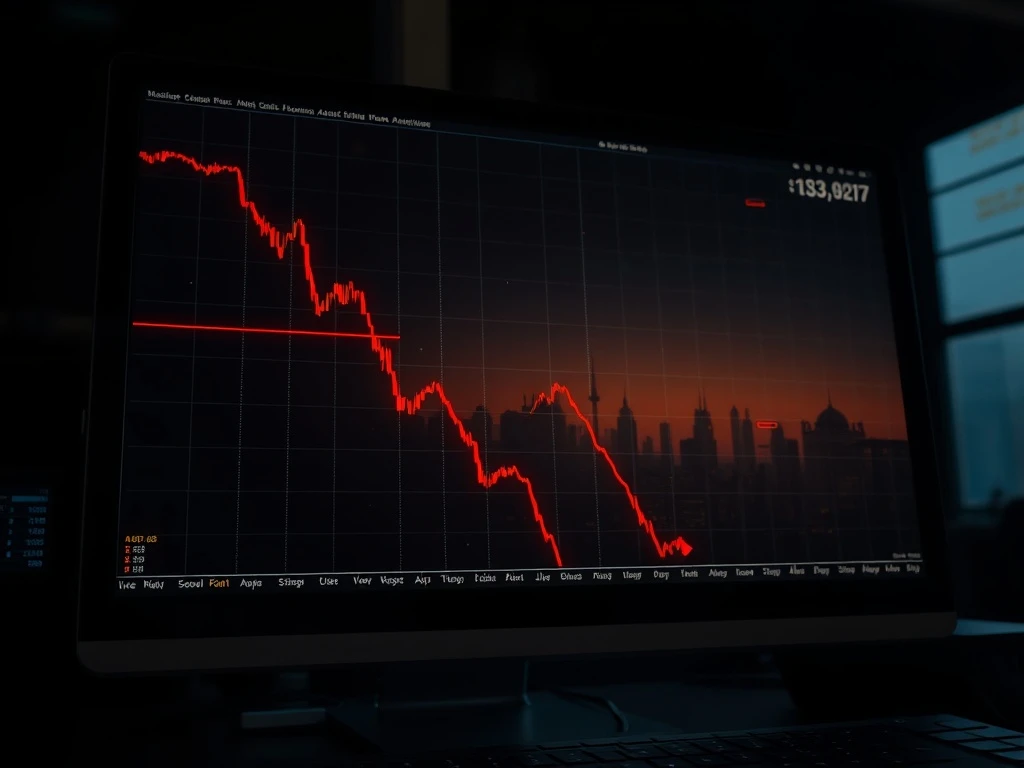
NEW YORK, April 15, 2026 — The cryptocurrency market experienced a severe shock today as escalating military conflict between Israel and Iran triggered a rapid sell-off. Ethereum (ETH), the second-largest digital asset by market capitalization, plummeted to a 30-day low of $1,859. Consequently, this sharp decline activated a cascade of automatic margin calls across major exchanges. Notably, the wallet associated with prominent Taiwanese crypto investor Machi Big Brother faced another multi-million dollar liquidation. Market analysts immediately linked the sell-off to confirmed reports of new U.S. and Israeli military actions, which intensified regional instability and sparked a flight to traditional safe-haven assets.
Ethereum Price Plunge and Geopolitical Catalyst
The ETH price crash began in the early Asian trading session and accelerated through European hours. Data from CoinMarketCap shows ETH dropped over 12% from its 24-hour high, breaching critical technical support levels clustered around $1,950. The sell-off volume spiked to more than double the 30-day average. “This is a classic risk-off move,” stated Dr. Lena Chen, a geopolitical risk strategist at the Atlantic Council’s GeoEconomics Center. “Digital assets are still treated as risk-on by institutional portfolios. When headlines confirm direct state-on-state military action, especially involving major powers, algorithmic traders and risk managers execute sell orders programmatically.” The immediate trigger was a statement from the Israeli Defense Forces confirming retaliatory strikes on Iranian infrastructure, which followed drone attacks over the weekend.
Also read: Crypto Clarity Act Gains Significant Backing as Armstrong Shifts Stance, Pressuring Congress
Historical context underscores the sensitivity. The crypto market exhibited similar volatility during the initial Russia-Ukraine invasion in 2022 and the 2020 U.S.-Iran crisis. However, today’s reaction was notably swifter. Blockchain analytics firm Nansen reported a net outflow of over $420 million from centralized exchanges in the 6 hours following the news, indicating investors were moving assets to cold storage amid the uncertainty, not just selling.
Cascading Liquidations and Machi Big Brother’s Position
The rapid ETH price decline triggered one of the largest liquidation events of the year for leveraged derivatives traders. According to data from Coinglass, total liquidations across the crypto market exceeded $850 million in 24 hours, with long positions on ETH and Bitcoin accounting for nearly 70%. The most significant single event was the liquidation of a massive ETH-collateralized position on the lending protocol Aave, linked to the wallet address 0x22…C4f5, widely recognized on-chain as belonging to Machi Big Brother.
Also read: XRP Price Prediction: Analyst Eyes $2 Target Before Potential Retest of Gaussian Channel Support
- Liquidation Value: On-chain data reveals the position was liquidated for approximately $5.2 million in stablecoins to cover the debt. This marks at least the third major liquidation for this entity in the past 18 months.
- Market Impact: The size of the sell order from the liquidation likely exacerbated the downward pressure on ETH’s price in the immediate aftermath, creating a negative feedback loop.
- Whale Behavior: Meanwhile, analytics from LookonChain showed several other large ETH holders, often called “whales,” reduced their exchange-held reserves by 15-20%, suggesting a move to defensive positioning rather than panic selling.
Expert Analysis on Market Structure Vulnerability
“The market structure was primed for this,” explained Marcus Thielen, Head of Research at CryptoQuant, in an interview. “Funding rates had been positive and high for weeks, indicating excessive bullish employ. Open Interest was near all-time highs. When a macro shock hits, this apply acts as an accelerant.” Thielen referenced a report from the Bank for International Settlements (BIS) published in late 2025, which warned that the interconnectedness of DeFi lending protocols could amplify systemic risk during stress events. The liquidation of a high-profile position like Machi Big Brother’s demonstrates this mechanism in real-time.
Comparative Analysis of Geopolitical Crypto Shocks
This event allows for a direct comparison with previous instances where geopolitical tension spilled into digital asset markets. The table below quantifies the reaction across key metrics, adjusted for the larger total market capitalization in 2026.
| Event | BTC Max Drawdown | ETH Max Drawdown | Total Liquidations | Recovery Time (Days) |
|---|---|---|---|---|
| Russia-Ukraine Invasion (Feb 2022) | -14.5% | -16.8% | $490M | 8 |
| 2020 U.S.-Iran Crisis (Jan 2020) | -7.2% | -9.1% | $180M | 3 |
| Israel-Iran Escalation (March 2026) | -10.1% | -12.3% | $850M+ | TBD |
The significantly higher liquidation volume in 2026, despite a similar percentage drop, highlights the massive growth in crypto derivatives trading and leveraged DeFi positions. The market is larger but also more fragile to use unwinds.
Forward Trajectory and Market Sentiment
The immediate focus for traders is the development on the ground in the Middle East. Any de-escalation could prompt a sharp, liquidity-driven rebound. However, analysts at Glassnode note that the Net Unrealized Profit/Loss (NUPL) metric for ETH has dipped into the “Fear” zone, which historically has presented buying opportunities for long-term holders. Major crypto fund Grayscale Investments issued a client note stating they view the sell-off as “disproportionate to long-term fundamentals” but cautioned that volatility will remain elevated until geopolitical clarity emerges.
Community and Institutional Reactions
Reactions across the crypto community were mixed. Some decentralized autonomous organization (DAO) treasuries announced they were executing contingency plans to re-collateralize positions. On social media, retail traders expressed frustration at the market’s sensitivity to distant conflicts. Conversely, traditional finance commentators pointed to the event as evidence that cryptocurrencies have not yet decoupled from broader macro risk sentiment, a key narrative for institutional adoption.
Conclusion
The ETH price crash of March 2026 serves as a stark reminder of cryptocurrency’s ongoing vulnerability to sudden geopolitical shocks. The event, which liquidated over $850 million in leveraged positions including that of Machi Big Brother, was amplified by a market structure heavy with speculative tap into. While the long-term thesis for blockchain technology remains unchanged, this episode underscores that in the short to medium term, digital assets remain correlated with global risk appetite. Investors should monitor developments in the Middle East closely, as further escalation could prolong market stress, while any diplomatic progress could trigger a relief rally. The key takeaway is that risk management and apply control are paramount in a market that can be upended by headlines from thousands of miles away.
Frequently Asked Questions
Q1: Why did Ethereum’s price drop so suddenly?
Ethereum’s price dropped due to a rapid, risk-off sell-off triggered by confirmed military escalation between Israel and Iran. This caused algorithmic traders and risk-averse investors to exit risky assets, including cryptocurrencies, leading to a cascade of liquidations on leveraged positions.
Q2: How much was Machi Big Brother liquidated for?
On-chain data indicates the wallet associated with Machi Big Brother was liquidated for approximately $5.2 million in stablecoins on the Aave protocol to cover an under-collateralized loan backed by ETH.
Q3: What happens to the crypto market if the conflict de-escalates?
Historically, crypto markets have shown sharp “relief rallies” following geopolitical de-escalation. The high amount of sidelined capital and short-term oversold conditions could lead to a rapid price rebound, though this depends on the specifics of the diplomatic outcome.
Q4: Is this a good time to buy Ethereum?
This is a subjective investment decision. Some metrics, like the Net Unrealized Profit/Loss (NUPL), indicate the market is in “Fear,” a zone that has preceded rallies. However, continued geopolitical uncertainty means high volatility is likely to persist, representing both risk and potential opportunity.
Q5: How does this compare to past crypto crashes during wars?
The percentage drop is similar to the Russia-Ukraine invasion, but the total value liquidated is much higher ($850M+ vs. $490M), reflecting the massive growth in crypto derivatives and leveraged trading since 2022.
Q6: How does this affect everyday crypto users not using utilize?
For users simply holding assets in a wallet, the effect is paper losses and potential anxiety. It does not force the sale of their assets. However, it may cause temporary congestion and higher transaction fees on networks like Ethereum due to increased trading and liquidation activity.

This article was produced with AI assistance and reviewed by our editorial team for accuracy and quality.