NYC Token: Eric Adams’ Controversial Memecoin Launch Sparks Crypto Philanthropy Debate
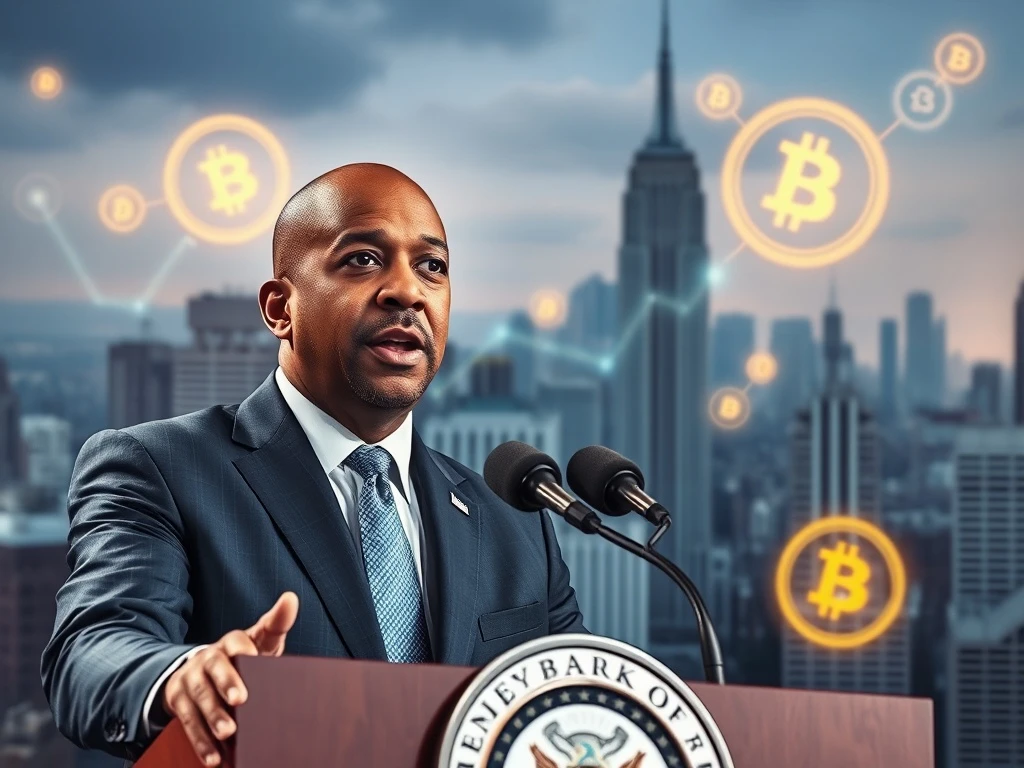
In a bold move that has ignited both enthusiasm and skepticism across financial and political circles, former New York City Mayor Eric Adams unveiled the NYC Token memecoin just weeks after leaving office in January 2026. This Solana-based cryptocurrency, launched with the stated mission of combating antisemitism and anti-Americanism, represents one of the most high-profile entries of a former major political figure into the volatile world of digital assets. The launch immediately triggered intense scrutiny regarding its tokenomics, market performance, and the broader implications for political figures engaging with cryptocurrency initiatives.
NYC Token Emerges from Political Transition
Eric Adams announced the NYC Token on January 12, 2026, marking his first significant public initiative since departing the mayor’s office on January 1. The political context surrounding this launch is particularly noteworthy. Adams, who gained recognition as one of America’s most pro-crypto mayors during his tenure, was succeeded by Zohran Mamdani, a politician with distinctly anti-capitalist leanings who defeated crypto advocate Andrew Cuomo in the November 2025 election. Consequently, Adams’ cryptocurrency venture arrives during a period of significant ideological shift in New York City’s leadership, potentially positioning the token as a symbolic counterpoint to the new administration’s direction.
Also read: BlockDAG's Defiant $0.000022 Presale Emerges as TRUMP Slumps and TAO Soars
During his time as mayor, Adams converted portions of his salary to Bitcoin and Ethereum, publicly championing New York as a cryptocurrency hub. His latest project extends this advocacy into a more structured initiative with specific social goals. In a video announcement, Adams declared, “We’re about to change the game,” suggesting the token would “take off like crazy” and bring New York to those who cannot physically visit the city. The project’s website further claims it aims to “inspire the next wave of innovation in NYC” while creating “a decentralized financial ecosystem that’s as ambitious as the city itself.”
Philanthropic Claims and Financial Mechanics
Adams provided specific details about the token’s intended philanthropic mechanism during an interview with FOX Business. He explained that proceeds from the NYC Token would fund nonprofit organizations focused on raising awareness about antisemitism and anti-Americanism through educational programs. Additionally, funds would support blockchain education initiatives and scholarships for students from underserved communities within New York City. “[There’s a] wave of anti-Americanism that is sweeping not only on Ivy League college campuses but in the cities,” Adams stated, emphasizing his goal to “use blockchain technology with this token” to fight these trends.
Also read: Cambodia Cracks Down: New Law Imposes Life Sentences for Crypto Fraud
The tokenomics structure outlined on the project’s website allocates 40% of NYC tokens to community rewards, 25% to liquidity, 15% to development, and divides the remaining 20% between marketing and team allocations. However, significant questions emerged immediately following launch, as the website’s “Buy NYC Token” and “Read Whitepaper” buttons were non-functional, limiting public access to comprehensive project documentation and purchase mechanisms.
Market Turbulence and Scam Allegations Surface
The NYC Token experienced dramatic volatility within its first trading hours, raising immediate concerns about its stability and management. According to DEXScreener data, the Solana-based token plummeted from approximately $0.47 to around $0.10 within thirty minutes of launch. This precipitous decline erased hundreds of millions in market capitalization, with the valuation dropping from nearly $500 million to under $110 million during initial trading. Such extreme volatility is characteristic of many new memecoins but appears particularly problematic for a project claiming serious social objectives.
Furthermore, blockchain analysts identified potential red flags. Crypto analyst Rune cited on-chain data suggesting that the development team might have intentionally removed liquidity, potentially scamming investors out of more than $3.4 million. These unverified accusations, combined with the token’s sharp decline, have fueled skepticism about the project’s legitimacy. Crypto News Insights reached out to Adams for comment regarding these allegations but received no immediate response, leaving important questions unanswered during the critical post-launch period.
Regulatory and Ethical Considerations
The NYC Token launch occurs within an evolving regulatory arena where the Securities and Exchange Commission (SEC) and other agencies have increased scrutiny of celebrity-endorsed cryptocurrencies and memecoins. Former political figures launching financial products face particular examination regarding potential conflicts of interest and the use of their public profile for commercial ventures. Legal experts note that while political figures are not prohibited from engaging in business activities after leaving office, their projects receive heightened attention regarding transparency and compliance.
Additionally, the concept of “crypto philanthropy”—using cryptocurrency proceeds to fund social causes—remains relatively untested despite growing interest. Successful models require transparent fund allocation, verifiable charitable distributions, and sustainable token economics that support long-term value rather than speculative trading. The NYC Token’s documentation currently lacks detailed mechanisms showing how funds will reach intended nonprofits, how distributions will be audited, or what percentage of trading activity will actually benefit the stated causes versus enriching early holders and developers.
Political Cryptocurrency Trend Gains Momentum
Eric Adams’ venture represents a growing trend of political figures engaging directly with cryptocurrency. Several politicians worldwide have launched or endorsed digital assets, though results have been mixed. For instance, former Philippines President Rodrigo Duterte’s son launched a memecoin in 2024 that faced similar volatility and skepticism. Proponents argue that blockchain technology enables politicians to create direct economic relationships with constituents and fund causes without traditional financial intermediaries. Critics, however, warn that these ventures often lack the regulatory oversight and transparency expected of public initiatives, potentially exploiting supporters’ trust.
The timing of Adams’ launch is particularly strategic, coinciding with a political transition that has alarmed some cryptocurrency advocates. New Mayor Zohran Mamdani’s anti-capitalist stance has drawn criticism from industry figures who fear it could drive technology talent and investment away from New York City. By launching the NYC Token, Adams may be positioning himself as a continuing champion of innovation against what some perceive as a hostile new administration, though this political dimension remains implicit rather than explicitly stated in the project’s official materials.
Technical Implementation and Blockchain Choice
The decision to build NYC Token on the Solana blockchain reflects practical considerations within the current cryptocurrency ecosystem. Solana has emerged as a preferred network for memecoin launches due to its low transaction fees and high throughput, enabling rapid trading that appeals to speculative investors. However, Solana has also experienced several network outages and security incidents, raising questions about reliability for projects with serious social missions. The technical implementation details—including smart contract security audits, wallet compatibility, and integration with decentralized exchanges—remain unclear from publicly available information, creating additional uncertainty for potential investors and beneficiaries alike.
Comparative analysis with other charity-focused cryptocurrencies reveals both opportunities and challenges for the NYC Token. Projects like Pinkcoin and Clean Water Coin have established transparent mechanisms for converting cryptocurrency trading into tangible social benefits, though none have achieved mainstream adoption or significant market capitalization. The table below illustrates how NYC Token’s proposed allocation compares to established charitable cryptocurrency models:
| Cryptocurrency | Charity Allocation | Transparency Mechanism | Market Cap (Approx.) |
|---|---|---|---|
| NYC Token | Portion of proceeds (unspecified) | Not yet established | $110 million (volatile) |
| Pinkcoin | 10% of all transactions | Monthly public reports | $8 million |
| Clean Water Coin | 50% of mining rewards | Blockchain-verified donations | $3 million |
Community Response and Future Trajectory
Initial reactions to the NYC Token have been polarized across cryptocurrency forums and social media platforms. Supporters applaud Adams for addressing important social issues through innovative technology and view the project as a legitimate attempt to harness cryptocurrency’s potential for social good. Detractors, however, characterize the venture as a speculative memecoin disguised as philanthropy, pointing to the token’s extreme volatility and the development team’s anonymity as evidence of problematic execution. This division reflects broader debates within the cryptocurrency community about whether memecoins can serve serious purposes or inevitably prioritize speculation over substance.
The project’s future depends on several unresolved factors. First, the development team must address technical issues with the website and provide comprehensive documentation about token mechanics and charitable distribution. Second, transparent communication regarding the liquidity allegations is essential to rebuild trust. Third, establishing verifiable partnerships with reputable nonprofit organizations would demonstrate serious commitment to the stated social missions. Finally, stabilizing the token’s valuation through sustainable trading patterns rather than speculative pumps would distinguish NYC Token from countless failed memecoin experiments.
Broader Implications for Cryptocurrency Adoption
Beyond its immediate market performance, the NYC Token launch carries significance for cryptocurrency’s evolving relationship with mainstream institutions and social causes. Successful implementation could provide a model for how public figures might tap into blockchain technology for philanthropic initiatives, potentially encouraging more legitimate projects at the intersection of cryptocurrency and social impact. Conversely, failure or scandal could reinforce skepticism about cryptocurrency’s capacity for serious applications beyond speculation, particularly when associated with high-profile political figures.
The project also tests whether cryptocurrency communities will support assets with explicit social missions versus purely speculative appeal. Historically, memecoins have thrived on humor, community engagement, and trading momentum rather than tangible utility or social impact. NYC Token attempts to bridge this gap by combining memecoin characteristics with serious social objectives—an ambitious hybrid approach without clear precedents for success. Its performance may therefore influence whether future projects pursue similar models or retreat to more conventional cryptocurrency frameworks.
Conclusion
The NYC Token represents a fascinating case study in the convergence of politics, philanthropy, and cryptocurrency. Eric Adams’ entry into the memecoin arena with a project targeting antisemitism and anti-Americanism has generated significant attention, controversy, and market volatility. While the token’s social mission addresses genuine concerns, its execution raises important questions about transparency, stability, and the appropriate role of former political figures in cryptocurrency ventures. As regulatory scrutiny intensifies and the cryptocurrency market matures, projects like NYC Token must demonstrate not only technical competence but also ethical rigor and tangible social impact to gain lasting legitimacy. The coming months will reveal whether this ambitious initiative can transcend its rocky start to establish a meaningful model for cryptocurrency-driven philanthropy or whether it will become another cautionary tale in the volatile world of digital assets.
FAQs
Q1: What is the NYC Token and who created it?
The NYC Token is a Solana-based memecoin launched by former New York City Mayor Eric Adams in January 2026. The project claims to combat antisemitism and anti-Americanism while supporting blockchain education and scholarships for underserved NYC students.
Q2: Why did the NYC Token price drop so dramatically after launch?
The token experienced extreme volatility, dropping from approximately $0.47 to $0.10 within thirty minutes of launch. This decline resulted from typical memecoin speculation patterns combined with allegations of liquidity removal, though these claims remain unverified.
Q3: How will the NYC Token actually fight antisemitism?
According to Eric Adams, proceeds from the token will fund nonprofit organizations that raise awareness about antisemitism through educational programs. However, specific mechanisms for fund distribution and verification have not been publicly detailed.
Q4: Is it legal for a former mayor to launch a cryptocurrency?
Yes, former political figures can engage in business activities after leaving office. However, such ventures receive heightened scrutiny regarding transparency, potential conflicts of interest, and compliance with securities regulations.
Q5: What differentiates NYC Token from other memecoins?
Unlike purely speculative memecoins, NYC Token claims specific social objectives and philanthropic mechanisms. However, its extreme volatility and technical issues during launch resemble patterns seen in many memecoin projects without social missions.
Q6: Can investors trust the NYC Token given the scam allegations?
Investors should exercise caution and conduct thorough due diligence. The unverified allegations of liquidity removal, combined with the token’s volatility and incomplete documentation, represent significant risk factors that warrant careful consideration before any investment.

This article was produced with AI assistance and reviewed by our editorial team for accuracy and quality.