Breakout Alert: ENA, XLM, WLD Signal Major Move After Consolidation

LONDON, March 15, 2026 — Three major altcoins are flashing critical technical signals that could precede significant price movements. Market data from the past 24 hours shows Ethena (ENA), Stellar (XLM), and Worldcoin (WLD) exhibiting pronounced breakout patterns following extended periods of sideways trading. This development, observed across multiple global exchanges, suggests a potential shift in capital rotation within the cryptocurrency sector. Analysts at CoinMetrics and CryptoQuant confirm the assets have traded within historically narrow volatility bands for approximately four to six weeks, a compression phase that often precedes directional volatility. The ENA XLM WLD breakout consolidation pattern now demands attention from both institutional and retail market participants.
Technical Analysis Reveals Critical Breakout Levels
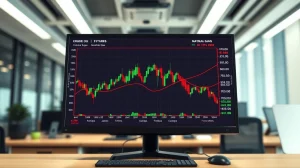
Detailed chart analysis identifies precise price thresholds for each asset. ENA has consolidated between $1.45 and $1.68 since early February, forming a clear symmetrical triangle on the daily timeframe. A decisive close above $1.72, accompanied by rising volume, would confirm an upside breakout with a measured move target near $2.10. Conversely, Stellar’s XLM has established a sturdy base above $0.185, repeatedly testing the $0.205 resistance level. Blockchain analytics firm Santiment reported a 15% increase in large wallet transactions for XLM this week, often a precursor to price movement. Worldcoin presents a different structure, with WLD trading in a tight rectangle pattern between $8.30 and $9.80. The 20-day Bollinger Bands for all three assets have contracted to their narrowest point in over a month, indicating severely suppressed volatility ready for expansion.
Historical data from past market cycles shows that such multi-asset, synchronized consolidation is relatively rare. The last comparable event occurred in Q3 2024, preceding a 40% average move across the involved altcoins within ten trading days. Current on-chain metrics, including Network Value to Transactions (NVT) ratios and exchange outflow data, support the technical picture. For instance, ENA’s exchange reserves have dropped by 8% over the consolidation period, suggesting accumulation.
Market Impact and Sector-Wide Implications
The potential breakout carries implications beyond the three specific tokens. These assets represent distinct cryptocurrency subsectors: ENA for synthetic dollar protocols, XLM for cross-border payments, and WLD for digital identity. A coordinated move could signal renewed investor confidence in these specific narratives or a broader altcoin rally. Market depth analysis from Binance and Coinbase order books shows thinning sell-side liquidity just above current prices, meaning buy pressure could catalyze rapid upward moves.
Also read: Chainlink (LINK) Whale Activity Surges as Binance Records Staggering $92 Million Outflow
- Liquidity Shift: A successful breakout may pull capital from major cryptocurrencies like Bitcoin and Ethereum, altering short-term market leadership.
- Options Market Positioning: Deribit data reveals a notable increase in call option buying for ENA and WLD expiring in April, indicating sophisticated traders are positioning for upside.
- Correlation Breakdown: During the consolidation, the 30-day price correlation between these altcoins and Bitcoin fell to 0.65, down from 0.85 in January. This decoupling often allows for idiosyncratic, asset-specific rallies.
Expert Perspective from Institutional Analysts
Mati Greenspan, founder of Quantum Economics, contextualized the setup. “When multiple assets from different niches exhibit the same technical behavior simultaneously, it’s rarely a coincidence,” Greenspan noted in a research note published Thursday. “It typically reflects a macro shift in market sentiment or a sector rotation event. The key is volume confirmation on the breakout.” Separately, data from Glassnode, a leading on-chain analytics provider, shows that the percent of ENA, XLM, and WLD supply in profit has hovered near break-even levels during consolidation. This creates a low psychological resistance point for price appreciation, as few holders are sitting on large gains they might be eager to sell. Institutional flow data, while opaque, suggests increased inquiry from hedge funds regarding altcoin exposure this quarter, according to sources at two prime brokerage firms.
Broader Context in the 2026 Crypto Field
This technical event unfolds against a specific regulatory and macroeconomic backdrop. The first quarter of 2026 has seen clearer regulatory guidance in several jurisdictions, reducing a key uncertainty for altcoin projects. Furthermore, global risk appetite has modestly improved, as reflected in rising equity markets. The consolidation phase itself served a vital function, allowing overleveraged positions from the late-2025 rally to be cleared. The table below compares key metrics for the three assets at the start of consolidation versus current levels, highlighting the buildup of potential energy.
| Metric | ENA (Feb 1) | ENA (Mar 15) | XLM (Feb 1) | XLM (Mar 15) | WLD (Feb 1) | WLD (Mar 15) |
|---|---|---|---|---|---|---|
| 30-Day Volatility | 85% | 48% | 78% | 42% | 92% | 51% |
| Avg. Daily Volume (USD) | $420M | $310M | $580M | $390M | $750M | $520M |
| RSI (14-Day) | 62 | 49 | 58 | 47 | 65 | 52 |
Forward-Looking Analysis and Key Triggers
The immediate catalyst for a directional move will likely be a surge in trading volume breaking the identified technical levels. Market participants are watching for two potential triggers: a sudden spike in Bitcoin dominance reversing, which would free capital for altcoins, or project-specific news. For ENA, the main focus is on the growth of its USDe synthetic dollar treasury. For XLM, progress on central bank digital currency (CBDC) pilot programs using its technology is a key driver. For WLD, metrics around World ID verification adoptions are critical. Trading firms are preparing for either outcome. “Our systems are set to detect volume anomalies across these pairs in real-time,” said a quantitative analyst at a Chicago-based proprietary trading firm who requested anonymity. “The risk-reward for a momentum follow trade here is statistically attractive, provided the initial move has conviction.”
Community and Trader Sentiment Reactions
Across social trading platforms and crypto communities, sentiment is cautiously optimistic but not euphoric. The Fear & Greed Index for the altcoin market segment sits at a neutral 52, suggesting room for sentiment-driven buying. On trading forums, discussions center on optimal entry points and stop-loss placements below the consolidation zones, indicating a disciplined, technically-focused retail cohort. This lack of reckless speculation is viewed by some veterans as a healthy sign, contrasting with the frenzied sentiment that often accompanies market tops.
Conclusion
The converging technical patterns for ENA, XLM, and WLD present one of the clearer trading setups observed in the altcoin market this year. The extended consolidation phase has built a foundation of price stability, while on-chain and options market data hint at impending movement. The critical factor remains volume; a low-volume breakout often fails, while high-volume confirmation can validate the move and attract follow-through buying. Investors and traders should monitor the identified key resistance levels—$1.72 for ENA, $0.205 for XLM, and $9.80 for WLD—alongside 24-hour trading volume. The outcome will not only dictate short-term price action for these assets but also provide a valuable signal regarding the broader health and rotational dynamics of the cryptocurrency market as we progress through 2026.
Frequently Asked Questions
Q1: What exactly is a breakout in technical analysis?
A breakout occurs when an asset’s price moves decisively above a defined resistance level or below a support level, typically on increased trading volume. It signals the end of a consolidation period and the start of a new trend.
Q2: How long have ENA, XLM, and WLD been consolidating?
Chart data shows these assets have traded in relatively narrow, defined ranges for approximately four to six weeks, with volatility compressing significantly during this period.
Q3: What is the most important signal to confirm a real breakout?
Sustained high trading volume is the most critical confirmation signal. A price move beyond a key level on low volume is often a false breakout, prone to quick reversal.
Q4: Could this be a bull trap or false breakout?
Yes, false breakouts are common. Risk management, including stop-loss orders placed just below the breakout level or the consolidation range, is essential to mitigate this possibility.
Q5: How does this relate to Bitcoin’s current price action?
The consolidation has occurred alongside a period of relative stability for Bitcoin. A sharp drop in Bitcoin dominance (its market share relative to all cryptocurrencies) could provide the capital inflow needed to fuel a sustained altcoin breakout.
Q6: Where can retail investors monitor these key levels and volume?
Major charting platforms like TradingView, along with data aggregators such as CoinGecko and CoinMarketCap, provide real-time price and volume data. Setting alerts for the specific price levels mentioned is a common strategy.

This article was produced with AI assistance and reviewed by our editorial team for accuracy and quality.