Elon Musk OpenAI ICO: The Stunning $10 Billion Fundraising Plan He Briefly Backed
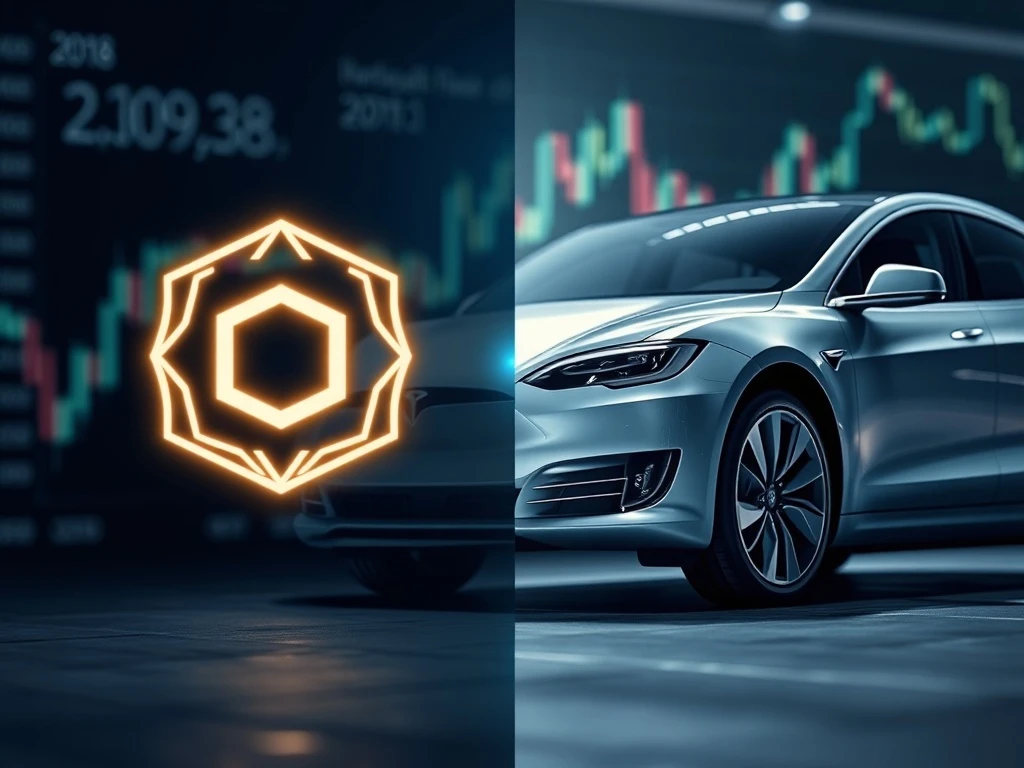
Newly surfaced documents reveal a pivotal moment in tech history: Elon Musk, the visionary behind Tesla and SpaceX, once endorsed a staggering $10 billion initial coin offering (ICO) for artificial intelligence pioneer OpenAI before his dramatic exit. This revelation, first reported by CoinDesk based on internal communications from early 2018, sheds new light on the intersection of AI ambition, cryptocurrency mania, and the regulatory reckoning that followed. The brief alignment of Musk’s influence with the volatile ICO market underscores a critical juncture for both industries.
The Elon Musk OpenAI ICO Proposal
In January 2018, discussions between Elon Musk and OpenAI’s founders, including Sam Altman, progressed to a concrete financial strategy. The proposal centered on OpenAI launching an initial coin offering to raise an unprecedented $10 billion. This method would have involved creating and selling a new cryptocurrency token to public investors. Consequently, Musk initially agreed to the plan, seeing it as a viable path to secure the colossal capital required for advanced AI research. However, his support proved fleeting. Shortly after, Musk withdrew his endorsement and resigned from the OpenAI board. He cited a need to eliminate potential conflicts of interest with his artificial intelligence development work at Tesla. This sequence of events highlights the intense pressure and rapid decision-making characteristic of the 2018 crypto boom.
Also read: Bitcoin Capital Rotation Triggers Critical Signal, Points to $41,400 Price Floor
The 2018 ICO Frenzy and Regulatory Backlash
The Elon Musk OpenAI ICO discussion did not occur in a vacuum. Instead, it happened at the peak of a global fundraising phenomenon. Initial coin offerings became the dominant mechanism for blockchain startups from 2017 through early 2018. Driven by soaring investor demand and a lack of clear regulatory frameworks, projects raised billions, often with little more than a whitepaper. The market operated in a gray area, attracting both genuine innovators and bad actors. This period saw monumental sums flow into projects like Filecoin and Tezos. However, the landscape shifted rapidly. Global authorities, including the U.S. Securities and Exchange Commission (SEC), began aggressive enforcement actions. They clarified that many ICO tokens constituted unregistered securities. This regulatory crackdown, combined with a broader market cooldown, effectively ended the ICO era by late 2018, paving the way for more structured offerings like Security Token Offerings (STOs) and later, decentralized finance (DeFi).
Expert Analysis: A Missed Turning Point
Financial technology analysts point to the revealed Elon Musk OpenAI ICO plan as a significant “what-if” scenario. “Had this $10 billion ICO proceeded, it would have been the largest token sale in history by a massive margin,” notes Dr. Anya Sharma, a fintech historian at Stanford University. “It could have permanently fused major AI development with cryptocurrency economics, creating a wholly different funding model for the sector.” The decision to abandon the plan likely stemmed from multiple factors. Firstly, increasing regulatory scrutiny made a project of that scale a high-risk target. Secondly, Musk’s deepening commitment to Tesla’s own AI, particularly for autonomous driving, created a tangible conflict. Finally, the inherent volatility and speculative nature of crypto markets may have been deemed unsuitable for a long-term, capital-intensive endeavor like AGI (Artificial General Intelligence) research. This pivot arguably led OpenAI to pursue its later, successful partnership with Microsoft.
Impact on OpenAI and Tesla’s Trajectories
The aftermath of the abandoned Elon Musk OpenAI ICO proposal set both organizations on their definitive paths. OpenAI, after forgoing the crypto route, secured a $1 billion investment from Microsoft in 2019. This partnership provided stable, corporate-backed funding essential for developing models like GPT-3 and DALL-E. Conversely, Musk refocused Tesla’s AI efforts on real-world applications. Tesla’s Full Self-Driving (FSD) system and its Dojo supercomputer project became primary recipients of this redirected attention. The divergence illustrates a fundamental strategic choice: decentralized, crowd-funded crypto capital versus traditional, strategic corporate investment. The table below summarizes the key differences in the potential outcomes.
| Potential Path: $10B ICO | Actual Path: Corporate Partnership |
|---|---|
| Funding from public token sale | Funding from Microsoft investment |
| Possible community governance via token holders | Structured corporate governance and oversight |
| High exposure to crypto market volatility | Stable, long-term capital commitment |
| Regulatory uncertainty and potential legal challenges | Clearer regulatory compliance framework |
The Legacy of Crypto Fundraising in Tech
The story of the Elon Musk OpenAI ICO serves as a crucial case study in the evolution of tech financing. It marks the zenith of ICO ambition before the market’s correction. Today, the fundraising landscape for tech and AI startups has matured significantly. Key modern methods include:
- Venture Capital Rounds: Traditional equity funding remains dominant for deep-tech like AI.
- Regulated Token Offerings: STOs and other compliant digital asset sales.
- Corporate Strategic Rounds: Similar to the Microsoft-OpenAI deal, providing capital and infrastructure.
- Decentralized Autonomous Organizations (DAOs): Community-governed funding pools, offering a more structured evolution of the ICO concept.
Furthermore, the regulatory clarity that emerged post-2018, particularly the Howey Test application to digital assets, makes a repeat of a purely speculative $10 billion ICO for a major AI lab highly improbable. The episode ultimately reinforced the principle that foundational technology requiring decades of research benefits from patient, stable capital.
Conclusion
The revelation of Elon Musk’s brief backing of a $10 billion OpenAI ICO provides a fascinating glimpse into a crossroads for artificial intelligence and cryptocurrency. This plan, conceived at the height of the ICO frenzy, represented an alternative future where AI’s development could have been crowdsourced through blockchain technology. Musk’s subsequent withdrawal and focus on Tesla underscored the practical challenges and regulatory risks of that path. The abandoned Elon Musk OpenAI ICO strategy highlights a definitive moment when two of the 21st century’s most transformative technologies—AI and crypto—flirted with convergence before diverging toward their current, more distinct trajectories. This historical footnote reminds us that the funding mechanisms behind technological breakthroughs are as critical as the innovations themselves.
FAQs
Q1: What was the proposed $10 billion Elon Musk OpenAI ICO?
The proposal, discussed in January 2018, involved OpenAI creating and selling a new cryptocurrency token to the public to raise $10 billion for its artificial intelligence research, with Elon Musk’s initial support.
Q2: Why did Elon Musk withdraw support for the OpenAI ICO?
Musk withdrew to avoid conflicts of interest with his expanding AI work at Tesla and likely due to growing regulatory uncertainties surrounding large-scale ICOs at the time.
Q3: How did OpenAI fund itself instead of doing an ICO?
After forgoing the ICO, OpenAI secured a major $1 billion partnership with Microsoft in 2019, which provided the stable, long-term capital needed for its research.
Q4: Were ICOs legal in 2018?
The legal status was unclear. Many ICOs operated in a regulatory gray area until authorities like the U.S. SEC began enforcement, declaring many tokens to be unregistered securities.
Q5: What is the difference between an ICO and the way crypto projects raise funds today?
Today, fundraising is more regulated. Methods include Security Token Offerings (STOs) that comply with securities laws, venture capital, and decentralized community funding via DAOs, moving beyond the speculative, unregulated model of the 2017-2018 ICO boom.

This article was produced with AI assistance and reviewed by our editorial team for accuracy and quality.