Dubai Real Estate Tokenization Pilot Expands with Revolutionary Secondary Trading Market
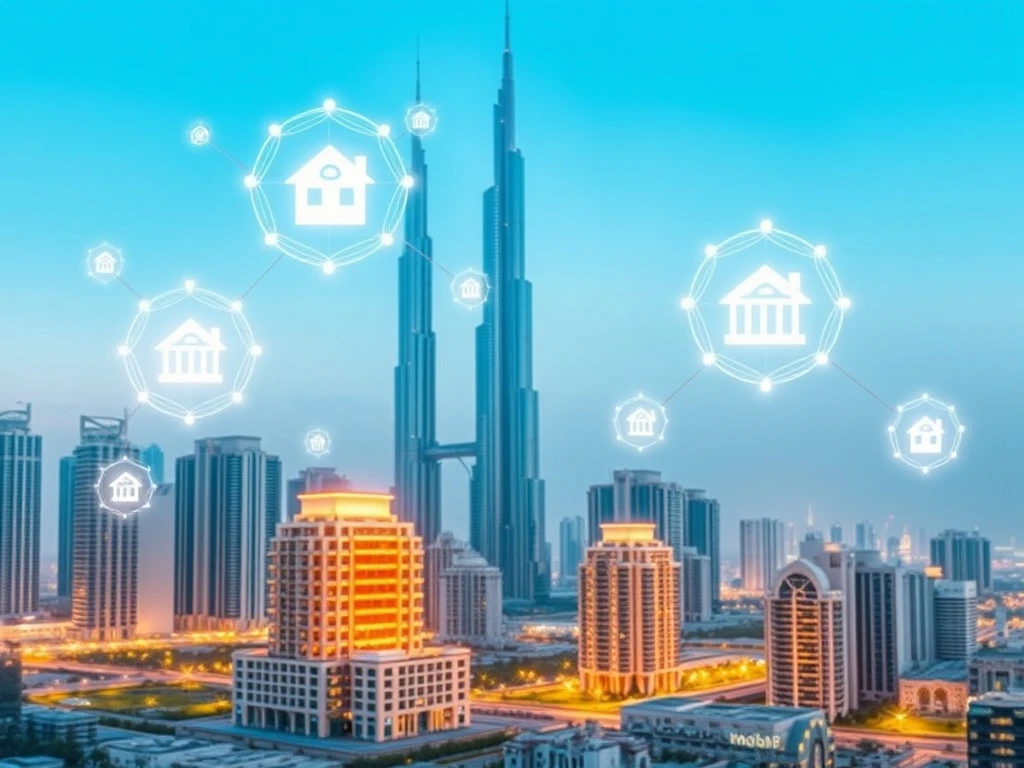
DUBAI, UAE – February 2025 marks a significant milestone in global property innovation as Dubai activates Phase Two of its original real estate tokenization pilot, fundamentally transforming how investors worldwide access and trade property assets through regulated secondary markets.
Dubai Real Estate Tokenization Enters Secondary Trading Phase
The Dubai Land Department officially launched regulated secondary trading for tokenized property stakes this week. Consequently, this development represents a major advancement beyond the initial proof-of-concept stage. The initiative now enables global investors to buy and sell fractional property ownership through blockchain-based tokens. Moreover, this expansion addresses previous limitations in property market liquidity.
Phase Two specifically focuses on creating a secure, transparent marketplace for tokenized real estate assets. The Dubai government established comprehensive regulatory frameworks to govern these transactions. Additionally, the system incorporates smart contracts to automate compliance and ownership transfers. This technological infrastructure reduces traditional settlement times from weeks to minutes.
Transforming Global Property Investment Accessibility
Real estate tokenization fundamentally changes investment accessibility by dividing properties into digital tokens. Previously, high-value Dubai properties required substantial capital commitments from individual investors. Now, tokenization enables fractional ownership starting from significantly lower investment thresholds. Therefore, this democratization opens Dubai’s premium real estate market to broader investor participation.
Also read: CryptoNewsInsights Plunges Below $2.1K: Traders Brace for Potential Slide to $1.5K Support
The secondary market mechanism provides significant liquidity previously absent from real estate investments. Traditionally, property investments required long holding periods due to illiquid markets. However, tokenized assets can now trade on regulated platforms similar to securities. This liquidity enhancement makes real estate more attractive to institutional and retail investors alike.
Regulatory Framework and Investor Protection Measures
Dubai’s regulatory authorities implemented solid investor protection protocols for the tokenization initiative. The framework includes mandatory disclosure requirements for token issuers. Furthermore, all secondary market transactions undergo real-time monitoring for compliance. The system also incorporates anti-money laundering (AML) and know-your-customer (KYC) verification at multiple levels.
Smart contracts automatically enforce ownership rights and distribution terms. These digital contracts execute rental income distributions proportionally to token holders. Additionally, they manage property maintenance fees and other obligations transparently. This automation reduces administrative costs and potential disputes significantly.
Comparative Analysis: Traditional vs. Tokenized Real Estate
The following table illustrates key differences between conventional property investment and Dubai’s tokenized approach:
| Aspect | Traditional Real Estate | Tokenized Real Estate |
|---|---|---|
| Minimum Investment | Typically $500,000+ | As low as $1,000 |
| Settlement Time | 30-90 days | Near-instant |
| Liquidity | Low (months to sell) | High (secondary market) |
| Geographic Access | Local buyers predominant | Global investor access |
| Transparency | Limited public records | Blockchain-verified history |
Technological Infrastructure and Implementation Details
Dubai’s real estate tokenization platform utilizes enterprise-grade blockchain technology. The system ensures immutable record-keeping for all property transactions. Specifically, each token corresponds to verifiable ownership rights recorded on distributed ledgers. This technological approach eliminates traditional title disputes and fraud risks.
The implementation involves multiple government entities collaborating closely. The Dubai Land Department leads the initiative with technical support from Dubai’s Digital Authority. Meanwhile, financial regulators oversee compliance with investment protection standards. This multi-agency approach ensures comprehensive oversight throughout the tokenization ecosystem.
Global Context and Market Implications
Dubai’s initiative positions the emirate as a global leader in property technology innovation. Other financial centers monitor these developments closely for potential adoption. Singapore and Switzerland previously explored similar concepts but at smaller scales. However, Dubai’s comprehensive regulatory approach provides a more complete model for other jurisdictions.
The secondary market activation particularly interests institutional investors seeking property exposure. Real estate investment trusts (REITs) and family offices previously faced liquidity constraints in direct property holdings. Now, tokenization offers alternative structures with enhanced flexibility. This development could potentially redirect significant capital flows toward tokenized assets.
Key Benefits of Dubai’s Tokenization Initiative
- Enhanced Liquidity: Secondary trading enables investors to exit positions without selling entire properties
- Improved Transparency: Blockchain records provide immutable transaction histories visible to all participants
- Reduced Costs: Automation decreases legal, administrative, and intermediary expenses significantly
- Global Accessibility: Investors worldwide can participate through digital platforms without physical presence
- Fractional Ownership: Lower investment minimums democratize premium real estate access
Future Development Roadmap and Expansion Plans
Phase Two represents the middle stage of Dubai’s three-phase tokenization strategy. The initial phase successfully tested basic token issuance and primary sales. Currently, Phase Two focuses on secondary market development and regulatory refinement. Subsequently, Phase Three will expand to include commercial properties and portfolio tokenization.
Future developments may incorporate additional asset classes beyond residential real estate. Commercial properties, hospitality assets, and development projects represent potential expansion areas. Furthermore, the platform could eventually support cross-border property tokenization. This expansion would enable international investors to tokenize assets in their home markets using Dubai’s infrastructure.
Conclusion
Dubai’s Phase Two real estate tokenization pilot fundamentally transforms property investment paradigms through regulated secondary trading. The initiative enhances market liquidity while strengthening transparency and investor protection mechanisms. As blockchain technology integrates further with traditional real estate markets, Dubai positions itself at the front of this financial innovation. The successful implementation of this Dubai real estate tokenization model could establish new global standards for property investment accessibility and efficiency.
FAQs
Q1: What exactly is real estate tokenization?
Real estate tokenization converts property ownership rights into digital tokens on a blockchain. Each token represents a fractional share of the underlying asset, enabling multiple investors to own portions of a single property through secure digital certificates.
Q2: How does secondary trading differ from initial token sales?
Initial token sales represent the first issuance of property tokens to investors. Secondary trading enables those token holders to sell their stakes to other investors on regulated marketplaces, providing liquidity without requiring property sale.
Q3: What investor protections exist in Dubai’s tokenization system?
The framework includes mandatory disclosures, regulatory oversight, smart contract automation, AML/KYC verification, and blockchain transparency. The Dubai Land Department monitors all transactions while smart contracts enforce ownership terms automatically.
Q4: Can international investors participate in Dubai’s tokenized real estate market?
Yes, the platform enables global investor participation through digital onboarding. International investors must complete verification procedures but can access the market remotely without physical presence in Dubai.
Q5: What types of properties are currently available for tokenization?
The initial phase focuses on premium residential properties in designated Dubai developments. Future expansions may include commercial real estate, hospitality assets, and mixed-use developments as the ecosystem matures.

This article was produced with AI assistance and reviewed by our editorial team for accuracy and quality.