Digitap ($TAP) Defies Market Slump with 273% Surge: How a Lean Fintech Presale Emerges as a 2026 Contender
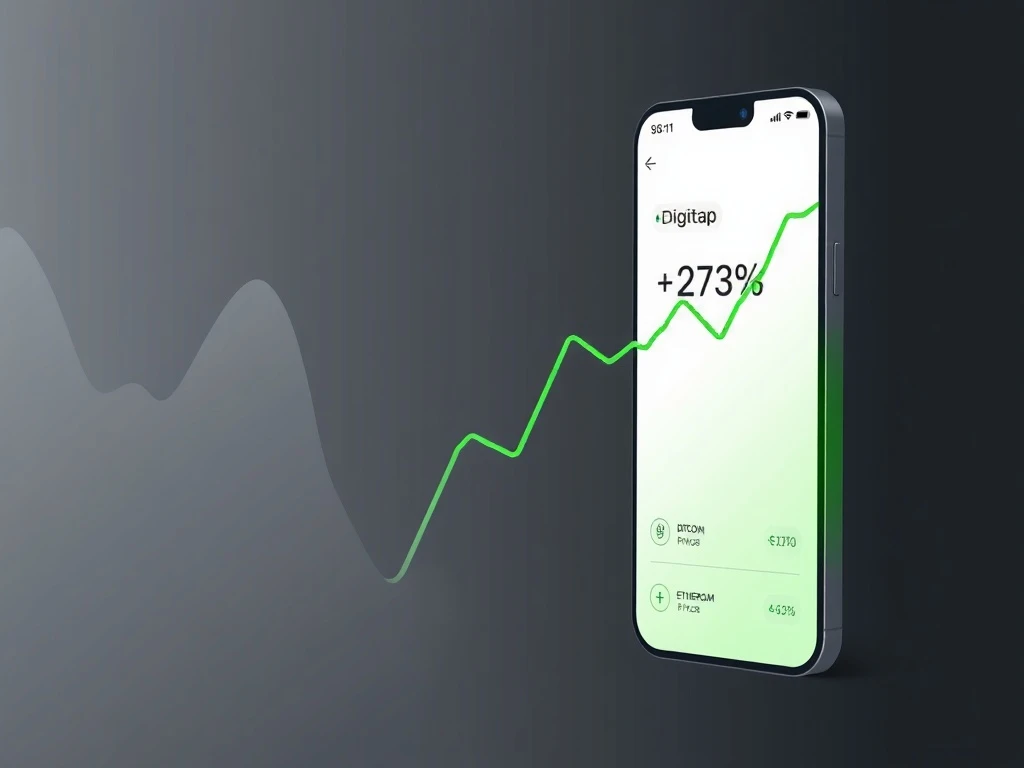
Global cryptocurrency markets exhibit a stark divergence in late 2025, as established leaders Bitcoin and Ethereum face consolidation while a new fintech-focused project, Digitap ($TAP), records a staggering 273% presale gain, prompting analysts to scrutinize the underlying shift in investor sentiment toward utility-driven blockchain models.
Digitap ($TAP) Presale Performance Defies Broader Market Trend
Recent market data reveals a compelling narrative of contrast. While Bitcoin (BTC) struggles to maintain support above the $78,000 level and Ethereum (ETH) consolidates below $2,400, the Digitap ($TAP) presale has generated significant attention. This presale event, structured with clear vesting schedules and treasury allocation transparency, has successfully raised capital based on a demonstrable prototype. Consequently, the project’s early valuation surge reflects measured investor confidence rather than mere speculation. Market analysts now track this performance as a potential indicator for the 2026 cycle, where efficiency and real-world application may take precedence.
Also read: Bitcoin Mining Difficulty Plummets: Network Data Signals 14% Downward Adjustment
Analyzing the Current Bitcoin and Ethereum Price Context
Bitcoin’s price action near $78,000 follows a period of heightened volatility after its latest halving event. On-chain data indicates significant accumulation by long-term holders, yet macroeconomic factors like interest rate decisions continue to apply downward pressure on liquidity. Similarly, Ethereum’s position below $2,400 coincides with ongoing network upgrades aimed at scaling and reducing transaction costs. These developments are critical for the ecosystem’s long-term health. However, in the short term, they contribute to a cautious trading environment where capital seeks high-potential, nascent opportunities outside the top two assets by market capitalization.
The Rise of the “Lean Fintech” Crypto Model
The standout performance of Digitap ($TAP) is not an isolated anomaly but part of an emerging trend. This trend prioritizes specific use cases over generalized smart contract platforms. The so-called “lean fintech” model, exemplified by $TAP, focuses on streamlining specific financial services like payments, savings, or asset tokenization. It does this with lower operational overhead and targeted functionality. This approach contrasts with the “do-everything” platform model, aiming for faster adoption and clearer regulatory pathways. Experts point to the success of similar focused projects in traditional fintech as a logical precursor to their blockchain-based evolution.
Also read: BlockDAG's Stunning 79,900% Surge Targets $1 as Litecoin and Dogecoin Struggle
Key Differentiators Driving Digitap’s Early Momentum
Initial examination of the Digitap project reveals several foundational elements that likely contributed to its strong presale reception. These elements provide a framework for evaluating similar emerging projects.
- Clear Utility First: The $TAP token is designed for specific functions within its ecosystem, such as fee discounts, staking rewards, and governance, moving beyond pure speculative value.
- Regulatory Conscious Design: Early documentation suggests architecture considerations for compliance, a growing priority for institutional and retail investors alike.
- Capital Efficiency: The project emphasizes a lower burn rate and sustainable treasury management, appealing to investors wary of excessive inflation.
- Measured Go-to-Market Strategy: A phased rollout plan with pilot partnerships demonstrates a focus on tangible adoption over hype.
| Metric | Bitcoin (BTC) | Ethereum (ETH) | Digitap ($TAP) Presale | |
|---|---|---|---|---|
| Recent Price Action | Consolidation below $78K | Testing support under $2.4K | +273% from initial offer | |
| Primary Narrative | Store of Value, Macro Asset | Smart Contract Platform, Web3 Backbone | Lean Fintech Applications | |
| Investor Focus | Institutional adoption, ETF flows | Network upgrade success, scaling | Token utility, real-world integration |
Expert Perspectives on the 2026 Market Cycle
Financial technology researchers note that market cycles often rotate leadership. The 2017 cycle highlighted store of value narratives. Subsequently, the 2021 cycle emphasized decentralized finance and non-fungible tokens. Therefore, the 2026 cycle could logically prioritize integration with traditional finance and compliant digital asset systems. This environment favors projects with clear operational frameworks and path to profitability. While Bitcoin and Ethereum provide foundational liquidity and security, the explosive growth may occur in adjacent sectors solving specific inefficiencies. Digitap’s early metrics, while from a small base, fit this hypothesized thematic rotation.
Risks and Considerations for Presale Investments
Despite impressive early numbers, analysts uniformly caution investors. Presale investments carry inherent high risk, including potential for smart contract vulnerabilities, regulatory changes, and failure to execute the roadmap. The 273% gain for early participants does not guarantee future performance or mainnet success. Due diligence remains paramount. Investors must scrutinize the team’s background, audit reports, tokenomics, and the competitive market. The presale market is also known for volatility, and projects can retrace gains quickly if development milestones are missed.
Conclusion
The current market dichotomy, with Bitcoin under $78,000 and Ethereum below $2,400 against Digitap ($TAP)’s substantial presale surge, highlights a evolving cryptocurrency market. This contrast suggests a growing investor appetite for focused, fintech-inspired blockchain solutions as the market looks toward 2026. While established assets consolidate and build foundational strength, emerging projects like Digitap demonstrate that innovation and capital flows are shifting toward tangible utility and efficient design. The coming months will test whether this lean fintech crypto model can transition from presale promise to sustainable market leadership.
FAQs
Q1: What is Digitap ($TAP)?
Digitap ($TAP) is a cryptocurrency project in its presale phase, focusing on building lean, efficient fintech applications on the blockchain. Its token is designed for use within its specific ecosystem for transactions, governance, and rewards.
Q2: Why are Bitcoin and Ethereum prices down while $TAP is up?
Major cryptocurrencies like BTC and ETH are influenced by broader macroeconomic factors and institutional flows, currently leading to consolidation. $TAP’s presale performance is driven by different factors: early-stage investor speculation on its novel fintech model and its potential within a niche, independent of the short-term moves of larger market caps.
Q3: Does a successful presale guarantee a project’s long-term success?
No, a successful presale is only an initial step. Long-term success depends on the team’s ability to deliver on its technical roadmap, achieve user adoption, manage regulatory environments, and sustain operations in a competitive market. Many projects with strong presales have failed post-launch.
Q4: What does “lean fintech” mean in crypto?
In the crypto context, “lean fintech” refers to projects that avoid building expansive, general-purpose platforms. Instead, they focus on solving one or two specific financial problems (e.g., cross-border payments, micro-savings) with a streamlined, cost-effective blockchain solution that prioritizes user experience and regulatory compliance.
Q5: How should investors evaluate a project like Digitap?
Investors should look beyond price performance. Key evaluation points include: the experience and credibility of the founding team, clarity and fairness of the tokenomics, results of smart contract security audits, details of the working prototype or product, the clarity of the regulatory strategy, and the specifics of its planned integration with existing financial systems.

This article was produced with AI assistance and reviewed by our editorial team for accuracy and quality.