Digital Asset Funds Face Alarming Fourth Week of Outflows as U.S. Investors Withdraw $403M

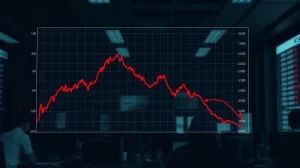
Global digital asset investment funds recorded their fourth consecutive week of outflows totaling $173 million in late 2024, with U.S. investors leading a substantial $403 million withdrawal that signals shifting market sentiment. Meanwhile, XRP and Solana funds continued attracting capital despite broader market pressures, creating a complex investment arena that demands careful analysis.
Digital Asset Funds Experience Sustained Outflow Pressure
Investment vehicles tracking cryptocurrency markets have faced persistent selling pressure throughout November 2024. According to verified data from CoinShares and Bloomberg, digital asset funds recorded $173 million in net outflows during the week ending November 22. This marked the fourth straight week of negative flows, bringing the total monthly outflow to approximately $480 million. The consistent pattern suggests institutional investors remain cautious about near-term market prospects.
Also read: Crypto Listing Scams: Binance CEO Changpeng Zhao Issues Critical Warning to Investors
Market analysts attribute this trend to several interconnected factors. First, regulatory uncertainty continues affecting investor confidence in major markets. Second, macroeconomic conditions including interest rate policies influence capital allocation decisions. Third, seasonal factors often impact investment flows during the fourth quarter. These elements combine to create challenging conditions for digital asset funds seeking stable capital.
U.S. Investors Drive Significant Capital Withdrawals
American investors accounted for the majority of outflows, withdrawing approximately $403 million from digital asset funds during the four-week period. This substantial capital movement represents nearly 70% of total global outflows. The United States remains the largest cryptocurrency market by trading volume and institutional participation, making these withdrawals particularly significant for overall market sentiment.
Several specific factors contributed to this U.S.-focused selling pressure. Regulatory developments from the Securities and Exchange Commission created uncertainty about future compliance requirements. Additionally, major financial institutions adjusted their cryptocurrency exposure in response to quarterly rebalancing needs. Furthermore, tax considerations ahead of year-end reporting deadlines influenced some investor decisions. These practical considerations drove capital movements beyond simple market speculation.
Expert Analysis of U.S. Market Dynamics
Financial analysts at JPMorgan Chase and Goldman Sachs provided context for these capital movements. According to their research reports, institutional investors typically reduce cryptocurrency exposure during periods of regulatory uncertainty. The current environment features multiple pending regulatory decisions that affect market stability. Consequently, risk-averse investors temporarily reallocate capital to less volatile assets while awaiting clearer regulatory frameworks.
Historical data supports this pattern of behavior. During similar periods in 2022 and 2023, digital asset funds experienced comparable outflow patterns preceding regulatory clarity. Market participants generally view these movements as temporary adjustments rather than permanent exits. However, the duration and magnitude of current outflows exceed previous instances, suggesting heightened caution among institutional investors.
XRP and Solana Defy Broader Market Trends
Despite overall outflows, specific digital assets demonstrated remarkable resilience. XRP-focused investment products attracted $4.2 million in inflows during the same period, continuing a positive trend that began in October. Solana funds recorded even stronger performance with $10.6 million in inflows, marking their eleventh consecutive week of positive capital movement. These contrasting performances highlight the increasingly selective nature of cryptocurrency investment.
The divergence between asset classes reveals important market dynamics. XRP benefits from recent legal clarity following its extended litigation with the SEC. Solana continues attracting developer activity and institutional interest despite previous network challenges. Both assets demonstrate how specific fundamentals can overcome broader market sentiment. This selective investment pattern represents maturation within digital asset markets as investors differentiate between projects based on individual merits.
| Asset | Weekly Flow | 4-Week Trend | Primary Region |
|---|---|---|---|
| Bitcoin Funds | -$156M | Consistent Outflows | Global |
| Ethereum Funds | -$34M | Mixed Flows | U.S. & Europe |
| XRP Funds | +$4.2M | Positive Inflows | Global |
| Solana Funds | +$10.6M | 11 Weeks Inflows | U.S. Dominant |
| Multi-Asset Funds | +$8.1M | Stable Inflows | Institutional |
Global Market Context and Regional Variations
While U.S. investors dominated outflows, other regions displayed more nuanced patterns. European digital asset funds experienced modest outflows of approximately $29 million during the same period. Asian markets showed mixed results with Japan recording slight inflows while South Korea maintained neutral positioning. These regional variations reflect different regulatory environments and market maturity levels across global jurisdictions.
Brazilian and Canadian markets demonstrated particular resilience despite broader trends. Both jurisdictions have established clearer regulatory frameworks for digital assets, providing investors with greater certainty. This correlation between regulatory clarity and investment stability appears consistently across global markets. Consequently, regions with progressive digital asset regulations generally experience more stable investment flows during market uncertainty.
Historical Perspective on Market Cycles
Current outflow patterns fit within historical market cycles observed since 2017. Digital asset funds typically experience periods of consolidation following significant price appreciation. The current cycle began with substantial inflows during early 2024, totaling approximately $2.3 billion between January and March. Subsequent months showed stabilization before the current outflow phase began in late October.
Previous cycles suggest several probable outcomes. First, outflows often precede periods of price consolidation or moderate correction. Second, selective inflows to specific assets like XRP and Solana indicate underlying strength in those ecosystems. Third, institutional participation typically increases following outflow periods as prices stabilize. Historical precedent therefore suggests current outflows represent normal market behavior rather than structural weakness.
Impact on Digital Asset Fund Management Strategies
Fund managers have adjusted strategies in response to persistent outflows. Several major institutions implemented enhanced liquidity management protocols to handle redemption requests efficiently. Additionally, many funds increased communication with investors regarding market conditions and strategic positioning. These proactive measures help maintain stability during challenging market periods.
Specific strategic adjustments include:
- Enhanced diversification across asset classes and geographic regions
- Increased cash positions to meet potential redemption requirements
- Strategic rebalancing toward assets demonstrating fundamental strength
- Improved investor education regarding market cycles and long-term value
These adjustments reflect maturation within digital asset fund management as the industry develops more sophisticated risk management approaches. The ability to deal with outflow periods successfully represents an important milestone for institutional cryptocurrency products.
Regulatory Developments Influencing Investor Behavior
Multiple regulatory factors contributed to current outflow patterns. In the United States, pending legislation regarding cryptocurrency taxation created uncertainty for institutional investors. Simultaneously, European markets implemented MiCA regulations that established clearer frameworks but required portfolio adjustments. These simultaneous regulatory developments across major markets created temporary dislocations in investment flows.
The SEC’s ongoing consideration of spot Bitcoin ETF applications represents another significant factor. While several applications remain under review, the extended timeline has delayed anticipated institutional participation. Many investors adopted wait-and-see approaches pending regulatory decisions. This cautious positioning contributed to outflow patterns as capital awaited clearer signals before committing to digital asset funds.
Conclusion
Digital asset funds face challenging conditions with four consecutive weeks of outflows totaling $173 million, driven primarily by U.S. investors withdrawing $403 million. However, selective inflows to XRP and Solana funds demonstrate continued interest in specific digital assets with strong fundamentals. These market dynamics reflect normal cyclical behavior within maturing cryptocurrency markets rather than structural weakness. As regulatory frameworks clarify and institutional participation evolves, digital asset funds will likely experience more stable investment patterns supporting long-term growth.
FAQs
Q1: What caused the fourth straight week of outflows from digital asset funds?
The outflows resulted from multiple factors including regulatory uncertainty, macroeconomic conditions, seasonal investment patterns, and institutional portfolio rebalancing ahead of year-end reporting requirements.
Q2: Why did U.S. investors withdraw $403 million specifically?
American investors responded to pending regulatory decisions, tax considerations, and risk management strategies that temporarily reduced cryptocurrency exposure during a period of market uncertainty.
Q3: How did XRP and Solana continue attracting inflows during overall outflows?
XRP benefited from legal clarity following its SEC case resolution, while Solana demonstrated strong developer activity and institutional interest despite broader market pressures.
Q4: Are these outflows unusual for digital asset markets?
Historical patterns show similar outflow periods typically occur after significant price appreciation and represent normal market consolidation rather than structural problems.
Q5: What might reverse the current outflow trend?
Clearer regulatory frameworks, stabilized macroeconomic conditions, institutional product approvals like spot Bitcoin ETFs, and demonstrated fundamental strength across digital asset ecosystems could reverse outflow patterns.

This article was produced with AI assistance and reviewed by our editorial team for accuracy and quality.