DEX ASTER Trading Competition Unveils Revolutionary $50K Prize Pool for Commodity Pairs
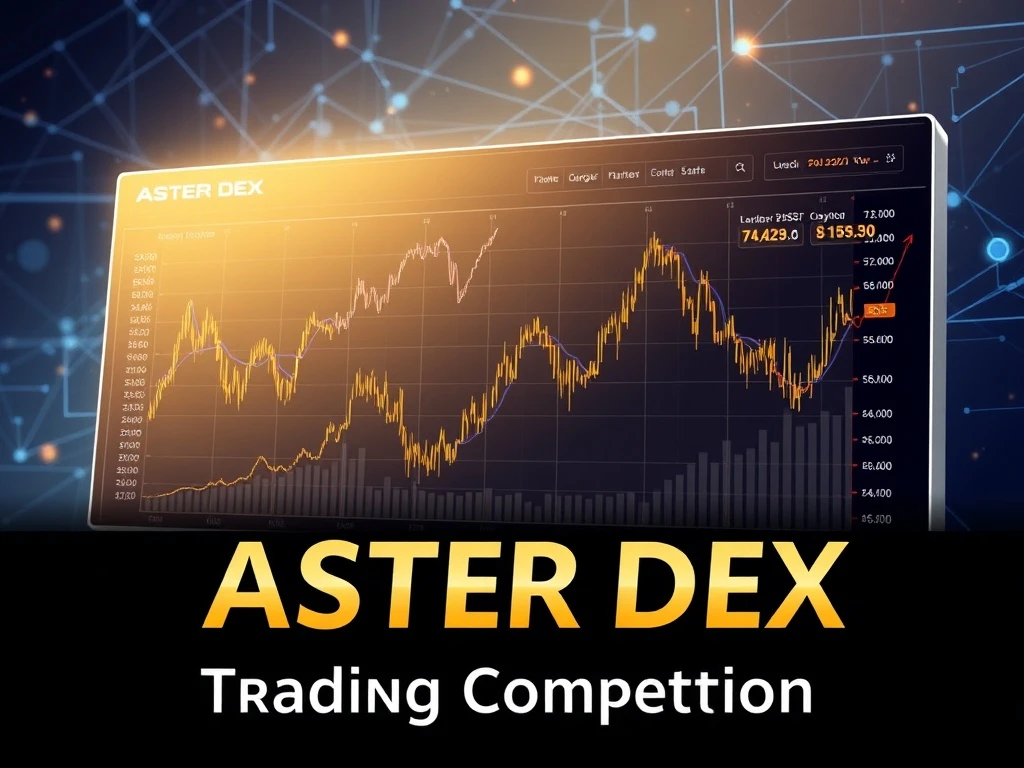
In a strategic move blending traditional finance with decentralized innovation, DEX ASTER has announced a novel trading competition featuring a substantial $50,000 prize pool exclusively for commodity-based trading pairs. This event, scheduled from January 29 to February 5, 2025, represents a significant development in the convergence of real-world assets and cryptocurrency markets. The competition specifically targets four key commodity pairs: XAU/USDT (gold), XAG/USDT (silver), XPT/USDT (platinum), and XCU/USDT (copper), creating a unique opportunity for traders familiar with both traditional commodities and digital asset markets.
DEX ASTER Trading Competition Mechanics and Structure
The DEX ASTER trading competition introduces a sophisticated reward mechanism that fundamentally differs from conventional volume-based contests. Participants must achieve a minimum cumulative trading volume of $10,000 during the competition period to qualify for rewards. However, the actual prize distribution employs an innovative Open Interest (OI) score system rather than simple trading volume metrics. This OI score calculates a time-weighted average of each participant’s contribution to market open interest, effectively rewarding traders who maintain positions longer and provide sustained liquidity to the platform.
Also read: Bitcoin Spot ETFs Shatter Positive Streak With $296 Million Outflow
Industry analysts recognize this approach as a strategic evolution in decentralized exchange incentive structures. Traditional trading competitions often encourage rapid, high-frequency trading that can increase market volatility without necessarily improving liquidity depth. Conversely, the OI-based scoring system promotes more stable market conditions by incentivizing position maintenance. This methodology aligns with broader DeFi trends toward sustainable liquidity provision, particularly important for commodity pairs that typically attract longer-term investment strategies compared to purely speculative crypto assets.
The Commodity Tokenization Space in 2025
Commodity-backed tokens have experienced substantial growth throughout 2024 and into 2025, with total value locked in commodity DeFi protocols increasing by approximately 187% year-over-year according to recent blockchain analytics reports. Gold tokens (XAU) maintain dominance in this sector, representing nearly 62% of all commodity token trading volume across major decentralized exchanges. Silver (XAG) tokens follow at 22%, while platinum (XPT) and copper (XCU) tokens constitute the remaining market share but show the highest growth rates at 315% and 287% respectively over the past six months.
Also read: Bitcoin Strategy Divide: GameStop's 4,710 BTC Hold Contrasts With Nation's Massive Sell-Off
This expansion coincides with increasing institutional interest in tokenized real-world assets. Major financial institutions have allocated an estimated $4.2 billion to commodity tokenization infrastructure in 2024 alone. The timing of DEX ASTER’s competition strategically positions the platform within this growing market segment. By focusing exclusively on commodity pairs, the exchange differentiates itself from competitors while catering to traders seeking exposure to inflation-hedge assets within the decentralized finance ecosystem.
Technical Implementation and Competition Parameters
The competition operates within precise technical parameters designed to ensure fairness and transparency. The event commences at 2:30 a.m. UTC on January 29, 2025, and concludes at 4:00 p.m. UTC on February 5, 2025, providing participants with approximately eight full days of trading activity. All trades must occur on the ASTER decentralized exchange platform through verified wallet connections. The platform employs smart contract-based tracking for both trading volume and open interest calculations, with real-time leaderboard updates available to participants.
Reward distribution follows a graduated structure based on participants’ final OI scores relative to the total competition OI. The minimum reward threshold is set at 1 USDF, ensuring even smaller participants receive recognition for their contributions. However, the majority of the $50,000 prize pool will distribute proportionally to top performers based on their OI score rankings. This structure creates multiple incentive tiers, encouraging participation across different trading capital levels while concentrating larger rewards on those providing the most significant liquidity contributions.
- Competition Duration: January 29 – February 5, 2025 (8 days)
- Qualifying Volume: Minimum $10,000 cumulative trading volume
- Reward Mechanism: OI score-based proportional distribution
- Minimum Reward: 1 USDF for all qualifying participants
- Trading Pairs: XAU/USDT, XAG/USDT, XPT/USDT, XCU/USDT
Strategic Implications for DeFi Liquidity Models
DEX ASTER’s competition represents more than a promotional event; it serves as a live experiment in alternative liquidity incentive models. The OI scoring system addresses several persistent challenges in decentralized exchange design. First, it reduces the incentive for wash trading, a common issue in volume-based competitions where traders execute circular trades to inflate volume metrics without meaningful market impact. Second, it encourages more strategic position management, as traders must balance entry and exit timing against the time-weighted scoring algorithm.
Blockchain researchers have documented similar incentive models in academic literature, but practical implementations remain relatively rare. A 2024 study published in the Journal of Decentralized Finance analyzed 47 different trading competitions across major DEX platforms, finding that only 12% employed metrics beyond simple volume counting. Among those, just three platforms utilized time-weighted scoring mechanisms similar to ASTER’s OI system. The competition therefore provides valuable data for the broader DeFi community regarding alternative incentive structures and their effects on market quality metrics.
Market Context and Competitive Space
The announcement arrives during a period of intensified competition among decentralized exchanges for market share in specialized trading verticals. Throughout 2024, several major DEX platforms launched initiatives targeting specific asset classes, including prediction markets, real estate tokens, and now commodity pairs. ASTER’s focus on commodities positions the exchange within a niche but rapidly expanding segment of the DeFi ecosystem. Current market data indicates commodity token trading volume across all platforms reached $18.7 billion in Q4 2024, representing a 94% increase from the previous quarter.
Competition timing also aligns with macroeconomic factors influencing commodity markets. Gold traditionally serves as a hedge against inflation and currency devaluation, concerns that have resurfaced in global economic discussions throughout early 2025. Silver maintains dual appeal as both a precious metal and industrial commodity, while platinum and copper benefit from increasing adoption in green energy technologies. By structuring the competition around these specific assets, DEX ASTER attracts traders with diverse motivations, from inflation hedging to technological optimism, potentially increasing participation breadth and depth.
| Token Pair | Monthly Volume | Price Volatility | Liquidity Depth |
|---|---|---|---|
| XAU/USDT | $8.2B | 2.8% | $42M |
| XAG/USDT | $3.1B | 4.2% | $18M |
| XPT/USDT | $1.4B | 5.7% | $9M |
| XCU/USDT | $0.9B | 6.3% | $6M |
Risk Considerations and Participant Guidance
While trading competitions offer reward opportunities, participants should approach them with appropriate risk management strategies. Commodity markets, even in tokenized form, remain subject to fundamental supply-demand dynamics, geopolitical factors, and macroeconomic trends. The competition’s OI scoring system may encourage longer position holding than some traders typically maintain, potentially exposing participants to overnight and weekend price gaps. Additionally, the $10,000 minimum volume requirement represents a substantial commitment, particularly for retail traders.
Decentralized finance experts recommend several precautionary measures for competition participants. First, traders should maintain standard risk management protocols despite the competition’s incentive structure. Second, participants should verify they understand the OI scoring algorithm thoroughly, as strategic position management differs from conventional trading approaches. Third, traders must consider gas fees and transaction costs, which can significantly impact net returns, especially when executing the volume necessary to qualify. Finally, participants should recognize that all trading involves risk, and past performance of commodity tokens provides no guarantee of future results.
Conclusion
The DEX ASTER trading competition represents a significant innovation in decentralized exchange incentive design, particularly through its focus on commodity pairs and implementation of an OI-based scoring system. This event provides valuable insights into alternative liquidity provision models while offering participants substantial reward opportunities within a growing market segment. As commodity tokenization continues expanding throughout 2025, initiatives like this competition will likely influence how decentralized exchanges structure incentives and attract specialized trading communities. The DEX ASTER trading competition therefore serves both as a market development tool and a research opportunity for the broader DeFi ecosystem.
FAQs
Q1: What is the OI score system used in the DEX ASTER trading competition?
The OI (Open Interest) score measures a participant’s time-weighted average contribution to market open interest rather than simple trading volume. This system rewards traders who maintain positions longer, encouraging sustained liquidity provision rather than rapid turnover.
Q2: How does the $10,000 minimum trading volume requirement work?
Participants must achieve at least $10,000 in cumulative trading volume across the four designated commodity pairs during the competition period. This volume includes both buy and sell trades, and traders can distribute their activity across multiple pairs to reach the threshold.
Q3: What are commodity pairs in cryptocurrency trading?
Commodity pairs represent tokenized versions of physical commodities like gold (XAU), silver (XAG), platinum (XPT), and copper (XCU) traded against stablecoins like USDT. These tokens typically track the price of their underlying commodities through various collateralization or oracle mechanisms.
Q4: Why is DEX ASTER focusing specifically on commodity pairs for this competition?
Commodity tokenization represents one of the fastest-growing segments in decentralized finance. By focusing on this niche, ASTER differentiates itself from competitors while attracting traders interested in real-world asset exposure within the DeFi ecosystem.
Q5: How will rewards be distributed after the competition concludes?
Rewards will distribute proportionally based on participants’ final OI scores relative to the total competition OI. The platform will calculate scores after the competition ends, verify all qualifying trades, and distribute prizes to connected wallets, typically within 7-10 business days.

This article was produced with AI assistance and reviewed by our editorial team for accuracy and quality.