DePIN’s Remarkable Resurgence: How Real-World Crypto Infrastructure Built a $10 Billion Market in 2025
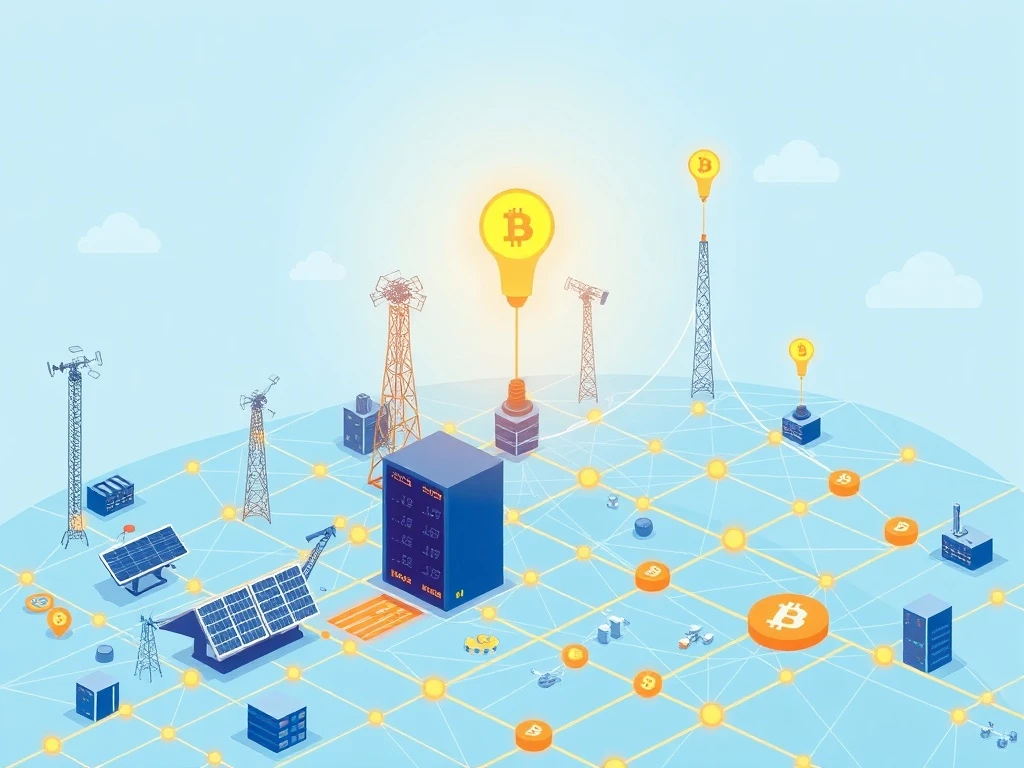
January 2025 – The decentralized physical infrastructure network (DePIN) sector, once overshadowed by speculative crypto trends, has staged a powerful comeback, according to a comprehensive new industry analysis. Messari’s “State of DePIN 2025” report reveals the market has reached a formidable $10 billion valuation, fundamentally challenging narratives about cryptocurrency’s utility. This resurgence stems not from token price appreciation, but from tangible, on-chain revenue generation and a pivot toward economically viable infrastructure projects.
DePIN’s Market Resurgence Defies Crypto Volatility
Messari’s data presents a compelling paradox within the cryptocurrency landscape. While many DePIN project tokens experienced significant price declines throughout 2024, the underlying networks demonstrated robust financial health. The sector collectively generated over $72 million in verifiable on-chain revenue during the reporting period. This divergence highlights a critical maturation: value is increasingly derived from operational performance rather than speculative trading.
Also read: AI Trading Agents: The Revolutionary Path to Mastering Your Crypto Portfolio in 2025
For instance, the Helium Network, a pioneer in decentralized wireless infrastructure, reported an astonishing 800% increase in its network usage revenue. This growth occurred alongside a 77% depreciation in its HNT token’s market price. Consequently, this dynamic underscores a shift where investor focus moves from tokenomics-driven inflation to sustainable business models. The “DePIN Leaders” index, tracking 15 projects each producing a minimum of $500,000 in annual revenue, validates this trend toward fundamental strength.
The Core Drivers Behind Decentralized Physical Networks
DePIN projects operate by incentivizing individuals and organizations to deploy and share real-world hardware resources. Participants earn crypto tokens for providing services like wireless coverage, data storage, or sensor data. Messari’s report emphasizes this sector’s break from purely financial applications. The focus is now on concrete utility across several verticals.
Also read: RunBot AI Trading Bot: Revolutionizing Automated Cryptocurrency Strategies with Machine Learning
- Wireless Connectivity: Networks like Helium and Pollen Mobile build decentralized 5G and LoRaWAN coverage.
- Geospatial Data: Projects such as Hivemapper create decentralized mapping systems via dashcam data.
- Compute Power: Platforms like Render and Akash Network decentralize GPU and server capacity for rendering and AI workloads.
- Energy Grids: Initiatives including React and PowerLedger enable peer-to-peer energy trading using blockchain.
This utility-first approach provides a natural hedge against market speculation. Revenue correlates directly with resource provision and consumption, creating a more predictable and rational economic framework. Analysts note this model attracts a different investor profile—one focused on infrastructure-as-a-service yields rather than short-term token pumps.
InfraFi: The Hybrid Model Financing Real-World Assets
A particularly innovative trend highlighted by Messari is the rise of “Infrastructure Finance” or InfraFi. This hybrid model leverages crypto’s capital efficiency to fund physical infrastructure development. Essentially, projects use stablecoins and tokenized assets to finance fleets of hardware—such as GPU clusters for AI or arrays of solar panels. Investors then receive a yield directly tied to the revenue these physical assets generate.
Projects like USDai, Dawn, and Daylight exemplify this trend. In 2025 alone, this subsector attracted over $1 billion in committed capital. Significantly, this capital seeks real-world profitability, not narrative-driven appreciation. A project financing AI training nodes, for example, must demonstrate compute demand and competitive pricing to succeed. This requirement imposes traditional business discipline onto the crypto funding model.
Comparative Analysis: DePIN vs. Traditional DeFi and L1s
The performance of DePIN stands in stark contrast to other crypto sectors. Many decentralized finance (DeFi) protocols and layer-1 blockchains remain heavily dependent on token emissions and speculative activity to drive usage. Their revenue models often tie closely to trading volumes, which fluctuate wildly with market sentiment. DePIN, however, creates value through external, real-world demand.
The following table illustrates key differentiating factors:
| Factor | Traditional DeFi / L1 | DePIN Sector |
|---|---|---|
| Primary Revenue Driver | Speculative trading, lending fees | Physical resource provision & consumption |
| Value Correlation | High correlation to crypto market cycles | Moderate correlation; tied to specific utility demand |
| Capital Allocation (2025) | Retreating towards established protocols | Growing, focused on infrastructure deployment |
| Regulatory Perception | Often viewed as financial securities | Increasingly seen as utility or telecom services |
This divergence suggests DePIN may offer a more resilient investment thesis during broader market downturns. Its success depends on executing real-world service contracts and achieving technological adoption, not merely attracting liquidity.
The Strategic Importance for Web3 and Beyond
Messari’s analysis positions DePIN as a central pillar for the next phase of Web3 development. The convergence of artificial intelligence, robotics, and IoT with decentralized networks creates unprecedented demand for verifiable, scalable infrastructure. DePIN protocols are uniquely positioned to coordinate and monetize these physical resources at a global scale without centralized intermediaries.
Industry experts point to several macro-trends fueling DePIN’s growth. The global demand for data, especially for AI training, continues to outstrip the supply of centralized data center capacity. Similarly, the transition to renewable energy requires more flexible, decentralized grid management solutions. DePIN networks provide a cryptographically secure and incentive-aligned framework to build these systems.
Furthermore, the transparency of blockchain-based accounting allows for precise measurement of resource contribution and reward distribution. This transparency builds trust among participants and provides regulators with clear audit trails. As such, the sector is gradually moving from a niche crypto concept to a legitimate alternative for building critical 21st-century infrastructure.
Conclusion
The DePIN sector’s ascent to a $10 billion market, as documented by Messari, marks a pivotal evolution in cryptocurrency’s narrative. The focus has decisively shifted from speculative value to tangible utility and real-world revenue generation. The emergence of InfraFi and the strong performance of networks like Helium, despite token price volatility, demonstrate a maturing industry prioritizing sustainable economics. For investors and builders, DePIN represents a compelling convergence of blockchain innovation with physical world impact, potentially paving the way for a more robust and utility-driven crypto ecosystem in the years ahead.
FAQs
Q1: What exactly is DePIN?
DePIN stands for Decentralized Physical Infrastructure Networks. These are blockchain-based protocols that incentivize people to deploy real-world hardware—like wireless hotspots, sensors, or data servers—to build and operate physical infrastructure in a decentralized manner. Contributors earn crypto tokens for providing these resources.
Q2: Why is the DePIN market growing if token prices are down?
The growth is driven by fundamental utility, not speculation. Networks are generating real revenue from users paying for services like data storage, wireless connectivity, or compute power. Messari’s report shows strong on-chain revenue growth even during a period of token price depreciation, indicating a healthy, usage-based economy.
Q3: What is InfraFi, and how does it relate to DePIN?
InfraFi, or Infrastructure Finance, is a subset of DePIN that uses crypto capital (often stablecoins) to fund the deployment of physical assets like GPU clusters or solar farms. Investors receive yields based on the revenue these assets generate, creating a direct link between crypto investment and real-world infrastructure profitability.
Q4: Is DePIN only relevant for the crypto industry?
No, its relevance is far broader. DePIN networks provide infrastructure services critical for AI, telecommunications, energy, and IoT. They offer a decentralized alternative to traditional, centralized service providers like cloud companies or telecom operators, potentially offering lower costs and greater resilience.
Q5: What are the main risks associated with DePIN projects?
Key risks include technological execution challenges, regulatory uncertainty regarding hardware deployment and telecom services, competition from well-funded traditional incumbents, and the long-term sustainability of token incentive models once initial rewards diminish. Success depends on achieving genuine commercial adoption.

This article was produced with AI assistance and reviewed by our editorial team for accuracy and quality.