Dental 3D Printing Market Surges Toward $10.06 Billion as Digital Dentistry Revolutionizes Patient Care
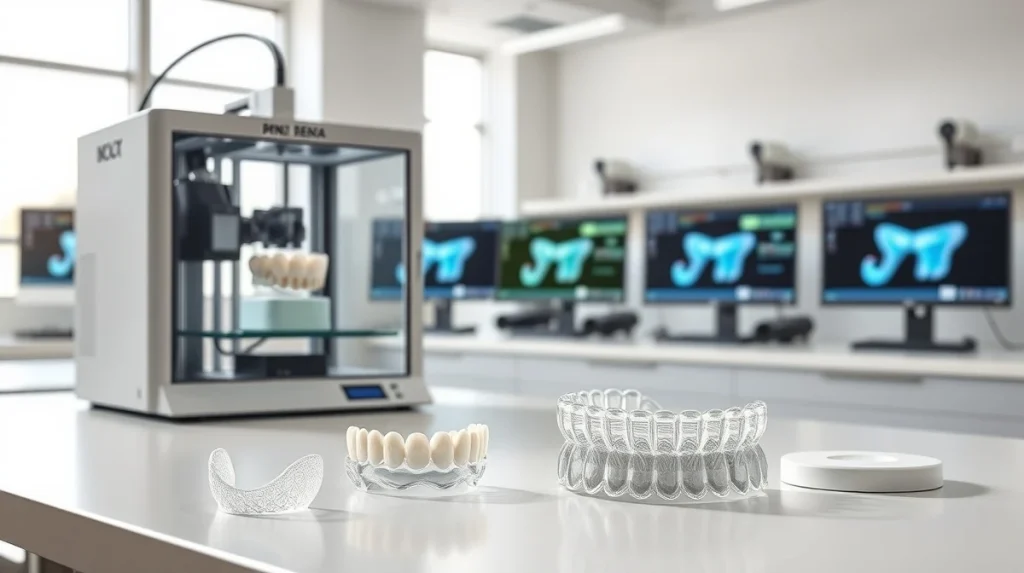
The global dental 3D printing market is undergoing a significant transformation, with analysts projecting its value to reach approximately $10.06 billion by 2030. This remarkable growth, driven primarily by the accelerating adoption of digital dentistry, represents a fundamental shift in how dental professionals diagnose, plan, and execute patient care. As of March 2026, dental laboratories and clinics worldwide are increasingly integrating additive manufacturing to create crowns, bridges, aligners, and surgical guides with remarkable speed and accuracy.
Digital Dentistry Adoption Fuels Market Expansion
The transition from analog impression techniques to fully digital workflows serves as the core engine for the dental 3D printing market’s expansion. Consequently, practices are investing in intraoral scanners, computer-aided design (CAD) software, and in-office printers. This integrated approach streamlines production, often reducing turnaround times for dental restorations from weeks to a single day. Furthermore, the push for cost-effective and personalized patient solutions makes additive manufacturing an attractive alternative to traditional milling and outsourcing.
Also read: M Series ANC Token Presale Launches with Detailed Vesting
Key applications demonstrating reliable growth include:
- Fixed Prosthodontics: Crowns, bridges, inlays, and onlays.
- Orthodontics: Clear aligners and custom brackets.
- Implantology: Surgical guides for precise implant placement.
- Denture Bases and Frameworks: Both partial and complete dentures.
Market data indicates that the acceptance of these technologies is no longer limited to large, urban clinics. Instead, smaller regional practices are now adopting entry-level systems, thereby broadening the overall market base significantly.
Also read: Pepeto Presale Attracts Investor Interest Amid Meme Coin Rally
Technological Advancements and Material Innovation
Parallel to the adoption of digital workflows, continuous innovation in 3D printing technologies and compatible materials directly contributes to market growth. Manufacturers are developing printers with higher resolution, faster print speeds, and improved biocompatibility certifications for dental resins and metals. Notably, the evolution of dental-specific materials—such as permanent crown resins, flexible denture bases, and ceramic composites—has expanded the range of viable clinical applications.
The table below outlines primary 3D printing technologies utilized in dentistry:
| Technology | Common Applications | Key Material Types |
|---|---|---|
| Vat Polymerization (SLA/DLP) | Surgical guides, models, temporary restorations | Photopolymer resins |
| Material Jetting | High-detail crowns, bridges, and dental models | Composite resins |
| Powder Bed Fusion (SLM/DMLS) | Metal crown & bridge frameworks, implant components | Cobalt-chrome, titanium alloys |
| Fused Deposition Modeling (FDM) | Study models, non-clinical prototypes | Thermoplastics |
These advancements collectively enhance the functional and aesthetic outcomes for patients while giving dentists greater control over the final product.
Economic and Operational Drivers for Clinics
Beyond clinical benefits, powerful economic incentives are propelling the dental 3D printing market forward. Practices implementing in-house printing capabilities often report reduced laboratory costs, lower inventory needs for physical impression materials, and decreased rates of restoration remakes due to improved fit. Additionally, the ability to produce devices on-demand improves practice efficiency and patient satisfaction through fewer appointments.
The competitive environment also plays a role. As early-adopter practices market their digital capabilities, patient expectations evolve, creating a ripple effect that encourages broader industry adoption. This trend is particularly evident in cosmetic and implant dentistry segments, where precision and customization are paramount.
Regional Market Dynamics and Future Trajectory
Market growth is not uniform globally. North America and Europe currently lead in adoption rates, supported by established healthcare infrastructure, higher dental expenditure, and early regulatory clearances for dental printing materials. However, the Asia-Pacific region is identified as the fastest-growing market, fueled by increasing healthcare investment, a growing middle class seeking advanced dental care, and the expansion of dental service organizations.
Looking ahead, several key trends are expected to shape the market trajectory through 2030. These include the further integration of artificial intelligence for automated dental restoration design, the development of stronger and more aesthetic printable ceramics, and the potential for bioprinting applications in regenerative dentistry. Nevertheless, challenges remain, such as the high initial capital investment for advanced systems, the need for continuous staff training, and varying regulatory pathways across different countries.
Conclusion
The projected growth of the dental 3D printing market to $10.06 billion by 2030 underscores a definitive shift toward digital, patient-centric dentistry. This expansion is fundamentally linked to the widespread adoption of digital workflows, continuous technological refinement, and the compelling economic value proposition for dental practices. As the technology becomes more accessible and its applications broaden, 3D printing is likely to become a standard tool in modern dental care, ultimately enhancing treatment outcomes, efficiency, and accessibility for patients worldwide.
FAQs
Q1: What is driving the growth of the dental 3D printing market?
The primary driver is the rapid adoption of digital dentistry workflows, which replace traditional analog impressions with intraoral scanning, CAD software, and in-office printing. This shift offers faster turnaround, cost savings, and highly customized patient solutions.
Q2: What are the most common dental applications for 3D printing?
Common applications include surgical guides for dental implants, clear orthodontic aligners, crowns and bridges, denture frameworks, and detailed anatomical models for diagnosis and treatment planning.
Q3: Which regions are leading in the adoption of dental 3D printing?
As of 2026, North America and Europe are the leading markets due to advanced healthcare infrastructure and early technology adoption. The Asia-Pacific region, however, is experiencing the fastest growth rate.
Q4: What types of materials are used in dental 3D printing?
Materials include photopolymer resins for models and temporaries, ceramic-filled composites for permanent restorations, and metal powders like cobalt-chrome and titanium for durable frameworks and implants. All materials require specific biocompatibility certifications.
Q5: What are the main challenges facing the wider adoption of dental 3D printing?
Key challenges include the significant upfront cost of high-end printing systems, the ongoing need for technician and clinician training, managing regulatory approvals for new materials, and integrating new digital workflows into existing practice management systems.

This article was produced with AI assistance and reviewed by our editorial team for accuracy and quality.