Denmark Greenland Sovereignty: Defiant Stance Against Geopolitical Pressure in Arctic Power Play
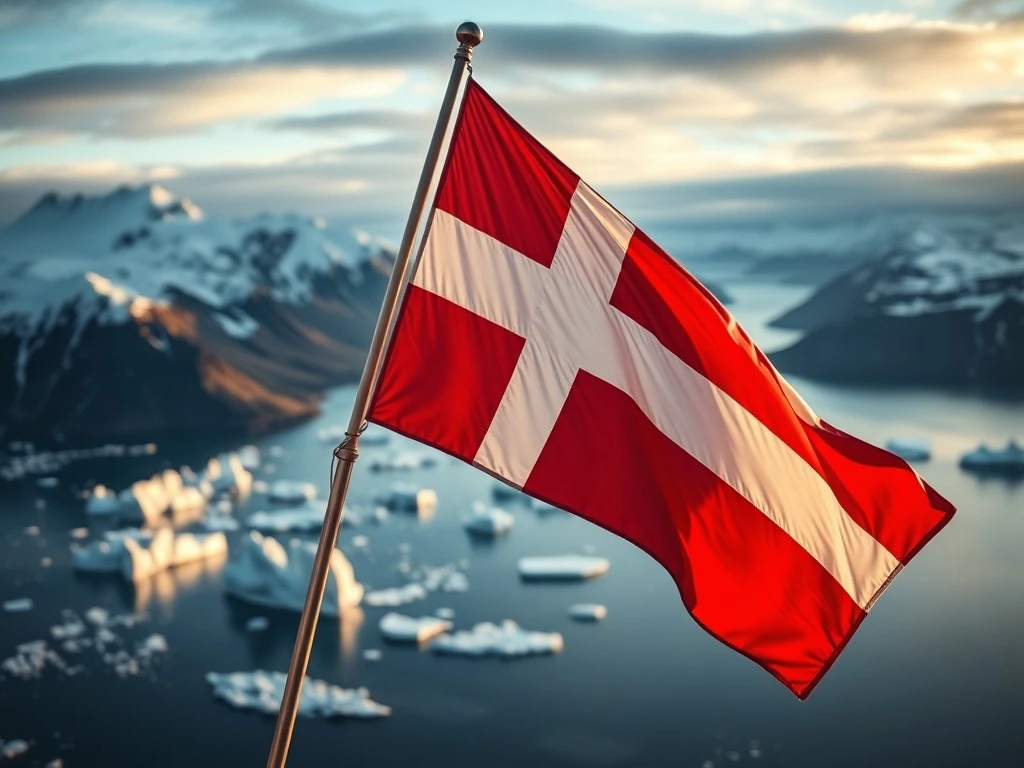
COPENHAGEN, Denmark – In a definitive statement reverberating across global diplomatic circles, Danish Prime Minister Mette Frederiksen has unequivocally declared that Denmark will not relinquish sovereignty over Greenland. This firm position directly addresses renewed geopolitical pressures surrounding the strategically vital Arctic territory. The announcement follows persistent international speculation and historical precedents of external interest in the world’s largest island.
Denmark Greenland Sovereignty: A Historical and Strategic Imperative
Denmark has maintained constitutional ties with Greenland since 1721. Consequently, the relationship evolved significantly in 1979 when Greenland gained home rule. Furthermore, the territory achieved self-government in 2009. However, Denmark retains control over foreign policy, security, and financial matters. This complex arrangement reflects centuries of cultural and political integration.
The Danish Prime Minister’s statement carries substantial weight for several reasons. First, Greenland possesses immense strategic value in Arctic shipping routes. Second, the territory holds untapped mineral resources. Third, climate change increasingly exposes new economic opportunities. Therefore, maintaining Denmark Greenland sovereignty represents both a constitutional duty and a strategic necessity.
Geopolitical analysts immediately noted the timing of this declaration. Specifically, it comes amid heightened Arctic competition among global powers. For instance, Russia continues expanding its military presence in the region. Similarly, China labels itself a “near-Arctic state” and pursues economic partnerships. Thus, Denmark’s position reinforces Western alignment in the High North.
Also read: Bitcoin Treasury Companies Face New Pressure as US-Iran Tensions Shift
Historical Context of Greenland Purchase Proposals
The concept of purchasing Greenland is not novel in international relations. In fact, the United States previously expressed interest multiple times throughout history. Most notably, President Harry Truman offered $100 million for Greenland in 1946. The Danish government rejected that proposal firmly. Similarly, reports surfaced in 2019 about President Donald Trump’s consideration of a purchase.
Historical records reveal consistent Danish resistance to territorial transfers. For example, Denmark refused German offers during World War II occupation. Additionally, the country maintained control despite post-war reconstruction challenges. This historical pattern demonstrates enduring commitment to Denmark Greenland sovereignty across political administrations.
| Year | Proposing Nation | Offer Details | Danish Response |
|---|---|---|---|
| 1867 | United States | Informal inquiry | Immediate rejection |
| 1946 | United States | $100 million offer | Formal refusal |
| 2019 | United States | Preliminary discussions | “Absurd” declaration |
Contemporary geopolitical dynamics differ significantly from historical contexts. Currently, climate change accelerates Arctic ice melt. This transformation opens new shipping lanes like the Northern Sea Route. Consequently, global trade patterns may shift dramatically. Greenland’s location becomes increasingly valuable for several reasons:
- Shipping control: Potential to monitor Arctic maritime traffic
- Resource access: Estimated oil, gas, and rare earth mineral deposits
- Research value: Climate science and environmental monitoring stations
- Military positioning: Strategic location for early warning systems
Geopolitical Analysis: Arctic Strategy Implications
Security experts emphasize Greenland’s importance in NATO’s northern flank. The territory hosts Thule Air Base, America’s northernmost military installation. This facility provides missile warning and space surveillance capabilities. Therefore, Denmark Greenland sovereignty directly affects transatlantic security architecture.
Regional specialists note Greenland’s evolving political sector. The local government increasingly seeks greater autonomy from Copenhagen. However, complete independence presents economic challenges. Greenland currently depends on Danish subsidies totaling approximately $535 million annually. This financial reality complicates sovereignty discussions.
International law experts reference the United Nations Charter regarding territorial integrity. Specifically, Article 2(4) prohibits force against territorial integrity. Additionally, the 1933 Montevideo Convention outlines statehood criteria. These legal frameworks support Denmark’s position on Denmark Greenland sovereignty.
Economic Dimensions and Resource Management
Greenland’s economy traditionally relied on fishing, which constitutes approximately 90% of exports. However, melting ice reveals substantial mineral resources. The territory potentially contains:
- Rare earth elements critical for electronics and renewable energy
- Substantial uranium deposits for nuclear energy
- Offshore oil and gas reserves in the Greenland Sea
- Rubies and other precious gemstones
The Danish government manages these resources through joint committees with Greenland’s authorities. This cooperative approach balances development with environmental protection. Moreover, Denmark provides technical expertise for sustainable extraction. This partnership demonstrates practical aspects of Denmark Greenland sovereignty.
Climate change presents both challenges and opportunities for Greenland. Rising temperatures threaten traditional hunting communities. Simultaneously, extended growing seasons enable new agriculture. Additionally, tourism increases as accessibility improves. Denmark supports adaptation through climate research and infrastructure investment.
Indigenous Rights and Cultural Considerations
Greenland’s population predominantly consists of Inuit peoples with distinct cultural heritage. The Danish constitution recognizes Greenlanders as a separate people with self-determination rights. This acknowledgment shapes contemporary governance structures. Cultural preservation remains integral to Denmark Greenland sovereignty discussions.
Language policies demonstrate this cultural commitment. Greenlandic (Kalaallisut) became the sole official language in 2009. Danish remains widely taught as a second language. Educational systems incorporate traditional knowledge alongside modern curricula. These measures strengthen social cohesion within the Kingdom of Denmark.
International Reactions and Diplomatic Fallout
European Union officials generally support Denmark’s position on Denmark Greenland sovereignty. The EU maintains strategic interests in Arctic stability. Additionally, Greenland retains special association status with the union despite leaving in 1985. This relationship facilitates trade and cooperation.
Russian media outlets have characterized the Danish statement as “predictable Western posturing.” Conversely, Chinese analysts note Greenland’s participation in Belt and Road initiatives. These contrasting responses highlight competing Arctic visions. Denmark navigates these complex diplomatic waters carefully.
Nordic neighbors express solidarity with Denmark’s position. Norway, Sweden, and Finland coordinate Arctic policies through regional forums. This cooperation strengthens collective bargaining power. Furthermore, Iceland shares similar small-state perspectives on sovereignty issues.
Conclusion
The Danish Prime Minister’s definitive statement on Denmark Greenland sovereignty reflects historical continuity and contemporary strategic calculation. This position acknowledges Greenland’s growing geopolitical importance amid Arctic transformation. The declaration reinforces constitutional commitments while addressing external pressures. Ultimately, Denmark Greenland sovereignty remains foundational to regional stability and international legal norms. Future developments will likely involve continued autonomy negotiations within the existing constitutional framework. The Kingdom of Denmark thus maintains its distinctive approach to balancing unity with self-determination in an increasingly competitive Arctic field.
FAQs
Q1: Why does Denmark maintain sovereignty over Greenland?
Denmark has governed Greenland since 1721 through historical colonization and subsequent constitutional integration. The relationship evolved through home rule (1979) and self-government (2009) arrangements while maintaining foreign policy and defense under Danish authority.
Q2: Can Greenland become an independent nation?
Greenland possesses the constitutional right to pursue independence through referendum under the 2009 Self-Government Act. However, economic challenges including reliance on Danish subsidies complicate immediate independence prospects.
Q3: What strategic value does Greenland offer?
Greenland provides strategic advantages including control over emerging Arctic shipping routes, access to rare earth minerals and hydrocarbons, military positioning for early warning systems, and climate research opportunities in a rapidly changing environment.
Q4: How does climate change affect Greenland’s future?
Climate change accelerates ice melt, opening new economic opportunities in shipping and resource extraction while threatening traditional livelihoods. These transformations increase Greenland’s geopolitical significance and complicate development decisions.
Q5: What is Thule Air Base’s significance?
Thule Air Base in northwestern Greenland represents America’s northernmost military installation, providing critical missile warning, space surveillance, and satellite tracking capabilities for North American and NATO defense systems.

This article was produced with AI assistance and reviewed by our editorial team for accuracy and quality.