
Danske Bank Crypto Policy Reversal: A Strategic Pivot Fueled by Regulatory Confidence
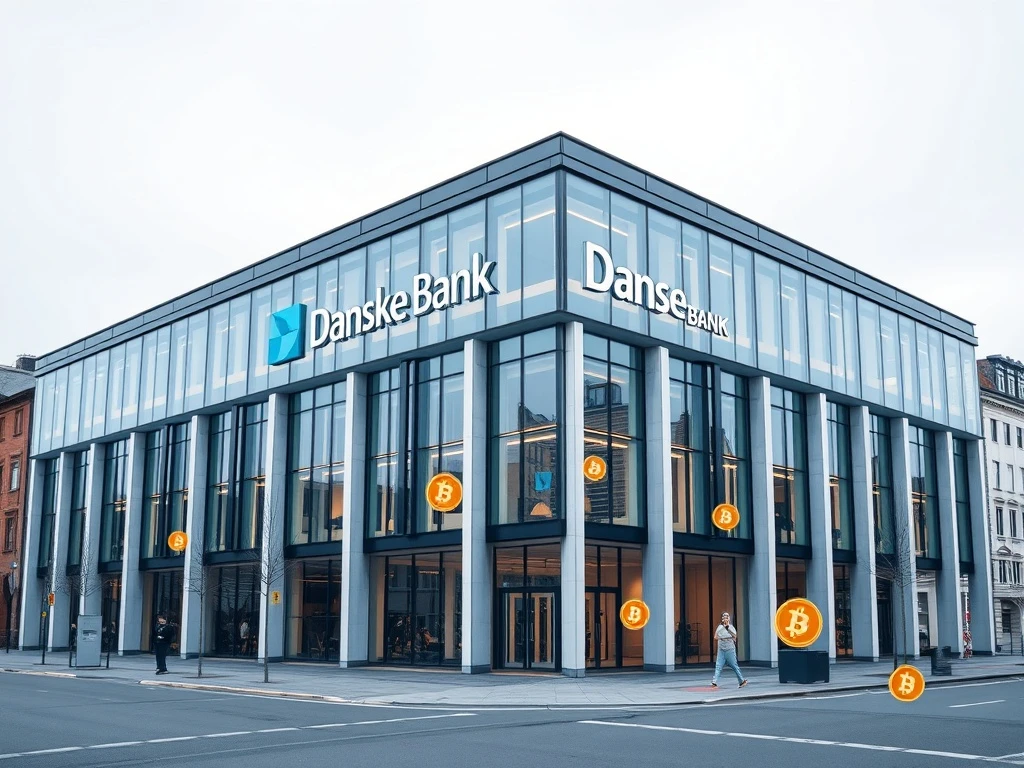
COPENHAGEN, Denmark – In a landmark decision that signals a profound shift in institutional finance, Danske Bank, Denmark’s largest financial institution, has officially reversed its longstanding restrictive stance on cryptocurrency. The bank announced on March 15, 2025, that it will now provide its clientele with access to Bitcoin and select crypto exchange-traded products (ETPs), directly attributing this strategic pivot to significant advancements in global cryptocurrency regulation. This move dismantles years of cautious avoidance and positions the Nordic banking giant at the forefront of traditional finance’s integration with the digital asset ecosystem.
Danske Bank Crypto Policy: From Restriction to Strategic Access
For nearly a decade, Danske Bank maintained a conservative position regarding digital assets. The bank previously cited market volatility, regulatory uncertainty, and concerns over money laundering as primary reasons for restricting client exposure. Consequently, this new policy represents a complete reversal. The bank will now facilitate investments in physically-backed Bitcoin ETPs and products tracking the CryptoNewsInsights Digital Asset Index. Importantly, this access comes with a maintained framework of investor warnings and risk disclosures. A senior bank executive stated the decision reflects a “matured regulatory landscape” rather than a diminished perception of asset risk.
The timeline of this shift is particularly revealing. Initial internal reviews began in late 2023, following the European Union’s finalization of the Markets in Crypto-Assets (MiCA) regulation framework. Subsequently, 2024 saw intensive due diligence on custody solutions, market infrastructure, and product vetting. This deliberate, multi-year process underscores the bank’s methodical approach. Furthermore, the policy change aligns with a broader trend among European banks. For instance, German savings banks and French investment firms have launched similar services since MiCA’s implementation.
The Regulatory Catalyst: MiCA and Global Standards
Danske Bank’s announcement repeatedly highlights “regulatory progress” as the core catalyst. The EU’s MiCA regulation, fully applicable from December 2024, provides a comprehensive rulebook for crypto-asset service providers. It establishes clear requirements for transparency, disclosure, authorization, and supervision of crypto transactions. This framework effectively addresses many traditional banks’ historical concerns regarding legal ambiguity and consumer protection.
Simultaneously, global standards from the Financial Action Task Force (FATF) and guidelines from the Basel Committee on Banking Supervision have created a more predictable environment. These developments allow a systemic bank like Danske to build compliant operational procedures. The bank’s decision, therefore, is not an endorsement of cryptocurrency’s price but a calculated response to a newly stabilized regulatory perimeter. This context is crucial for understanding the move’s significance beyond a simple product launch.
Operational Mechanics and Risk Management
The bank’s execution strategy involves offering exposure through established, regulated exchange-traded products listed on major European exchanges. This indirect model allows Danske Bank to leverage existing, supervised financial market infrastructure rather than building direct crypto custody. Clients will not purchase Bitcoin directly but will invest in securities that track the underlying asset’s price.
The bank has outlined a clear risk management stance, communicated through several key pillars:
- Custody & Security: All ETPs are held under the bank’s standard securities custody, relying on the product issuers’ regulated custody solutions.
- Client Suitability: Access is initially geared toward institutional and sophisticated private banking clients, with mandatory educational disclosures.
- Volatility Warnings: Explicit communications detail the high volatility and speculative nature of crypto assets compared to traditional investments.
This structured approach demonstrates how traditional finance intends to bridge the gap between innovative asset classes and institutional-grade risk controls. The table below contrasts the old and new policy frameworks:
| Policy Aspect | Pre-2025 Stance | 2025 Policy |
|---|---|---|
| Client Access | Blocked / Restricted | Permitted via Regulated ETPs |
| Primary Concern | Regulatory Void, AML Risks | Managed via MiCA Compliance |
| Target Clientele | N/A | Institutional & Sophisticated Investors |
| Risk Communication | General Warnings | Structured, Product-Specific Disclosures |
Market Impact and Competitive Landscape
Danske Bank’s reversal exerts immediate pressure on other Nordic and European banks that retain restrictive crypto policies. As a systemic institution with over 3.5 million retail customers, its actions carry substantial market influence. Analysts predict competitor banks will accelerate their own review processes to avoid losing high-net-worth clients seeking diversified portfolios. The move also validates the ETP and exchange-traded note (ETN) wrapper as the preferred vehicle for traditional finance entry.
Moreover, the decision impacts the broader digital asset industry. It signals to regulators and skeptics that within a clear regulatory framework, major banks can engage with crypto assets responsibly. This could encourage further institutional capital allocation. Data from the European Securities and Markets Authority (ESMA) shows a 40% year-over-year increase in assets under management in EU-listed crypto ETPs since MiCA’s final text was agreed upon, a trend Danske Bank is now directly feeding.
Expert Analysis and Long-Term Implications
Financial analysts specializing in fintech and regulation view this as an inevitable, yet significant, step. “Danske Bank’s move is less about crypto and more about regulatory compliance,” noted Dr. Elin Sørensen, a finance professor at Copenhagen Business School. “They are demonstrating that when the rulebook is clear, even the most conservative institutions can navigate new asset classes. The true test will be in scaling this access responsibly and integrating it with sustainable finance goals.”
The long-term implication extends beyond Bitcoin. By establishing the operational and compliance pipeline for crypto ETPs, Danske Bank creates a template for future digital asset services. This could include tokenized securities, fund distributions, or even central bank digital currency (CBDC) integration. The policy reversal is therefore a foundational step, not an end point. It reflects a strategic acknowledgment that digital assets are becoming a permanent, regulated component of global finance.
Conclusion
Danske Bank’s decision to reverse its crypto policy marks a definitive moment in the convergence of traditional and digital finance. Driven primarily by the maturation of comprehensive regulation like the EU’s MiCA, the bank is cautiously opening doors it once firmly shut. This strategic pivot provides clients with new investment avenues while maintaining rigorous risk management protocols. The Danske Bank crypto policy shift serves as a powerful indicator that regulatory clarity, not just market sentiment, is the key driver for institutional adoption. As other major banks observe this development, the landscape of European financial services continues its steady evolution toward a more integrated digital future.
FAQs
Q1: What exactly has Danske Bank changed in its crypto policy?
Danske Bank has shifted from prohibiting client exposure to cryptocurrencies to allowing investments in regulated Bitcoin and crypto index Exchange-Traded Products (ETPs). This provides indirect exposure through traditional securities infrastructure.
Q2: Why did Danske Bank make this change now?
The bank cites “regulatory progress” as the primary reason, specifically referencing the full implementation of the European Union’s Markets in Crypto-Assets (MiCA) regulation, which provides a clear legal framework for crypto-asset services.
Q3: Can any Danske Bank customer buy these crypto ETPs?
Initially, access is focused on institutional clients and sophisticated investors within the bank’s private banking division. The bank emphasizes suitability assessments and mandatory educational disclosures for all clients.
Q4: Does this mean Danske Bank is recommending cryptocurrency as an investment?
No. The bank maintains a cautious risk stance. It is providing access to the asset class while issuing strong warnings about high volatility and speculative risk. This is framed as responding to client demand within a newly regulated environment.
Q5: How does this affect other banks in Europe?
As Denmark’s largest bank, this move creates competitive pressure on other financial institutions. It may accelerate similar policy reviews across the Nordic region and broader European banking sector, encouraging more banks to offer regulated crypto investment products.
