Custom Packaging Revolution: How Middle Eastern Industrial Expansion is Reshaping Global Supply Chains
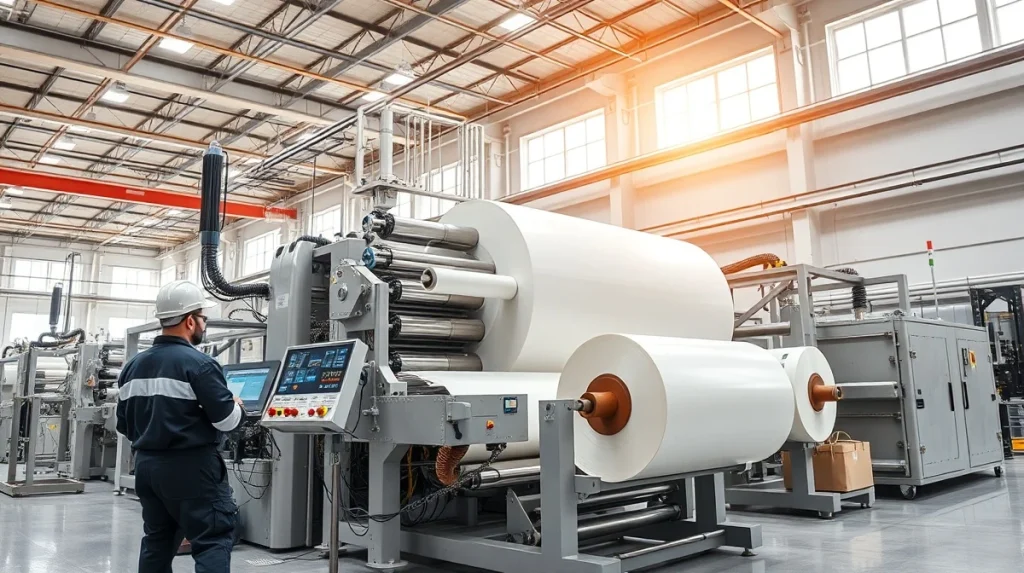
The global packaging industry is undergoing a significant transformation, with the Middle East emerging as a central region for custom packaging solutions and advanced manufacturing equipment. As of March 2026, regional investments in industrial upgrading and infrastructure development are driving remarkable demand for specialized packaging technologies, particularly in cast film production and custom bulk handling systems. This growth reflects broader economic diversification efforts across Gulf Cooperation Council (GCC) countries, where nations are reducing hydrocarbon dependence through strategic industrial development.
Cast Film Machine Market Expansion in the Middle East
Market analysis indicates steady growth for cast film machinery throughout the Middle East region in 2026. This expansion directly correlates with increased production capacity requirements across multiple industries. Regional governments have implemented substantial industrial policies that prioritize manufacturing sector development, consequently creating sustained demand for packaging equipment. The food and beverage sector’s rapid growth represents a primary driver, as producers seek high-performance barrier films and recyclable packaging solutions. Furthermore, pharmaceutical companies require specialized films with specific protective properties, while consumer goods manufacturers need versatile packaging options.
Also read: M Series ANC Token Presale Launches with Detailed Vesting
Industrial analysts note that Saudi Arabia’s Vision 2030 initiative has particularly accelerated packaging infrastructure investments. The program’s emphasis on economic diversification has resulted in numerous food processing facilities and manufacturing plants requiring advanced packaging systems. Similarly, the United Arab Emirates continues to develop its position as a regional logistics hub, necessitating efficient packaging solutions for export-oriented industries. These national strategies collectively create a favorable environment for packaging equipment suppliers.
Technical Specifications Driving Investment
Modern cast film machines offer several technological advantages that justify their adoption. Equipment capable of producing multilayer films with enhanced barrier properties receives particular attention from regional manufacturers. These machines enable production of packaging that extends product shelf life while maintaining quality standards. Additionally, sustainability considerations have increased demand for machinery that processes recyclable and biodegradable materials. Industry standards now emphasize energy efficiency, with newer models consuming approximately 15-20% less power than previous generations while maintaining higher output rates.
Also read: Pepeto Presale Attracts Investor Interest Amid Meme Coin Rally
TPU Film Production: Meeting Diverse Industrial Needs
Thermoplastic polyurethane (TPU) cast film production lines are experiencing growing demand across Middle Eastern markets. This specialized segment serves multiple high-value applications that align with regional development priorities. Building and construction projects utilize TPU films for waterproofing membranes in major infrastructure developments. Medical facilities require TPU films for sterile packaging of medical devices and pharmaceutical products. Automotive manufacturers incorporate TPU films for interior components and protective coverings. Renewable energy projects, particularly solar panel installations, use TPU films as protective layers and encapsulation materials.
The versatility of TPU films explains their expanding market presence. These materials offer exceptional durability, flexibility, and resistance to environmental factors. Regional climate conditions, characterized by high temperatures and intense sunlight, make TPU’s UV resistance particularly valuable. Industrial applications benefit from TPU’s abrasion resistance and mechanical strength. Medical applications apply TPU’s biocompatibility and sterilization compatibility. This multifunctionality positions TPU production as a strategic investment for manufacturers serving diverse industrial sectors.
Regional Market Variations and Opportunities
Market dynamics vary across Middle Eastern nations, creating distinct opportunities for equipment suppliers. Saudi Arabia represents the region’s fastest-growing market, driven by investments in smart city developments, renewable energy projects, and industrial zone expansions. The United Arab Emirates maintains strong demand across construction, healthcare, and logistics sectors. Qatar’s infrastructure development for international events continues to require specialized materials. Oman and Bahrain are developing smaller but growing manufacturing bases that increasingly require advanced packaging solutions.
| Country | Primary Drivers | Growth Rate |
|---|---|---|
| Saudi Arabia | Vision 2030, industrial cities, renewable energy | High |
| United Arab Emirates | Logistics hub, healthcare expansion, construction | Moderate-High |
| Qatar | Infrastructure development, event hosting | Moderate |
| Oman | Economic diversification, port development | Moderate |
| Bahrain | Manufacturing sector growth, financial services | Steady |
Custom Bulk Handling Solutions for Industrial Applications
Beyond film production, custom bulk handling equipment represents another growth area within Middle Eastern industrial packaging. Specialized manufacturers are delivering tailored solutions for port operations, mining facilities, and agricultural processing plants. These systems must accommodate regional operational requirements, including high-temperature environments, dust control needs, and integration with existing infrastructure. The completion and shipment of custom hoppers to Middle Eastern clients in early 2026 demonstrates this ongoing demand for specialized material handling equipment.
Engineering firms developing these solutions emphasize several critical design considerations. Equipment must withstand harsh environmental conditions prevalent in the region. Systems require integration capabilities with both modern automated facilities and existing traditional operations. Safety standards must meet or exceed international benchmarks while addressing local regulatory requirements. Maintenance accessibility and spare parts availability represent additional important factors for equipment selection in remote locations.
Technical Compliance and Quality Assurance
Equipment suppliers highlight technical compliance as essential for successful Middle Eastern market entry. Custom solutions undergo rigorous testing against client specifications and international standards. Documentation requirements include detailed certification of materials, manufacturing processes, and performance testing. Quality assurance protocols typically involve third-party verification to ensure equipment meets all contractual obligations. These procedures help mitigate risks associated with complex industrial installations in challenging environments.
Industrial Upgrading and Technology Adoption
The Middle East’s packaging equipment demand reflects broader regional trends toward industrial modernization. Manufacturing facilities are increasingly adopting Industry 4.0 principles, incorporating automation, data exchange, and smart manufacturing technologies. This transition creates opportunities for equipment suppliers offering integrated solutions with digital capabilities. Packaging machinery with IoT connectivity, predictive maintenance features, and energy monitoring systems receives particular interest from forward-looking manufacturers.
Several factors drive this technological adoption. Labor market dynamics encourage automation investments in some Gulf states. Quality consistency requirements for export markets necessitate precise manufacturing controls. Sustainability initiatives promote energy-efficient equipment with reduced environmental impact. Competitive pressures in global markets demand production efficiency improvements. These converging factors create a favorable environment for advanced packaging technology adoption throughout the region.
Training and Knowledge Transfer Considerations
Successful technology implementation requires corresponding investments in human capital development. Equipment suppliers increasingly provide comprehensive training programs alongside machinery deliveries. These initiatives ensure proper operation, maintenance, and troubleshooting capabilities at client facilities. Knowledge transfer represents a critical component of long-term equipment performance and return on investment. Regional educational institutions are developing specialized programs in packaging technology and industrial engineering to support this skills development.
Conclusion
The Middle Eastern custom packaging sector demonstrates strong growth as regional economies diversify beyond traditional hydrocarbon industries. Cast film machinery, TPU production lines, and custom bulk handling equipment represent key growth segments driven by food processing, construction, healthcare, and renewable energy developments. This expansion reflects strategic national visions emphasizing industrial development and technological advancement. Equipment suppliers must address regional specificities while maintaining international quality standards to capitalize on these opportunities. The packaging industry’s evolution in the Middle East will likely influence global supply chains as regional manufacturing capabilities continue expanding through 2026 and beyond.
FAQs
Q1: What factors are driving cast film machine demand in the Middle East?
The primary drivers include expansion in food and beverage processing, pharmaceutical manufacturing growth, increased export packaging requirements, and industrial upgrading initiatives under national development plans like Saudi Arabia’s Vision 2030.
Q2: Which applications are increasing TPU film demand in the region?
Major applications include building waterproofing for infrastructure projects, medical device packaging, automotive interior components, solar panel encapsulation for renewable energy projects, and specialized industrial protective films.
Q3: How does custom packaging equipment differ from standard solutions?
Custom equipment addresses specific client requirements including unique material handling needs, integration with existing systems, environmental condition adaptations, and compliance with local regulatory standards and operational practices.
Q4: What technical considerations are important for packaging equipment in Middle Eastern environments?
Key considerations include heat resistance for high-temperature operations, dust protection systems, corrosion resistance, energy efficiency for cost management, and maintenance accessibility for remote locations.
Q5: How are sustainability trends affecting packaging equipment selection?
Manufacturers increasingly seek machinery that processes recyclable and biodegradable materials, consumes less energy, minimizes material waste through precision controls, and supports circular economy principles through design for recyclability.

This article was produced with AI assistance and reviewed by our editorial team for accuracy and quality.