Custom Hoppers Ship to Fuel Middle East’s Booming Industrial Expansion
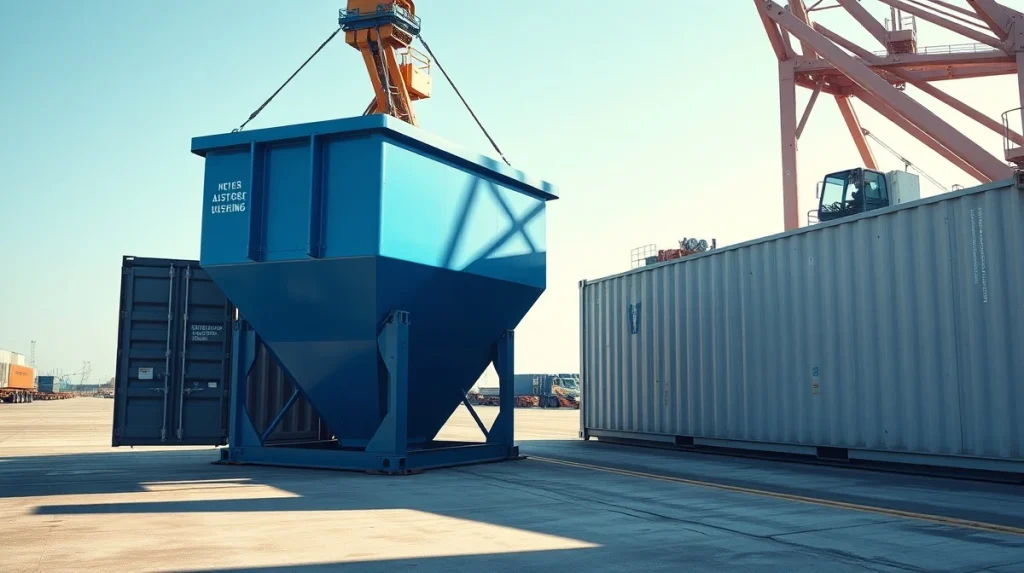
TSF Engineering has confirmed the readiness and imminent shipment of a batch of custom-engineered hoppers to clients in the Middle East, a move that directly supports the region’s accelerating industrial and infrastructure development as of March 2026. This shipment arrives amid significant regional investments in sectors like advanced packaging and renewable energy, which rely on specialized material handling solutions.
Custom Hoppers Address Specific Middle Eastern Market Needs
Engineers designed these hoppers for precise applications within the Middle East’s growing manufacturing base. Consequently, the equipment features specifications tailored to local environmental conditions and production requirements. For instance, the units incorporate advanced material flow technology to handle polymers and composite materials used in film production. Furthermore, they meet stringent durability standards for operations in high-temperature climates common across the Gulf Cooperation Council (GCC) states.
Also read: M Series ANC Token Presale Launches with Detailed Vesting
This strategic equipment delivery aligns with broader regional economic visions, such as Saudi Arabia’s Vision 2030 and the UAE’s Operation 300bn. These national initiatives actively promote industrial diversification beyond hydrocarbons. Therefore, demand for specialized machinery like custom hoppers has seen a measurable increase. Industry analysts link this demand directly to new factory construction and capacity expansion projects announced throughout 2024 and 2025.
Linking Equipment to Regional Industrial Growth Drivers
The shipment serves two primary and interconnected industrial sectors currently experiencing rapid growth in the Middle East. First, the packaging industry’s expansion, particularly for food, beverage, and medical supplies, requires consistent, high-volume raw material feeding for production lines. Second, the deployment of new energy infrastructure, including photovoltaic panel manufacturing, depends on precise handling of sensitive components and raw materials.
Also read: Pepeto Presale Attracts Investor Interest Amid Meme Coin Rally
Analysis of Key Demand Sectors
Data from regional trade bodies indicates sustained investment in production capacity. For example, the need for high-barrier and recyclable films in packaging has driven orders for cast film production machinery. This machinery, in turn, requires compatible feeding and handling systems like the hoppers from TSF Engineering. Similarly, large-scale solar projects under development necessitate specialized supply chains where custom hoppers play a critical role in material logistics.
The table below outlines the primary industrial drivers for this specialized equipment in the region:
| Industrial Sector | Primary Application for Hoppers | Regional Growth Catalyst |
|---|---|---|
| Advanced Packaging | Feeding polymer resins into cast film extrusion lines | Rising domestic consumption & export-oriented manufacturing |
| New Energy (PV) | Handling silica sand and composite materials for panel production | National renewable energy targets and giga-project investments |
| Building Materials | Processing raw materials for waterproofing membranes and composites | Continued infrastructure and smart city development |
Engineering and Logistics Behind the Shipment
Preparing this shipment involved a coordinated effort between engineering, procurement, and logistics teams. Initially, TSF Engineering’s design phase incorporated client feedback and site-specific data. Subsequently, fabrication occurred under strict quality control protocols. Finally, the logistics team arranged for specialized containerization to ensure safe ocean transit to Middle Eastern ports like Jebel Ali and King Abdullah Port.
The engineering approach prioritized several key features:
- Corrosion Resistance: Coatings and material selections suited for coastal industrial environments.
- Dust Mitigation: Integrated systems to maintain material purity and meet clean production standards.
- Modular Design: Allowing for easier installation and future capacity upgrades at client facilities.
Conclusion
The shipment of these custom hoppers by TSF Engineering highlights a tangible response to the Middle East’s ongoing industrial transformation. By providing essential equipment tailored to local needs, such projects directly support regional goals in manufacturing diversification and sustainable development. The movement of this specialized capital equipment underscores the interconnected nature of global industrial supply chains and regional economic ambitions as of early 2026.
FAQs
Q1: What are custom hoppers primarily used for in industrial settings?
Custom hoppers are bulk material handling containers designed to store, meter, and feed specific raw materials—like plastic resins or mineral compounds—into production processes with precision and minimal waste.
Q2: Why is the Middle East a growing market for this type of equipment?
The region is actively pursuing economic diversification through national visions like Saudi Arabia’s Vision 2030, leading to massive investments in non-oil industries such as advanced packaging, pharmaceuticals, and renewable energy, all requiring specialized production machinery.
Q3: How does equipment like this support the new energy sector?
In photovoltaic (PV) panel manufacturing, hoppers are critical for handling and feeding raw materials like silicon and ethylene-vinyl acetate (EVA) into production lines consistently, which is essential for quality and scale in giga-factories.
Q4: What makes a hopper ‘custom’ as opposed to standard?
Custom hoppers are engineered to specific client requirements, considering factors like material characteristics (flowability, abrasiveness), required discharge rates, capacity, integration with existing plant systems, and environmental operating conditions.
Q5: Are there significant logistical challenges in shipping large industrial equipment to the Middle East?
Yes, challenges include securing appropriate ocean freight, ensuring proper containerization to prevent damage, managing port regulations, and arranging final overland transport to often remote industrial sites, requiring detailed advance planning.

This article was produced with AI assistance and reviewed by our editorial team for accuracy and quality.