AI Infrastructure’s Hidden Genesis: How Crypto Mining’s Dramatic Pivot Reshapes Computing Power in 2025
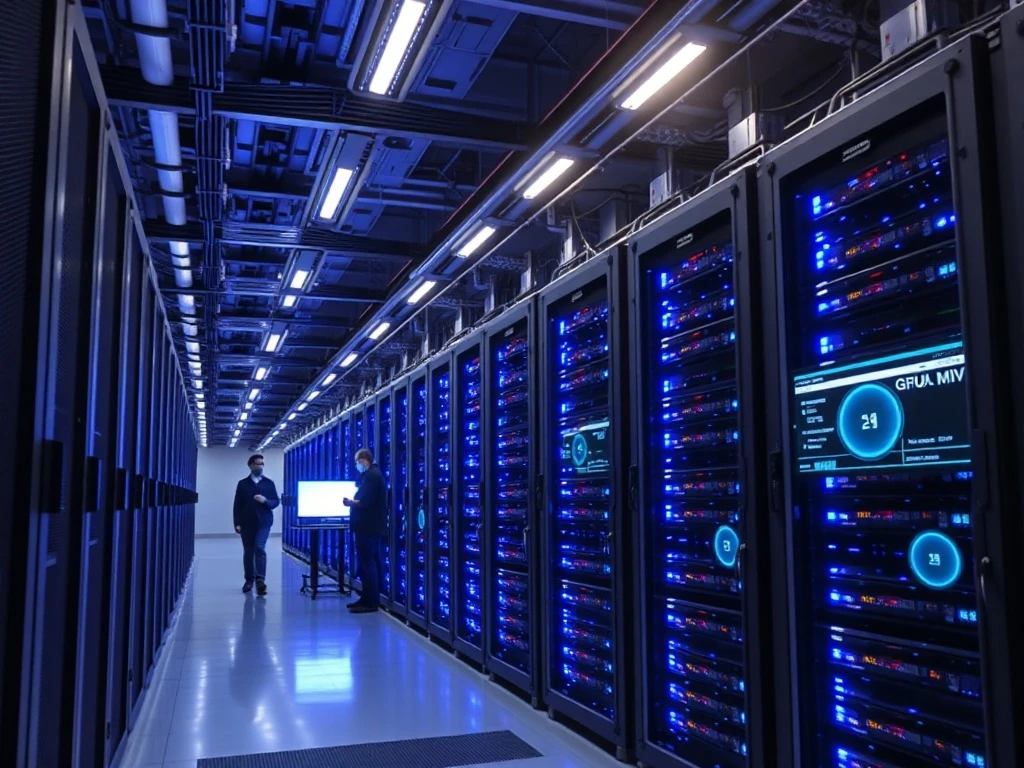
In a remarkable technological evolution that few predicted, former cryptocurrency mining operations are now powering the artificial intelligence revolution, fundamentally altering data center economics and challenging Big Tech’s infrastructure dominance as we enter 2025. CoreWeave’s journey from Ethereum mining to becoming Nvidia’s strategic AI partner exemplifies this seismic shift, revealing how specialized hardware finds new life across technological cycles while creating remarkable market opportunities.
The Crypto-to-AI Infrastructure Transformation
CoreWeave’s strategic pivot began in 2019, well before artificial intelligence became mainstream. The company recognized early that Ethereum’s planned transition from proof-of-work to proof-of-stake would dramatically reduce demand for GPU-based mining operations. Consequently, they initiated a gradual shift toward cloud and high-performance computing services. This forward-thinking approach positioned them perfectly when generative AI exploded in 2023, creating remarkable demand for specialized GPU infrastructure.
Also read: Zcash Analysis: Grayscale's Bold Claim on Private Money's Future and ZEC's Value
The transformation proved remarkably timely. According to industry analysis from The Miner Mag, Ethereum’s complete move away from proof-of-work in late 2022 eliminated approximately 95% of GPU mining revenue streams almost overnight. However, companies like CoreWeave had already redeployed their hardware toward AI training workloads. This strategic foresight created what analysts now call “the great compute migration”—the movement of specialized hardware from cryptocurrency validation to artificial intelligence model development.
The Hardware Repurposing Advantage
Former cryptocurrency miners possessed several critical advantages in the AI infrastructure race. Their operations already featured:
- Specialized GPU clusters optimized for parallel processing
- Proven cooling systems for high-density computing environments
- Established relationships with energy providers and local governments
- Technical expertise in managing distributed computing networks
These capabilities translated directly to AI infrastructure requirements. For instance, training large language models demands precisely the kind of parallel processing that cryptocurrency mining optimized. Similarly, the thermal management solutions developed for 24/7 mining operations proved ideal for sustained AI training sessions that can run for weeks without interruption.
Market Dynamics and Big Tech’s Evolving Role
The infrastructure shift carries profound implications for market concentration. Historical data shows that Amazon Web Services, Microsoft Azure, and Google Cloud collectively controlled approximately 65% of global cloud computing capacity in 2022. However, emerging research suggests this dominance may be weakening in specialized AI infrastructure segments.
Bloomberg’s analysis of DC Byte research reveals thousands of new entrants entering the data center business specifically for AI workloads. Projections indicate that by 2032, traditional Big Tech companies could see their share of global computing capacity fall below 18% in certain high-performance computing categories. This fragmentation creates opportunities for specialized providers like CoreWeave, which secured a landmark $2 billion equity investment from Nvidia in 2024.
| Provider Type | 2022 Market Share | 2032 Projection |
|---|---|---|
| Big Tech Cloud Providers | 65% | <18% |
| Specialized AI Infrastructure | 12% | 42% |
| Hybrid/Other Providers | 23% | 40% |
Financial Implications and Executive Outcomes
The financial impact of this transformation has been substantial. CoreWeave’s successful repositioning generated approximately $1.6 billion in proceeds from executive stock sales following their March 2024 initial public offering, according to Miner Mag analysis. This liquidity event demonstrates how infrastructure pivots can create significant shareholder value while supporting broader technological advancement.
Other cryptocurrency mining companies have followed similar paths with varying degrees of success. HIVE Digital, TeraWulf, Hut 8, and MARA Holdings have all announced AI infrastructure initiatives, though their execution and scale differ considerably. The common thread remains energy infrastructure and computing capacity originally developed for cryptocurrency mining finding new applications in artificial intelligence.
Emerging Challenges and Historical Parallels
Despite promising growth, AI data centers now face challenges remarkably similar to those encountered by early Bitcoin mining operations. Local opposition tied to power consumption, grid strain, and land use has emerged in several regions hosting large AI facilities. These concerns mirror the regulatory and community relations issues that cryptocurrency miners navigated throughout the 2010s.
Power consumption represents a particularly striking parallel. Training advanced AI models requires enormous energy resources—sometimes comparable to the annual electricity consumption of small cities. Consequently, AI infrastructure providers must address sustainability concerns while maintaining computational performance. Many are adopting strategies pioneered by cryptocurrency miners, including:
- Locating facilities near renewable energy sources
- Implementing advanced cooling technologies to reduce energy waste
- Developing flexible power consumption models that respond to grid demands
- Participating in demand response programs with utility providers
The Regulatory Field Evolution
Regulatory frameworks are evolving to address AI infrastructure’s unique characteristics. Unlike cryptocurrency mining, which faced sometimes hostile regulatory environments, AI infrastructure generally receives more favorable treatment due to its perceived economic and technological benefits. However, this advantage may diminish as AI’s environmental impact receives greater scrutiny.
Several jurisdictions have begun developing specialized regulations for AI data centers, addressing concerns about water usage for cooling, electromagnetic interference, and community disruption. These regulatory developments create both challenges and opportunities for infrastructure providers, particularly those with experience handling complex regulatory environments from their cryptocurrency mining days.
Technological Convergence and Future Implications
The convergence between cryptocurrency infrastructure and AI computing represents more than mere hardware repurposing. It signals a fundamental shift in how specialized computing resources are allocated across technological domains. This flexibility may become increasingly important as new computing paradigms emerge.
Industry experts note that the same GPU clusters powering today’s AI models could potentially support future technologies like quantum computing simulations, advanced climate modeling, or next-generation cryptographic systems. This adaptability creates resilience against technological disruption—a valuable characteristic in rapidly evolving fields.
The infrastructure transformation also influences hardware development cycles. Nvidia’s substantial investment in CoreWeave reflects not just confidence in a single company, but recognition that specialized infrastructure providers will play critical roles in AI advancement. This relationship may accelerate hardware innovation as infrastructure needs feed back into chip design processes.
Conclusion
CoreWeave’s journey from cryptocurrency mining to AI infrastructure leadership illustrates a broader technological truth: specialized computing resources rarely become obsolete—they find new applications. The crypto-to-AI transformation reveals how infrastructure adaptability creates value across technological cycles while challenging established market structures. As Big Tech’s infrastructure dominance shows early signs of fragmentation, specialized providers with experience in high-performance computing environments may increasingly shape technological advancement. This evolution carries implications for investors, policymakers, and technology developers alike, suggesting that infrastructure flexibility will remain essential as computing continues evolving toward increasingly specialized applications.
FAQs
Q1: What prompted cryptocurrency mining companies to pivot to AI infrastructure?
The primary catalyst was Ethereum’s transition from proof-of-work to proof-of-stake consensus in 2022, which dramatically reduced demand for GPU mining. Simultaneously, the explosive growth of generative AI created rare demand for GPU computing power, creating perfect market conditions for infrastructure repurposing.
Q2: How does AI infrastructure differ technically from cryptocurrency mining infrastructure?
While both utilize GPU clusters for parallel processing, AI infrastructure typically requires more specialized memory configurations, different cooling optimizations, and distinct network architectures. AI training involves different computational patterns than cryptocurrency mining, though the fundamental hardware capabilities overlap significantly.
Q3: What advantages do former cryptocurrency miners have in the AI infrastructure market?
These companies possess established expertise in managing distributed GPU networks, proven cooling solutions for high-density computing, existing relationships with energy providers, and experience operating 24/7 computing facilities. They also understand regulatory compliance in specialized computing environments.
Q4: Are there environmental concerns with AI infrastructure similar to those with cryptocurrency mining?
Yes, AI infrastructure faces comparable concerns regarding energy consumption, grid impact, and cooling requirements. However, AI generally receives more favorable regulatory treatment due to its perceived economic benefits, though this may change as environmental scrutiny increases.
Q5: How might this infrastructure transformation affect technology development cycles?
The emergence of specialized AI infrastructure providers could accelerate hardware innovation through closer collaboration with chip manufacturers like Nvidia. It may also create more diverse computing environments that support experimentation with novel AI architectures and training methodologies.

This article was produced with AI assistance and reviewed by our editorial team for accuracy and quality.