Crypto Market Stabilizes: The Silent Rebound Lacks Critical Volume Surge
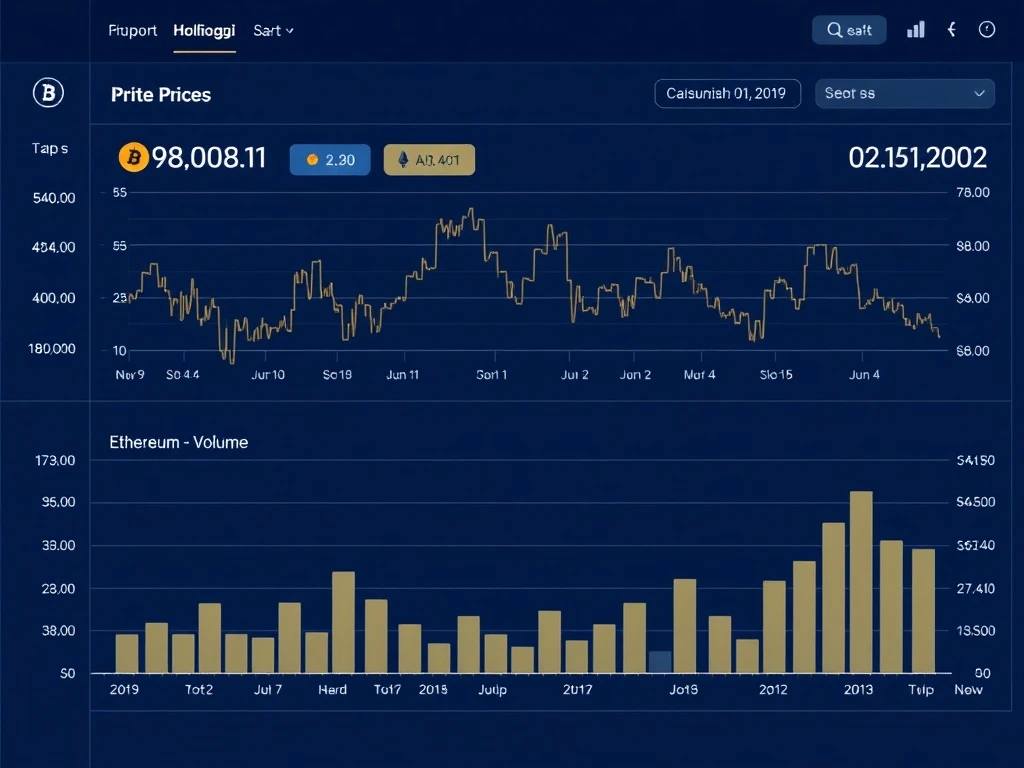
Global cryptocurrency markets entered a phase of notable stabilization in early January 2026, yet this apparent calm masks a critical deficiency: trading volumes remain stubbornly low. While the pervasive fear that dominated late 2025 has receded, allowing prices to find firmer footing, the lack of solid spot market activity suggests this is a consolidation, not a decisive recovery. This divergence between sentiment improvement and participant hesitation creates a complex sector for investors and analysts addressing the new year.
Crypto Market Stabilizes: Sentiment Normalizes as Volatility Cools
The most visible sign of change is the Crypto Fear & Greed Index. After plunging into “Extreme Fear” territory below 25 in late 2025, the index climbed to a neutral reading of 54 by mid-January 2026. This metric, which analyzes volatility, market momentum, social media sentiment, and surveys, acts as a crowd psychology gauge. Its return to neutrality indicates that the market’s emotional fever has broken. Consequently, price swings have narrowed significantly. Major cryptocurrencies like Bitcoin (BTC) and Ethereum (ETH) have established tighter trading ranges, providing a respite from the intense volatility that characterized previous months. This stabilization primarily stems from reduced selling pressure and a pause in large-scale liquidations.
Also read: AI Trading Agents: The Revolutionary Path to Mastering Your Crypto Portfolio in 2025
The Institutional Backstop: ETF Flows Provide a Foundation
Institutional products have played a key role in this stabilization. U.S.-listed spot Bitcoin Exchange-Traded Funds (ETFs), now over a year old, continue to attract capital. For instance, data from January 14, 2026, showed aggregate net inflows of approximately $843.6 million across all funds in a single session. BlackRock’s iShares Bitcoin Trust (IBIT) alone accounted for $648 million of that total. These consistent inflows create a structural bid for Bitcoin, effectively establishing a psychological and often tangible price floor. This institutional participation changes the market’s texture, making it less prone to retail-driven panic sell-offs. However, it does not automatically translate into broad-based retail enthusiasm or increased speculative activity across the entire altcoin spectrum.
The Critical Missing Fuel: Analyzing the Persistent Volume Slump
Beneath the surface of calmer prices lies the article’s core concern: depressed trading volume. Daily global spot cryptocurrency volume has hovered near $400 billion, a figure starkly lower than the $600 to $900 billion peaks witnessed during more frenetic periods in mid-2025. Volume is the lifeblood of any financial market, representing genuine participation, liquidity, and conviction. Low volume during a stabilization phase tells a nuanced story:
Also read: RunBot AI Trading Bot: Revolutionizing Automated Cryptocurrency Strategies with Machine Learning
- Limited Participation: Fewer active traders and investors are engaging with the market.
- Reduced Liquidity: The market has less capacity to absorb large buy or sell orders without causing significant price slippage.
Selective Capital Allocation: Available capital is moving into specific assets (like Bitcoin via ETFs) rather than flooding the entire ecosystem.
This environment can create deceptive price action. Rallies on low volume are often considered technically weak, as they lack broad conviction. Conversely, the current stability, while positive, remains fragile because a sudden surge in volume—in either direction—could easily disrupt the equilibrium.
A Comparative Look: Volume vs. Sentiment (2025-2026)
| Period | Avg. Fear & Greed Index | Avg. Daily Spot Volume | Market Character |
|---|---|---|---|
| Mid-2025 (Peak) | > 70 (Greed) | $600B – $900B | Speculative, High Volatility |
| Late 2025 (Trough) | < 25 (Extreme Fear) | ~$500B | Panic, Capitulation |
| Early Jan 2026 (Current) | 54 (Neutral) | ~$400B | Stabilization, Low Participation |
External Headwinds: Regulatory Uncertainty Acts as a Discreet Brake
Beyond pure market mechanics, regulatory developments contribute to the cautious atmosphere. In the United States, a key event on January 15, 2026, illustrated this dynamic. The Senate Committee on Banking, Housing, and Urban Affairs postponed discussions on a comprehensive digital asset market structure bill. This delay followed public withdrawal of support by major exchange Coinbase, which criticized the draft legislation as “worse than the status quo,” particularly regarding its proposed frameworks for stablecoins and decentralized finance (DeFi). Such political uncertainty does not typically cause immediate price crashes. Instead, it fosters a “wait-and-see” approach among institutional and sophisticated investors. When the regulatory roadmap is unclear, capital deployment often slows, directly manifesting as lower trading volumes and a reluctance to take on new, aggressive positions.
Bitcoin’s Role: Anchor, Not Engine, in the Current Phase
Bitcoin’s current performance encapsulates the broader market condition. It has reclaimed ground from its late-2025 lows and stabilized, largely thanks to ETF inflows. Its role, however, appears more that of a market anchor than a growth engine pulling the entire sector upward. The decoupling between Bitcoin’s stability and altcoin performance has become more pronounced. Capital is not indiscriminately flowing into smaller-cap tokens, indicating a risk-averse selectivity among the remaining active market participants. This behavior further supports the thesis of a cautious, volume-starved consolidation rather than a risk-on bull phase.
Conclusion
The cryptocurrency market stabilization in early 2026 presents a mixed picture. On one hand, the return to neutral sentiment and calmer prices provides a necessary healing period after a stressful downturn. Institutional support through ETFs offers a novel and solid foundation for Bitcoin. On the other hand, the persistent lack of a volume rebound serves as a powerful cautionary signal. It reveals that while fear has dissipated, broad conviction and participation have not yet returned. The market is advancing on tiptoes, not with confident strides. For this stabilization to evolve into a sustainable recovery, an increase in spot market activity will be the most critical metric to watch. Until then, the environment favors cautious positioning and selective investment over exuberant speculation.
FAQs
Q1: What does a “neutral” Fear & Greed Index reading mean for the crypto market?
A neutral reading (around 54) suggests market sentiment is neither driven by extreme fear nor greed. It indicates a period of balance where emotions are not dominating price action, often leading to lower volatility and consolidation. However, it does not predict the next directional move.
Q2: Why is trading volume so important if prices are stable?
Volume confirms the validity of a price trend. High volume during a price move shows strong conviction. Low volume during stability or a rally suggests weak participation, making the price action fragile and potentially vulnerable to a sharp reversal if volume suddenly returns.
Q3: How do Bitcoin ETF inflows help stabilize the market?
Consistent ETF inflows represent steady institutional demand. This creates a reliable source of buying pressure, which can absorb sell orders and establish a higher price floor. It also lends legitimacy and reduces the likelihood of panic-driven crashes seen in purely retail-driven markets.
Q4: Could the market rise significantly without a volume rebound?
While possible, especially in a low-liquidity environment where relatively small orders can move prices, such a rise is generally considered technically weak and unsustainable. A healthy, long-term bullish trend is almost always accompanied by rising or sustained high trading volumes.
Q5: What might trigger a return of higher trading volumes?
Potential catalysts include a decisive breakthrough in key regulatory frameworks, a new major technological development (like a successful Ethereum upgrade), a sharp move in traditional markets that forces portfolio reallocation, or the emergence of a compelling new use case or narrative that attracts fresh capital.

This article was produced with AI assistance and reviewed by our editorial team for accuracy and quality.