Crypto Liquidation Wave Looms as Leverage Stress Creates Dangerous Market Imbalance
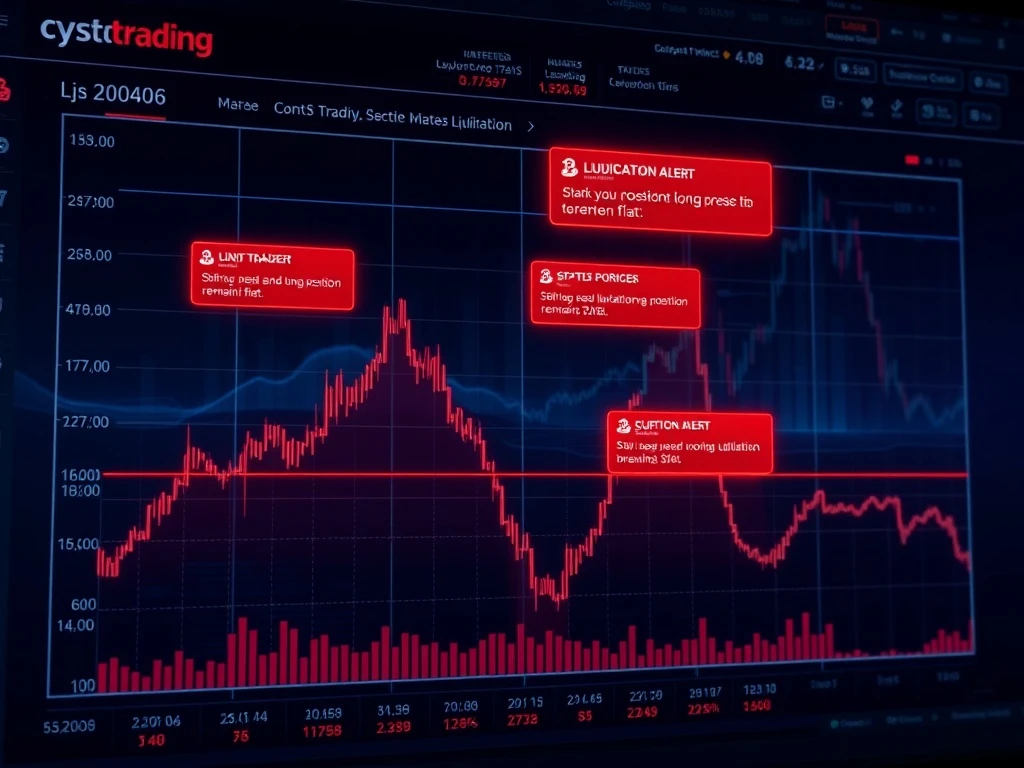
Cryptocurrency markets are displaying concerning signs of mounting leverage stress as January 2026 unfolds, with liquidation data revealing significant downside exposure despite relatively stable spot prices. Recent analysis indicates traders have accumulated vulnerable leveraged positions, particularly on the long side, creating conditions ripe for potential forced selling events. This situation presents a classic case of market tension where derivative positioning diverges dangerously from underlying asset stability.
Crypto Liquidation Wave Signals Mounting Derivatives Pressure
Derivatives markets across major cryptocurrency exchanges show escalating leverage stress according to comprehensive data analysis. The market’s sensitivity to relatively minor price movements has increased substantially as traders continue building positions vulnerable to forced unwinds. Interestingly, spot prices have maintained range-bound behavior despite this growing derivatives tension, creating what analysts describe as a “pressure cooker” scenario.
Also read: Binance Oil and Gas Futures Launch with 100x Utilize: A High-Stakes Gamble for Traders
Recent liquidation events provide concrete evidence of this mounting stress. During specific hourly windows, long position liquidations have exceeded $230 million while short liquidations remained below $5 million. This dramatic imbalance suggests that bullish leverage continues dominating market structure, leaving the ecosystem exposed to cascading liquidations if prices breach nearby support levels. Market participants are closely monitoring these developments as they represent early warning signals for broader market instability.
Long Position Dominance Creates Asymmetric Risk Profile
Cumulative liquidation data reveals a consistent pattern of long liquidations exceeding short liquidations during multiple intraday spikes throughout the past week. This persistent skew toward long position unwinding indicates that market participants remain predominantly positioned for upward price movement despite growing technical warnings. The concentration of risk on one side of the market creates what risk managers call “asymmetric exposure” to downside movements.
Also read: XRP ETF Architect Declares Bullish Stance: 'XRP Community Is an Army'
Exchange-specific analysis provides further granularity on this concentration risk. Binance recorded approximately $36 million in long liquidations during recent volatility spikes, while Hyperliquid experienced over $59 million in long position unwinding. Across all tracked platforms, short liquidations totaled just $3.5 million during comparable periods. This exchange-level data confirms that the leverage imbalance represents a broad market phenomenon rather than isolated platform behavior.
Market Structure Analysis from Derivatives Experts
Seasoned derivatives traders note that current market conditions resemble previous periods preceding significant volatility events. The divergence between stable spot prices and escalating liquidation activity suggests that leverage is being reduced incrementally rather than through sudden capitulation. However, liquidation clusters remain active near recent local lows, meaning decisive downward price movements could trigger more substantial forced selling as remaining leveraged positions face margin calls.
Historical comparison reveals similar patterns occurred before the May 2021 market correction, when leveraged long positions accumulated during a period of price stability eventually contributed to accelerated downward momentum. Market analysts emphasize that while current conditions don’t guarantee similar outcomes, they do indicate elevated systemic risk that requires careful monitoring and position management.
Market Capitalization Heatmap Reveals Broad Risk-Off Sentiment
The market capitalization heatmap provides additional context for understanding current market dynamics. Most large-cap digital assets continue trading in negative territory, with Bitcoin’s market capitalization hovering around $1.71 trillion and Ethereum remaining near $344 billion. Both major cryptocurrencies show sustained selling pressure rather than sharp rebounds, indicating underlying weakness despite surface-level price stability.
Mid-capitalization assets and sector-specific tokens demonstrate limited upside participation, suggesting capital rotation remains defensive rather than opportunistic. This broader market behavior reinforces the liquidation data narrative, painting a picture of cautious market participation with concentrated risk in leveraged derivatives positions. The combination of these factors creates what technical analysts describe as a “fragile equilibrium” susceptible to disruption from external catalysts or internal market mechanics.
Price Stability Masks Growing Systemic Risk
The apparent stability in spot prices creates a potentially misleading market narrative. While major cryptocurrencies have avoided sharp breakdowns, the elevated liquidation activity beneath the surface indicates growing stress within market structure. This divergence between spot and derivatives markets represents a critical consideration for traders and investors assessing current conditions.
Several factors contribute to this apparent stability despite mounting leverage stress:
- Staggered position unwinding: Liquidations are occurring in phases rather than single events
- Incremental margin calls: Traders are receiving warnings before complete position liquidation
- Defensive capital allocation: Some market participants are reducing exposure preemptively
- Institutional management: Larger players may be implementing controlled position reduction
However, liquidation clusters remain active near recent price lows, creating technical levels that could trigger more substantial selling if breached. This creates what risk managers describe as a “threshold effect” where market stability depends on maintaining specific price ranges.
Regulatory and Macroeconomic Context
The current leverage stress occurs within a broader regulatory and macroeconomic environment that influences market behavior. Global financial conditions, interest rate expectations, and cryptocurrency-specific regulatory developments all contribute to market participant psychology and positioning decisions. Understanding this context helps explain why traders might maintain leveraged positions despite growing technical warnings.
Recent months have seen increased institutional participation in cryptocurrency derivatives markets, potentially contributing to both the scale of positions and the sophistication of risk management approaches. This institutional involvement may explain why liquidations are occurring in controlled phases rather than sudden cascades, as larger players implement systematic position management strategies.
Monitoring Critical Indicators for Market Health
Traders and analysts are focusing on specific metrics to gauge whether current leverage stress will translate into broader market weakness. The relationship between liquidation volumes and price ranges represents a particularly telling indicator. Sustained increases in long liquidations without meaningful spot price recovery would signal that leverage stress is evolving into more fundamental market weakness.
Additional monitoring points include:
- Funding rate behavior: Sustained negative funding could indicate shifting sentiment
- Open interest changes: Declining open interest alongside liquidations suggests position reduction
- Exchange flow patterns: Movement between exchanges can indicate institutional positioning
- Volatility index readings: Expected volatility measures provide forward-looking sentiment indicators
These metrics collectively provide a more comprehensive picture than liquidation data alone, helping market participants distinguish between contained leverage reduction and more concerning structural weakness.
Historical Precedents and Market Psychology
Current market conditions show similarities to previous periods of leverage accumulation followed by correction. Market psychology often follows predictable patterns during such phases, with early warnings frequently ignored until triggering events force rapid position adjustment. Understanding these historical patterns helps contextualize current data within broader market cycles.
The cryptocurrency market’s relatively short history contains several examples of leverage-driven volatility events. Each instance provides lessons about market structure, participant behavior, and risk management approaches. While historical patterns don’t guarantee future outcomes, they do provide valuable frameworks for interpreting current developments and preparing for potential scenarios.
Conclusion
Crypto liquidation data reveals that derivatives markets carry more structural risk than spot price action alone suggests. The growing imbalance between long and short positions, combined with concentrated exchange exposure, creates conditions where relatively small price movements could trigger disproportionate liquidation events. As January 2026 progresses, market participants face the challenge of navigating this leverage stress while maintaining perspective on broader market fundamentals. The coming weeks will determine whether current pressure results in contained position adjustment or more substantial market repricing, making careful monitoring and disciplined risk management essential for all market participants.
FAQs
Q1: What exactly is a liquidation wave in cryptocurrency markets?
A liquidation wave occurs when multiple leveraged positions face forced closure simultaneously due to insufficient margin, often creating cascading selling pressure that amplifies price movements.
Q2: Why are long positions more vulnerable than short positions currently?
Market data shows significantly more leveraged long positions than shorts, creating asymmetric risk where downward price movements trigger disproportionate liquidation events compared to upward movements.
Q3: How can traders monitor liquidation risk in real-time?
Traders can track liquidation data through platforms like Coinglass, monitor funding rates across exchanges, watch open interest changes, and set alerts for specific price levels where liquidation clusters are concentrated.
Q4: What typically happens after a major liquidation event?
Following significant liquidations, markets often experience reduced leverage, increased volatility, and potential price discovery as forced selling subsides and new equilibrium levels establish.
Q5: How does leverage stress affect long-term cryptocurrency investors?
While primarily impacting active traders, leverage-induced volatility can create buying opportunities for long-term investors but also increases overall market risk and potential for exaggerated price movements.

This article was produced with AI assistance and reviewed by our editorial team for accuracy and quality.