Crypto Futures Liquidated: Staggering $1,143 Million Evaporates in One Hour Amid Market Turmoil
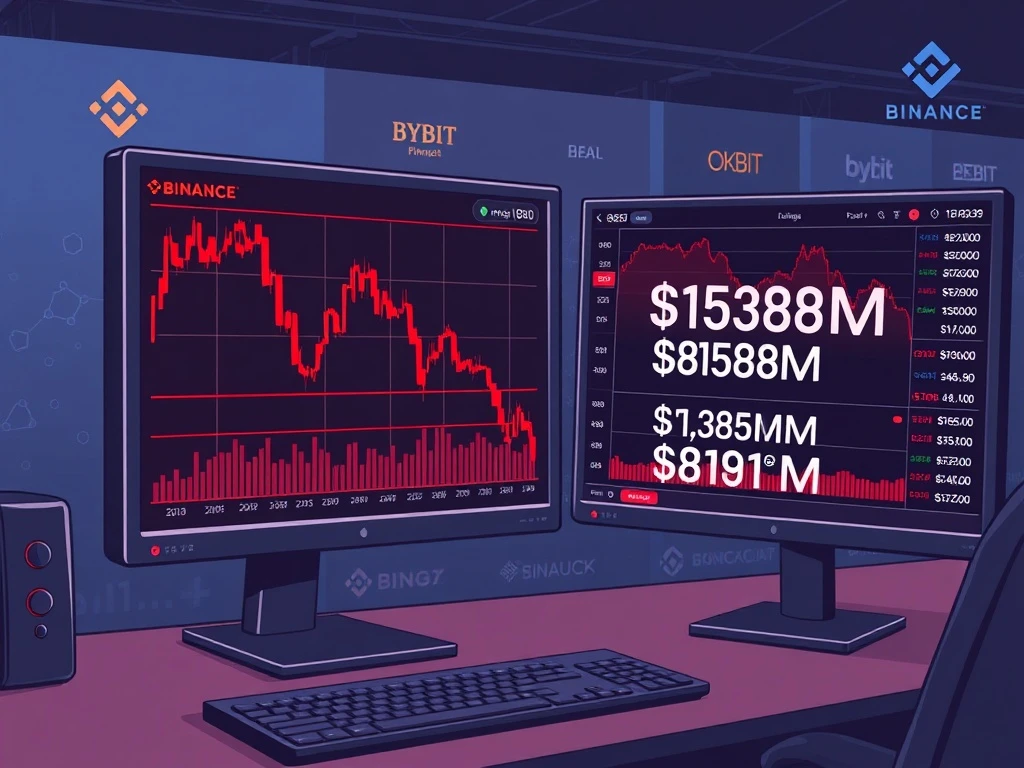
Global cryptocurrency markets witnessed a severe deleveraging event on March 25, 2025, as over $1.14 billion in futures contracts were forcibly closed within a single hour. This intense wave of liquidations, primarily affecting Bitcoin and major altcoins, highlights the persistent risks embedded in highly leveraged digital asset trading. Consequently, market participants faced significant losses, triggering a cascade of selling pressure across major exchanges like Binance, Bybit, and OKX. Furthermore, this event underscores the fragile nature of sentiment-driven markets during periods of macroeconomic uncertainty.
Crypto Futures Liquidated: Anatomy of a $1.14 Billion Hour
The reported figure of $1,143 million liquidated represents the total value of leveraged positions automatically closed by exchanges when traders could not meet margin requirements. Typically, exchanges execute these liquidations to prevent losses from exceeding a trader’s collateral. Moreover, the past 24-hour total reached a staggering $2,537 million, indicating sustained pressure throughout the trading day. This data, sourced from aggregate tracking platforms like Coinglass, reflects real-time market stress.
Liquidations occur in both long and short positions. For instance, a sharp price drop triggers mass liquidations of leveraged long bets, while a rapid price surge can wipe out aggressive short sellers. The majority of this specific hourly liquidation likely involved long positions following a sudden market downturn. Market analysts often view such clustered liquidations as a potential sign of a local market bottom, as weak hands are flushed from the system.
| Timeframe | Total Value Liquidated | Primary Direction |
|---|---|---|
| Past 1 Hour | $1,143 Million | Likely Longs |
| Past 24 Hours | $2,537 Million | Mixed (Longs & Shorts) |
Understanding the Mechanics of Futures Liquidation
To grasp the scale of this event, one must understand how futures trading works. Traders use leverage, often ranging from 5x to 100x, to amplify potential gains. However, this leverage also magnifies risks. Exchanges set liquidation prices for each position. If the market price hits this level, the exchange automatically sells the position. This process can create a feedback loop:
- Forced selling from liquidations pushes the price lower.
- Lower prices trigger more liquidations at nearby price points.
- This cascade accelerates volatility, creating a liquidation spiral.
Major exchanges employ slightly different risk engines, but the core mechanism remains consistent. The high volume of liquidations suggests that a large number of traders were using excessive leverage with tight stop-loss margins. Therefore, even a moderate price swing of 3-5% can be catastrophic for highly leveraged accounts.
Expert Insight on Market Structure and Risk
According to common analysis from institutional trading desks, such liquidation events are not merely symptoms of volatility but also indicators of market maturity. “While painful, these events are a necessary market-clearing mechanism,” notes a typical report from a crypto risk management firm. “They remove overleveraged speculation and help realign prices with underlying spot market flows. However, the sheer size—over a billion dollars in an hour—points to a market still grappling with risk management discipline.”
Historical context is crucial. Similar large-scale liquidation events preceded major market capitulations in 2018, 2021, and 2022. For example, the May 2021 crash saw over $10 billion in liquidations in 24 hours. Comparatively, the current event, while significant, is smaller in absolute terms but similar in its triggering mechanics—often a combination of:
- Negative macroeconomic news (e.g., interest rate fears).
- Large, coordinated spot market selling.
- Breakdown of key technical support levels.
Broader Impacts on the Crypto Ecosystem
The immediate impact of mass liquidations extends beyond individual traders. Firstly, exchange platforms experience immense operational load on their trading engines. Secondly, the resulting volatility can cause temporary spreads to widen and liquidity to thin on derivative platforms. Thirdly, the fear generated often spills over into the spot market, causing retail investors to sell their holdings.
Furthermore, the funding rates in perpetual futures contracts often turn deeply negative after such events. This dynamic incentivizes traders to open long positions, potentially stabilizing the market. Data from the event showed funding rates on Bitcoin perpetual contracts plunging, which can set the stage for a short-term rebound as traders re-enter at lower prices.
From a regulatory perspective, these events renew discussions about leverage limits and investor protection. Jurisdictions like the UK and South Korea have already imposed strict caps on leverage for retail crypto traders. Observers suggest that repeated nine-figure liquidation events could prompt more global regulators to consider similar measures to mitigate systemic risk.
Conclusion
The liquidation of $1,143 million in crypto futures within one hour serves as a stark reminder of the inherent volatility and risk in leveraged digital asset trading. This event, part of a larger $2.5 billion 24-hour deleveraging, was likely driven by a break of technical support amid tense macroeconomic conditions. While such liquidations contribute to efficient price discovery, they also cause significant capital destruction and market stress. Ultimately, this underscores the critical importance of prudent risk management, appropriate leverage use, and a deep understanding of derivative mechanics for all market participants. The market’s ability to absorb and recover from these shocks remains a key indicator of its evolving maturity.
FAQs
Q1: What does “futures liquidated” mean?
A futures liquidation occurs when an exchange automatically closes a trader’s leveraged position because they no longer have enough collateral (margin) to maintain it. This happens to prevent the trader’s loss from exceeding their initial deposit.
Q2: What causes a mass liquidation event like this?
Mass liquidations are typically caused by a sharp, rapid price movement in the underlying asset (like Bitcoin). This move triggers a cascade of automatic liquidations as many traders hit their individual liquidation prices almost simultaneously, often due to high leverage and clustered stop-loss orders.
Q3: Who loses money during a liquidation?
The trader whose position is liquidated loses their remaining collateral (margin). The exchange uses this collateral to cover the loss on the closed position. The counter-party to the trade (often the exchange’s insurance fund or other traders) realizes the gain.
Q4: Are liquidations bad for the overall market?
In the short term, liquidations increase volatility and selling pressure, which is disruptive. However, many analysts argue they are a necessary correction that removes excessive, unstable leverage from the system, potentially leading to a healthier price foundation in the medium term.
Q5: How can traders avoid being liquidated?
Traders can avoid liquidation by using lower leverage, maintaining ample margin (collateral) above the maintenance level, employing prudent stop-loss orders, and actively monitoring their positions, especially during periods of high volatility and important news events.