Crypto Fear & Greed Index Soars to ‘Greed’ for First Time Since October’s $19 Billion Liquidation Event
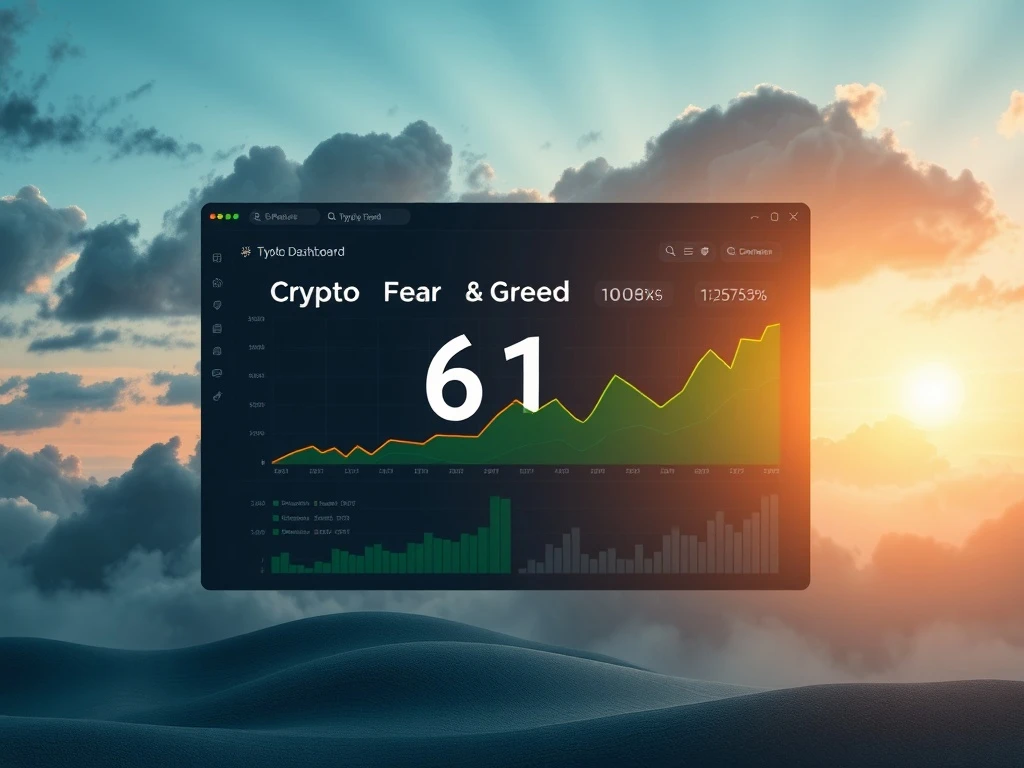
Global cryptocurrency markets have witnessed a pivotal psychological shift this week, as the widely monitored Crypto Fear & Greed Index has surged into ‘Greed’ territory for the first time since a devastating $19 billion liquidation event rocked investor confidence in October. This dramatic reversal, recorded on Thursday, marks a critical turning point for market sentiment after months dominated by fear and extreme pessimism. The index’s climb to a score of 61 reflects a renewed wave of optimism sweeping through digital asset markets, coinciding with a powerful Bitcoin rally that has propelled the flagship cryptocurrency to its highest price point in over two months. This development provides traders and analysts with a crucial behavioral data point, suggesting a fundamental change in market participant psychology.
Crypto Fear & Greed Index Signals Major Sentiment Reversal
The Crypto Fear & Greed Index serves as a crucial barometer for the emotional state of the cryptocurrency market. By aggregating and analyzing multiple data sources, it quantifies whether investors are driven by fear—often leading to panic selling—or by greed, which can fuel buying frenzies and potential asset bubbles. The index’s sudden leap from a ‘Neutral’ rating of 48 to a definitive ‘Greed’ score of 61 within a single day represents one of the most rapid sentiment improvements in recent history. This surge is particularly significant because it breaks a prolonged period of negative sentiment that began in mid-October.
Historically, the index has proven to be a valuable contrarian indicator. For instance, prolonged periods of ‘Extreme Greed’ have often preceded market corrections, while sustained ‘Extreme Fear’ has frequently marked potential buying opportunities. The current shift into ‘Greed’ suggests that the collective memory of the October liquidation, which saw massive leveraged positions unwound across exchanges, is beginning to fade. Market participants are now refocusing on positive price action and future potential, rather than past losses.
October’s Liquidation Event and Its Lingering Shadow
The catalyst for the previous sentiment collapse was a severe market event on October 11. A cascade of liquidations totaling approximately $19 billion erased significant value from the crypto market, with altcoins bearing the brunt of the sell-off. This event triggered a mass exodus from riskier assets and plunged the Fear & Greed Index into a deep ‘Extreme Fear’ zone. Throughout November and December, the index repeatedly registered some of its lowest scores on record, languishing in the low double digits as investors grappled with uncertainty and risk aversion.
The liquidation event underscored the inherent volatility and interconnected leverage within crypto markets. Many traders using borrowed funds to amplify their positions were forced to sell their holdings as prices fell, creating a self-reinforcing downward spiral. The aftermath saw a dramatic reduction in trading volumes and speculative activity, as a climate of caution took hold. The index’s recovery from those depths to its current ‘Greed’ status illustrates a remarkable healing process for market psychology, demonstrating the resilience and cyclical nature of cryptocurrency investor sentiment.
Understanding the Index’s Calculation Methodology
The Crypto Fear & Greed Index is not a simple survey of feelings; it is a composite metric built from several tangible, data-driven market indicators. Analysts and automated systems compile this score by examining six primary factors:
- Volatility (25%): Measuring current price fluctuations against historical averages.
- Market Momentum/Volume (25%): Analyzing trading volume and the strength of recent price moves.
- Social Media (15%): Gauging the tone and volume of discussion on platforms like X (formerly Twitter) and Reddit.
- Surveys (15%): Periodic polls of market participant sentiment.
- Dominance (10%): Tracking Bitcoin’s market share relative to the entire crypto market.
- Trends (10%): Analyzing search engine query data for cryptocurrency-related terms.
This multi-faceted approach ensures the index reflects real-world trading behavior and search interest, not just anecdotal opinion. The recent score of 61 indicates positive readings across most, if not all, of these underlying components.
Bitcoin Rally Fuels the Shift to Greed
The improvement in sentiment directly correlates with a robust price recovery for Bitcoin. Over a seven-day period, Bitcoin’s price ascended from approximately $89,800 to breach $97,700, reclaiming a price level not seen since mid-November. This rally provided the fundamental price action necessary to shift investor psychology. Interestingly, the last time Bitcoin traded above $97,000 in November, the Fear & Greed Index was mired in ‘Extreme Fear’ as the market corrected from all-time highs. The contrast between then and now highlights how context defines sentiment; the same price level can evoke fear in a downtrend and greed in an uptrend.
This price movement has been accompanied by supportive on-chain data. Analysis from market intelligence firm Santiment noted a curious trend: over the three days preceding the rally, the number of non-empty Bitcoin wallets decreased by 47,244. While this might seem bearish at first glance, analysts interpreted it as a positive sign. They suggested this drop indicated ‘retail had been dropping out due to FUD [Fear, Uncertainty, and Doubt] & impatience,’ effectively shaking out weaker hands before a price advance. Historically, when smaller, less committed investors exit the market, it can reduce selling pressure and set the stage for a more sustainable rally driven by longer-term holders.
The Bullish Signal of Declining Exchange Balances
A critical data point reinforcing the positive sentiment is the amount of Bitcoin held on centralized exchanges. Santiment reported that exchange balances hit a seven-month low, with only about 1.18 million BTC readily available for sale on trading platforms. This metric is closely watched because it reflects holder conviction. When investors withdraw Bitcoin to personal or custodial wallets, they signal an intent to hold (or ‘HODL’) for the longer term, reducing the immediate supply available for sale. This dynamic can create a supply squeeze if demand increases, potentially leading to higher prices. The current low exchange balance, therefore, acts as a fundamental underpinning for the improved sentiment score, suggesting holders are not looking to sell at current levels.
Historical Context and Sentiment Cycle Analysis
Market sentiment rarely moves in a straight line. It typically cycles between periods of euphoria and despair. The Crypto Fear & Greed Index provides a framework for understanding these cycles. The journey from the ‘Extreme Fear’ of late 2024 to the current ‘Greed’ follows a classic market bottoming pattern. First, panic selling exhausts itself (October-November). Then, a period of disbelief and neutral sentiment follows as prices stabilize (December-January). Finally, improving fundamentals and price action foster a return of optimism and greed (current phase).
Comparing the current reading to historical extremes offers perspective. A score of 61 sits in the lower range of ‘Greed.’ It is a far cry from the ‘Extreme Greed’ readings above 90 that have marked major market tops in the past. This suggests that while sentiment has improved markedly, it may not yet be at an irrational exuberance stage that often precedes sharp corrections. The market appears to be in a phase of cautious optimism, where positive price action is reinforcing belief in the ongoing rally.
Practical Implications for Traders and Investors
For market participants, the index’s move into ‘Greed’ territory serves as both an indicator and a warning. It confirms that a positive trend is in place and that crowd psychology has turned favorable. However, experienced traders also view rising greed as a signal to remain vigilant. Key considerations include:
- Risk Management: Greed can lead to over-leveraging and chasing prices. Maintaining disciplined position sizing is crucial.
- Contrarian Thinking: Monitoring the index for a move into ‘Extreme Greed’ (above 75) can help identify potential local tops.
- Fundamental Alignment: Sentiment should be weighed against fundamental developments, such as regulatory news, adoption metrics, and macroeconomic factors.
The index is a tool for gauging the market’s emotional temperature, not a standalone trading signal. Its greatest utility lies in combining its readings with technical analysis and fundamental research to form a more complete market view.
Conclusion
The Crypto Fear & Greed Index’s decisive flip into ‘Greed’ marks a seminal moment for cryptocurrency markets, effectively closing the book on the fearful period initiated by October’s historic liquidation. This shift, driven by a potent Bitcoin rally and supportive on-chain data like declining exchange balances, reflects a restored sense of confidence among investors. While the index now signals optimism, its current moderate level suggests the market may be in a phase of sustainable growth rather than speculative mania. As always, this sentiment indicator provides a valuable snapshot of market psychology, reminding participants that in the volatile world of digital assets, understanding collective emotion is as important as analyzing charts and fundamentals. The return of greed signifies that the market’s risk appetite has been renewed, setting the stage for the next chapter in the ongoing cryptocurrency narrative.
FAQs
Q1: What does a ‘Greed’ score on the Crypto Fear & Greed Index mean?
A1: A ‘Greed’ score, typically between 55 and 74, indicates that market participants are becoming increasingly optimistic and potentially driven by FOMO (Fear Of Missing Out). It suggests buying pressure may be rising, but it also serves as a caution to watch for over-exuberance.
Q2: How is the Crypto Fear & Greed Index calculated?
A2: The index is a composite score derived from six data sources: market volatility (25%), momentum and volume (25%), social media sentiment (15%), surveys (15%), Bitcoin dominance (10%), and search trends (10%). It translates these quantitative metrics into a single sentiment score from 0 (Extreme Fear) to 100 (Extreme Greed).
Q3: Why is a low amount of Bitcoin on exchanges considered bullish?
A3: When Bitcoin is moved off exchanges into private wallets, it reduces the immediately available supply for sale. This indicates holders intend to keep their assets long-term (HODL), decreasing potential selling pressure. If demand increases while supply on exchanges is low, it can create upward price pressure.
Q4: Can the Fear & Greed Index predict market turns?
A4: The index is best used as a contrarian indicator at extremes. Prolonged periods of ‘Extreme Greed’ have often preceded market pullbacks, while sustained ‘Extreme Fear’ has sometimes signaled buying opportunities. It measures current sentiment, not future price, but extreme readings can warn of potential reversals.
Q5: What was the October liquidation event referenced in the article?
A5: On October 11, a sharp market downturn triggered the forced closure of approximately $19 billion worth of leveraged cryptocurrency positions. This cascade of liquidations, particularly in altcoins, caused rapid price declines and sparked a prolonged period of fear and risk aversion among investors, which lasted for months.