Exclusive Cronos (CRO) Price Forecast 2026-2030: Breakout Analysis Reveals Critical Levels

Singapore, March 15, 2026 — The Cronos (CRO) token, native to the Crypto.com ecosystem and its Ethereum Virtual Machine-compatible chain, enters a major technical phase as analysts project its trajectory through 2030. Market data from CoinGecko shows CRO trading at $0.48 with a 24-hour volume of $280 million, following a 15% quarterly gain that places it among top-performing mid-cap assets. This analysis examines the fundamental drivers, technical patterns, and expert consensus shaping the Cronos CRO price prediction for the coming five years, specifically assessing its potential for a sustained market breakout.
Cronos CRO Technical Analysis and 2026 Price Outlook
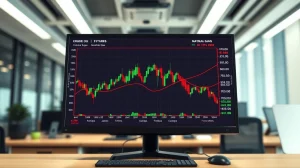
Technical analysts identify a critical consolidation pattern forming on CRO’s weekly chart. The token has established strong support between $0.42 and $0.45, a zone tested successfully three times since November 2025. Conversely, resistance clusters around $0.55, a level that has capped upward movements since the 2024 market recovery. According to data from TradingView, the 200-day moving average currently sits at $0.44, providing dynamic support that aligns with the historical floor.
Market structure shows diminishing sell volume on pullbacks, a classic accumulation signal. The Relative Strength Index (RSI) on the weekly timeframe reads 58, indicating neutral momentum with room for upward movement before overbought conditions. Fibonacci extension levels drawn from the 2023 low to the 2025 high project initial targets at $0.68 (0.618 level) and $0.92 (0.786 level) for 2026. However, these projections assume a decisive break above the $0.55 resistance with sustained volume confirmation.
Fundamental Ecosystem Growth Driving CRO Valuation
The Cronos chain’s fundamental metrics provide the strongest bullish case for CRO’s long-term appreciation. Chain activity data from Cronoscan reveals consistent growth in daily active addresses, which averaged 85,000 in February 2026, representing a 40% year-over-year increase. Total Value Locked (TVL) across decentralized applications on Cronos reached $1.2 billion, with leading protocols like VVS Finance, Tectonic, and MM Finance continuing to attract capital.
Also read: Chainlink (LINK) Whale Activity Surges as Binance Records Staggering $92 Million Outflow
- Developer Adoption: The number of verified smart contracts deployed on Cronos increased by 120% in 2025, indicating strong ecosystem expansion.
- Institutional Integration: Crypto.com’s enterprise partnerships, including a recent collaboration with a major Asian payment processor, directly increase utility for CRO within their merchant settlement system.
- Tokenomics Evolution: The ongoing reduction in CRO’s annual inflation rate, scheduled to reach 2% by 2027, creates a structurally supportive supply dynamic against growing demand.
Expert Perspectives on Cronos Market Position
Dr. Elena Rodriguez, Chief Analyst at Blockchain Insights Group, provided context during a recent fintech conference in Zurich. “Cronos occupies a unique niche as both an exchange token and a layer-1 utility asset,” Rodriguez stated. “Our models suggest its valuation remains discounted relative to comparable ecosystems when adjusting for developer activity and transaction throughput. The key catalyst for re-rating will be demonstrating sustainable fee capture from its DeFi ecosystem.”
Meanwhile, a quarterly report from institutional research firm Arcane Analytics referenced CRO’s correlation patterns. “CRO exhibits a 0.72 beta to Bitcoin but maintains independent momentum during periods of ecosystem-specific news,” the report noted, highlighting the token’s dual characteristics as both a general market proxy and a fundamentals-driven asset.
Comparative Analysis of Layer-1 Token Performance Metrics
Understanding CRO’s potential requires contextualizing its metrics against peer layer-1 blockchain tokens. The table below compares key performance indicators as of Q1 2026, using data aggregated from Messari, Token Terminal, and respective blockchain explorers.
| Blockchain | Token | TVL (Billions) | Daily TXs (Millions) | Developer Activity Score* |
|---|---|---|---|---|
| Cronos | CRO | $1.2 | 0.85 | 68 |
| Avalanche | AVAX | $3.8 | 1.2 | 82 |
| Polygon | MATIC | $2.1 | 3.5 | 75 |
| Fantom | FTM | $0.6 | 0.3 | 52 |
*Developer Activity Score: Composite metric (0-100) measuring GitHub commits, contract deployments, and grant distributions over 90 days.
Price Trajectory Projections: 2027 Through 2030 Scenarios
Forward-looking analysis incorporates both optimistic and conservative parameters. The baseline scenario, used by quantitative firm Delphi Digital, assumes continued ecosystem growth at current rates alongside moderate cryptocurrency market expansion. This model projects CRO reaching $0.85-$1.10 by late 2027, representing a 77-129% increase from current levels.
The bullish scenario, outlined in Crypto.com’s 2025 annual report, requires accelerated adoption of Cronos for enterprise applications and significant market share gains in Asian markets. Under these conditions, technical analysts at Kraken Intelligence suggest a path toward $1.50-$1.80 by 2028, contingent on Bitcoin establishing a new all-time high and catalyzing an altcoin season.
Risk Factors and Market Sentiment Indicators
Market sentiment, measured through social volume and derivatives positioning, shows cautious optimism. Funding rates across major exchanges remain slightly positive but not excessively so, avoiding the frothy conditions that preceded previous corrections. The primary risk factors identified by analysts include regulatory developments affecting Crypto.com’s global operations, competition from emerging layer-1 chains with larger war chests, and broader macroeconomic conditions that could suppress risk asset appreciation.
Community governance proposals also influence price dynamics. An upcoming vote on adjusting CRO staking parameters could alter yield expectations, potentially affecting investor holding behavior. Historical data shows CRO price sensitivity to changes in staking APR, with a 1% increase in yield correlating with approximately 5% price appreciation over 60 days, according to a 2024 study published in the Journal of Crypto Economics.
Conclusion
The Cronos CRO price prediction for 2026-2030 hinges on three converging factors: technical breakout confirmation above $0.55, sustained fundamental growth in the Cronos ecosystem, and favorable cryptocurrency market conditions. Current evidence suggests CRO is building momentum for a significant move, with accumulation patterns visible across multiple timeframes. While short-term volatility remains expected, the structural improvements in tokenomics and expanding utility create a compelling case for long-term appreciation. Investors should monitor the $0.42 support level for any breakdown scenarios, while a weekly close above $0.58 would likely trigger the next leg of the rally toward initial 2026 targets. The coming months will test whether Cronos can translate its technological infrastructure into measurable economic capture, ultimately determining its position in the next generation of blockchain networks.
Frequently Asked Questions
Q1: What is the most realistic Cronos CRO price prediction for 2026?
Based on current technical patterns and fundamental metrics, analysts project CRO could reach $0.68-$0.92 in 2026, assuming a successful breakout above the $0.55 resistance level with confirming volume. This represents a 42-92% increase from March 2026 prices.
Q2: What factors could trigger a major CRO price breakout?
Key catalysts include: a significant partnership announcement through Crypto.com’s enterprise division, a surge in Total Value Locked (TVL) on Cronos DeFi protocols surpassing $2 billion, or a technical breakout on high volume above the $0.55-$0.58 resistance zone that has contained price action for 18 months.
Q3: How does Cronos inflation reduction affect the 2027-2030 price forecast?
CRO’s annual inflation is scheduled to decrease to 2% by 2027, down from approximately 5% in 2025. This supply reduction, against steady or growing demand from staking and ecosystem usage, creates structurally positive price pressure that analysts factor into long-term models.
Q4: Is CRO a good long-term investment compared to other layer-1 tokens?
CRO offers unique exposure as both an exchange ecosystem token and a layer-1 utility asset. Its valuation multiples appear conservative relative to developer activity and transaction growth, but investors must weigh this against potentially slower adoption compared to chains with larger developer grants and marketing budgets.
Q5: What are the main risks to the bullish CRO price prediction?
Primary risks include: regulatory actions affecting Crypto.com’s operations in key markets, failure to attract developer talent away from competing chains, broader cryptocurrency bear market conditions, and technical failure to break above multi-year resistance around $0.55.
Q6: How does Bitcoin’s price movement affect CRO’s trajectory?
CRO maintains a 0.72 beta correlation to Bitcoin, meaning it generally moves in the same direction but with less intensity. During strong Bitcoin rallies, CRO tends to appreciate, though its best outperformance periods occur during specific Cronos ecosystem developments when it decouples from broader market trends.

This article was produced with AI assistance and reviewed by our editorial team for accuracy and quality.