Core Scientific’s 2026 BTC Liquidation: A $150M Pivot to AI Infrastructure
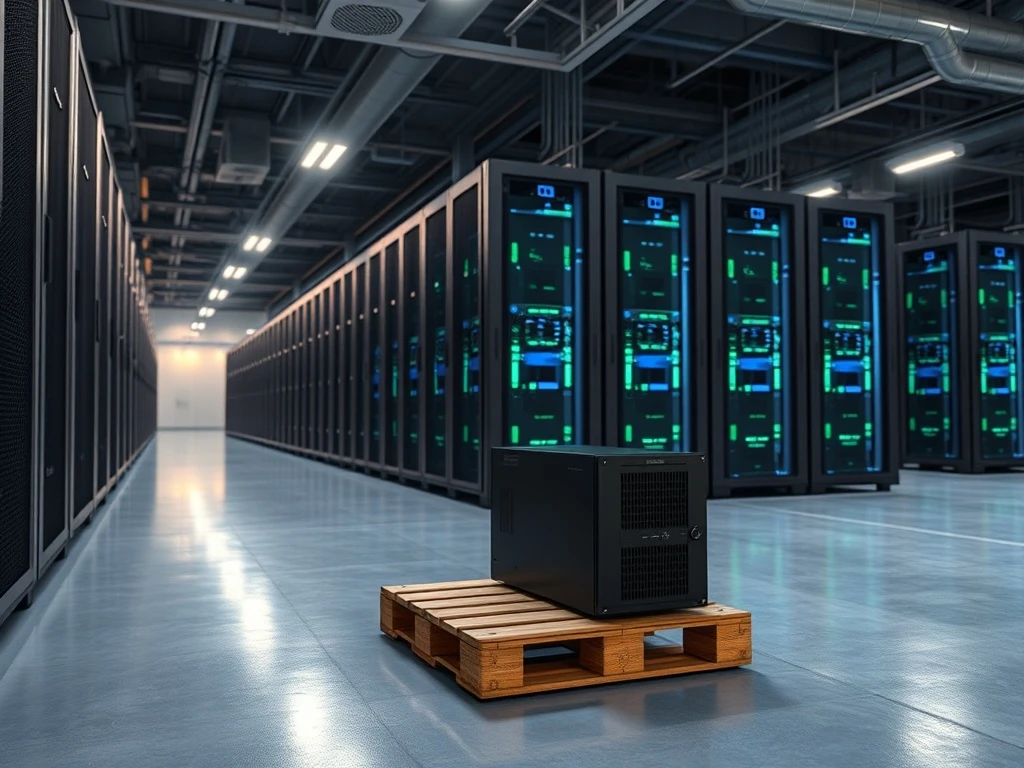
AUSTIN, Texas — February 15, 2026: In a move that underscores a seismic shift within the cryptocurrency mining sector, publicly traded Bitcoin miner Core Scientific has announced plans to liquidate nearly its entire Bitcoin treasury during the first quarter of 2026. The company intends to sell approximately 2,537 BTC, worth an estimated $150 million at current prices, according to its annual 10-K filing with the U.S. Securities and Exchange Commission (SEC). This substantial BTC liquidation directly funds a strategic capital allocation toward expanding its high-density artificial intelligence (AI) colocation business, a pivot that analysts view as a critical response to evolving market dynamics and technological convergence.
Core Scientific’s Strategic Pivot: From Bitcoin Mining to AI Colocation
The decision, first reported by blockchain analytics firm Wu Blockchain following the SEC filing disclosure, represents one of the largest planned Bitcoin disposals by a major mining entity. Core Scientific’s filing explicitly states the capital raised will “fund expansion of our AI colocation business and for general corporate purposes, including liquidity.” This marks a definitive strategic redirection. The company, which emerged from Chapter 11 bankruptcy restructuring in early 2024, has been actively diversifying its revenue streams beyond the volatile Bitcoin block reward and transaction fee model. Consequently, its AI colocation segment, which involves leasing data center space and power to companies running GPU-intensive AI workloads, has grown to contribute over 35% of its total revenue in the last fiscal quarter.
Industry observers note the timing is strategically significant. The first quarter of 2026 precedes the next Bitcoin halving event, anticipated in mid-2028, which will cut mining rewards by 50%. “This is a pre-emptive capital reallocation,” said Martha Rodriguez, a senior analyst at Blockware Intelligence. “Core Scientific is leveraging its strong Bitcoin reserve, accumulated during the 2023-2025 bull market, to build a more predictable, contracted revenue business in AI before the mining economics become more challenging. It’s a textbook case of corporate foresight in a cyclical industry.” The company’s existing AI colocation contracts, primarily with cloud service providers and large language model developers, often feature multi-year terms, providing stable cash flow distinct from cryptocurrency price swings.
Quantifying the Impact on Core Scientific and Bitcoin’s Market
The liquidation of 2,537 BTC will have a multi-layered impact, affecting Core Scientific’s balance sheet, shareholder perception, and potentially the broader Bitcoin market. Based on a Bitcoin price of $59,000, the sale would generate roughly $150 million in immediate capital. This influx will directly accelerate the build-out of new, liquid-cooled data hall capacity specifically designed for NVIDIA’s latest generation of AI accelerators. The company has already secured power purchase agreements for an additional 300 megawatts (MW) across its Texas and Georgia facilities to support this expansion.
- Balance Sheet Transformation: The move will drastically reduce the company’s exposure to Bitcoin price volatility, converting a speculative digital asset into hard capital for infrastructure development. Post-sale, Core Scientific’s Bitcoin holdings will be negligible, fundamentally altering its investment profile.
- Market Liquidity Event: A single, planned sale of this magnitude is unlikely to cause a major market downturn, but it will represent a significant over-the-counter (OTC) liquidity event. The company will likely execute the sale through institutional brokers to minimize market impact, a process detailed in its risk management disclosures.
- Industry Signaling Effect: As one of North America’s largest miners, Core Scientific’s pivot places pressure on competitors to articulate their own diversification strategies. It validates a growing trend of “hashrate-to-compute” transitions within the sector.
Expert Analysis on the Mining Industry’s Evolution
Financial and cryptocurrency experts view this not as an abandonment of Bitcoin mining, but as a sophisticated hedging and growth strategy. Dr. Ian Lee, a professor of FinTech at MIT Sloan School of Management, provided context: “Core Scientific is not exiting mining; it’s leveraging mining’s capital-intensive infrastructure—cheap power, robust connectivity, and scalable facilities—to capture value in the adjacent, high-growth AI compute market. This is a logical convergence. The real estate and power agreements are the key assets, not the specific application running on them.” This sentiment is echoed in the company’s own communications, which emphasize a “dual-purpose infrastructure” model capable of supporting both proof-of-work mining and high-performance computing.
Furthermore, the SEC filing itself serves as a primary source document, reinforcing the announcement’s credibility. The requirement for detailed disclosure in a 10-K filing means the plan has undergone legal and financial scrutiny, distinguishing it from speculative social media rumors that often circulate in the crypto space. The filing also references the company’s debt covenants and liquidity requirements, providing a transparent rationale for the capital raise beyond mere expansion ambitions.
Broader Context: The Great Mining Migration to AI Compute
Core Scientific’s maneuver is the most prominent example of a wider industry trend. Over the past 18 months, multiple public and private miners have announced pilot projects or full-scale deployments of AI and cloud computing services within their data centers. This shift is driven by economic fundamentals: AI compute can generate revenue of $15-$30 per kilowatt-hour (kWh), while Bitcoin mining at current difficulty and price levels typically yields $5-$12 per kWh. The higher, contracted revenue potential of AI provides a compelling argument for capital allocation, especially for miners with access to low-cost, interruptible power contracts that can flex between applications.
| Mining Company | AI/Compute Initiative | Status (as of Q4 2025) |
|---|---|---|
| Core Scientific | AI Colocation Business Expansion | Active; 35% of revenue; Major 2026 expansion funded by BTC sale. |
| Iris Energy | High-Performance Computing (HPC) Pods | Pilot phase; 100 MW allocated. |
| Hut 8 | GPU Cloud Services Division | Operational; acquired four data centers for this purpose in 2024. |
| Bit Digital | Strategic Hosting for AI Firms | Announced partnerships; converting some US sites. |
The table illustrates a sector in active transition. However, analysts caution that the AI compute market has its own barriers to entry, including significant upfront capital for specialized cooling systems, established customer relationships, and expertise in managing non-blockchain workloads. Core Scientific’s use of Bitcoin reserves to fund this leap is a calculated bet to overcome these hurdles rapidly.
What Happens Next: Execution and Market Watch Points
The critical timeline is now the execution window of Q1 2026. Investors and analysts will monitor the company’s quarterly reports for updates on the Bitcoin sale’s progress and the deployment of proceeds. Key performance indicators will shift from pure Bitcoin production metrics to a blend of hash rate, AI colocation megawatts deployed, and contracted revenue backlog. The company’s share price, which has shown sensitivity to both Bitcoin’s price and its own AI partnership announcements, will likely decouple further from cryptocurrency markets if the transition succeeds.
Stakeholder and Market Reactions
Initial reaction from the investment community has been cautiously optimistic. Several equity research firms maintained “hold” or “moderate buy” ratings, noting the strategic logic but emphasizing execution risk. Within the cryptocurrency community, reactions are mixed. Some Bitcoin maximalists view the move as a betrayal of the mining sector’s core mission, while pragmatists see it as a necessary adaptation for publicly-traded companies accountable to shareholders seeking stable returns. Notably, the announcement had no discernible negative impact on Bitcoin’s network hash rate, which continues to trend upward, suggesting other miners are readily absorbing any potential change in Core Scientific’s mining focus.
Conclusion
Core Scientific’s plan to liquidate nearly 2,537 BTC in early 2026 is far more than a simple asset sale. It is a landmark strategic pivot, channeling capital from its Bitcoin treasury into the competitive AI infrastructure arena. This decision, grounded in its official SEC filing and expert financial analysis, highlights the evolving nature of digital infrastructure companies. They are no longer defined solely by cryptocurrency cycles but by their ability to leverage power, real estate, and capital agility across high-value compute applications. The success of this BTC liquidation and subsequent AI expansion will be a defining case study for the entire sector, testing whether the convergence of blockchain and artificial intelligence infrastructure can create sustainable, hybrid business models for the long term.
Frequently Asked Questions
Q1: Why is Core Scientific selling its Bitcoin in 2026?
Core Scientific is selling approximately 2,537 BTC to raise an estimated $150 million in capital. The primary purpose, as stated in its SEC filing, is to fund the expansion of its artificial intelligence (AI) colocation business and to boost general corporate liquidity, marking a strategic shift toward diversified revenue streams.
Q2: How will this large Bitcoin sale affect the market price?
The company will likely execute the sale through institutional over-the-counter (OTC) brokers to minimize direct impact on public exchange prices. While a $150 million sale is significant, the daily trading volume of Bitcoin is typically in the tens of billions, making a sustained price crash from this single event unlikely.
Q3: Is Core Scientific exiting the Bitcoin mining business entirely?
No. The company is not exiting mining but is diversifying its operations. It plans to use the capital from the Bitcoin sale to build new infrastructure that can support both AI compute and Bitcoin mining, pursuing a “dual-purpose” model to maximize the utility of its data centers and power contracts.
Q4: What is AI colocation, and why is it attractive to a Bitcoin miner?
AI colocation involves leasing data center space, power, and cooling to companies that need to run powerful AI software on banks of GPUs. It’s attractive because it can generate higher, more predictable revenue per unit of energy compared to the often volatile returns from Bitcoin mining, especially as the next block reward halving approaches.
Q5: Does this signal a wider trend in the cryptocurrency mining industry?
Yes. Several major mining companies are exploring or have launched high-performance computing and AI service divisions. The core assets of miners—low-cost power contracts and large-scale data center facilities—are also valuable for other compute-intensive industries, leading to a natural convergence.
Q6: How does this affect Core Scientific’s shareholders and investors?
The move aims to reduce the company’s financial dependence on Bitcoin’s price volatility and build a more stable revenue base from long-term AI contracts. Success could lead to a higher valuation based on predictable earnings, but it also introduces execution risk associated with entering a new, competitive market.