Circle Stock Plummets 10% Amid Analyst Downgrade and Drift Protocol Fallout
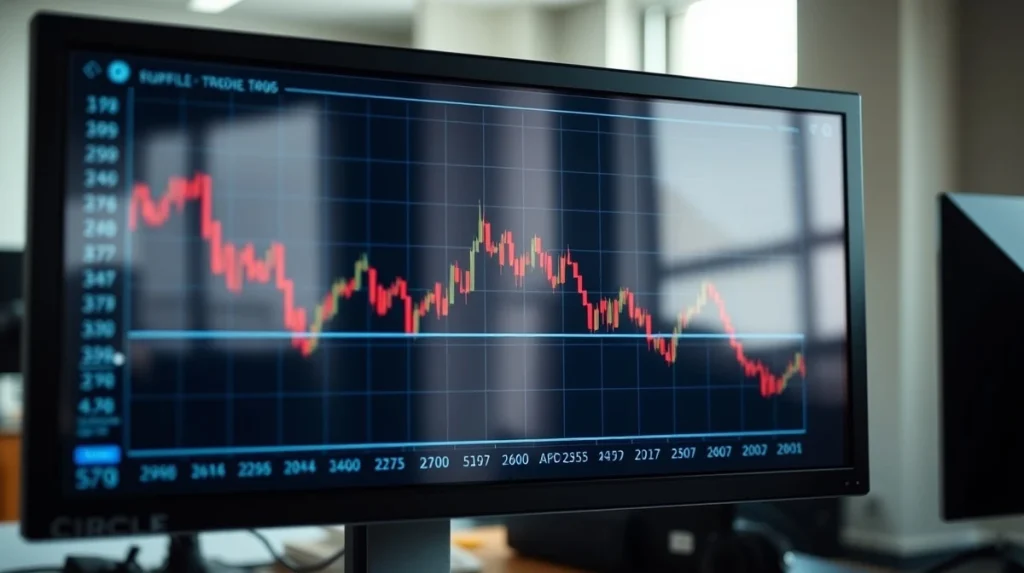
Shares of Circle Internet Financial, the issuer of the USDC stablecoin, plunged more than 10% in early trading on April 10, 2026. The sharp decline followed a one-two punch of negative news: a prominent “Sell” rating from a major Wall Street firm and escalating revelations from the Drift Protocol scandal. This double blow rattled investor confidence in one of crypto’s most established public companies.
Analyst Downgrade Hits Circle Stock
Investment bank Barclays initiated coverage on Circle with an Underweight rating, the equivalent of a “Sell.” The firm set a price target of $8.50, significantly below the stock’s closing price the previous day. In its research note, Barclays analysts expressed concerns about Circle’s revenue concentration. They noted that over 85% of the company’s income is tied to interest earned on the reserves backing its USDC stablecoin.
Also read: XRP Price Prediction: Analyst's $1000 Target by 2030 Faces Scrutiny and Skepticism
“A sustained period of lower interest rates directly pressures Circle’s core profitability model,” the Barclays report stated. Data from the Federal Reserve shows market expectations for rate cuts have increased in recent months. This suggests a potential headwind for Circle’s earnings. The downgrade triggered immediate selling pressure. Trading volume for the stock spiked to three times its 30-day average within the first hour.
The Drift Protocol Scandal Connection
Simultaneously, new details emerged linking Circle to the ongoing Drift Protocol investigation. Drift, a decentralized finance (DeFi) lending platform, collapsed in March 2026 amid allegations of fraudulent accounting and asset mismanagement. Court documents filed on April 9 revealed that Circle was a major liquidity provider to Drift’s treasury.
Also read: PancakeSwap (CAKE) Price Prediction: A Cautious Long-Term Forecast for 2026-2030
According to a filing from the U.S. Securities and Exchange Commission, Circle held a $150 million USDC deposit in a Drift-managed yield-generating pool. While Circle is not accused of wrongdoing, the exposure highlights the interconnected risks within the digital asset ecosystem. “This shows that even blue-chip crypto firms face counterparty risk in DeFi,” said Martha Chen, a fintech analyst at Cornell University. “Investors are reassessing the stability of these revenue channels.”
Market Impact and Broader Context
The sell-off in Circle shares contributed to a broader dip in crypto-related stocks. The sell rating and scandal news arrived at a sensitive time for the sector. Regulatory scrutiny of stablecoin issuers has intensified globally. In February 2026, the European Union’s Markets in Crypto-Assets (MiCA) regulations began imposing stricter capital and governance requirements on firms like Circle.
Industry watchers note that the reaction may be disproportionate to the direct financial risk from Drift. The implication is that the market is punishing Circle for broader ecosystem instability. “This is a sentiment-driven move,” noted David Lin, host of the FinTech Today podcast. “The Drift news provides a concrete example of the ‘unknown unknowns’ that analysts have warned about.”
Circle’s Response and USDC Stability
A Circle spokesperson addressed the developments in a statement. “We are confident in our business model and the full backing of USDC,” the statement read. “Our exposure to Drift Protocol was within our established risk parameters and represents a minor portion of our treasury portfolio. USDC remains redeemable 1:1 for U.S. dollars.”
On-chain data appears to support the claim of stability for the stablecoin itself. Blockchain analytics firm Nansen reported no abnormal outflows from USDC throughout the trading day. The stablecoin’s market capitalization held steady at approximately $28 billion. This divergence between the stock price and the stablecoin’s performance is notable. It suggests investors are separating concerns about Circle’s equity from trust in its core product.
Historical Precedents and Investor Outlook
This is not the first time Circle’s stock has faced volatility tied to external events. Shares fell sharply in March 2025 following the failure of the crypto-friendly Signature Bank, a key partner. However, the stock recovered those losses within six weeks. The current situation presents a different challenge. It combines a fundamental business concern from the analyst with a reputational hit from industry scandal.
What this means for investors is heightened uncertainty. The stock is now trading nearly 40% below its 52-week high. Some see this as a buying opportunity, betting on Circle’s dominant position in the stablecoin market. Others advise caution until the Drift investigation concludes and the interest rate picture becomes clearer. The coming quarterly earnings report, scheduled for late April, will be closely watched for management’s commentary on these issues.
Conclusion
Circle stock experienced a significant drop driven by a major analyst downgrade and damaging news flow from the Drift Protocol scandal. While the USDC stablecoin itself showed resilience, equity investors fled on fears over revenue sustainability and ecosystem risk. The event underscores the complex pressures facing public companies in the digital asset sector, where traditional financial metrics intersect with novel technological and regulatory risks. Circle’s path to recovery will depend on its ability to deal with these dual challenges and reassure the market of its long-term profitability.
FAQs
Q1: Why did Circle’s stock price fall 10%?
The drop resulted from two simultaneous events: a “Sell” rating and price target cut from Barclays analysts, and new revelations about Circle’s financial exposure to the failed Drift Protocol.
Q2: Is the USDC stablecoin still safe to use?
On-chain data and company statements indicate USDC remains fully backed and redeemable 1:1 for U.S. dollars. The stock market reaction is focused on Circle the company, not its stablecoin product.
Q3: What was Circle’s involvement with Drift Protocol?
According to SEC filings, Circle had deposited $150 million in USDC into a yield-generating pool managed by Drift Protocol. Circle is considered a creditor in Drift’s bankruptcy proceedings.
Q4: What was the main reason for the analyst downgrade?
Barclays cited over-reliance on interest income from USDC reserves as a key vulnerability, especially if the Federal Reserve cuts interest rates.
Q5: Have other crypto stocks been affected?
Yes. The negative news contributed to a broader sell-off in crypto-correlated stocks on April 10, though Circle’s decline was among the most pronounced.

This article was produced with AI assistance and reviewed by our editorial team for accuracy and quality.