Advanced Aerogel Insulation: China’s Breakthrough Gas Membrane Organic-Silica Composite Materials Transform Industrial Applications
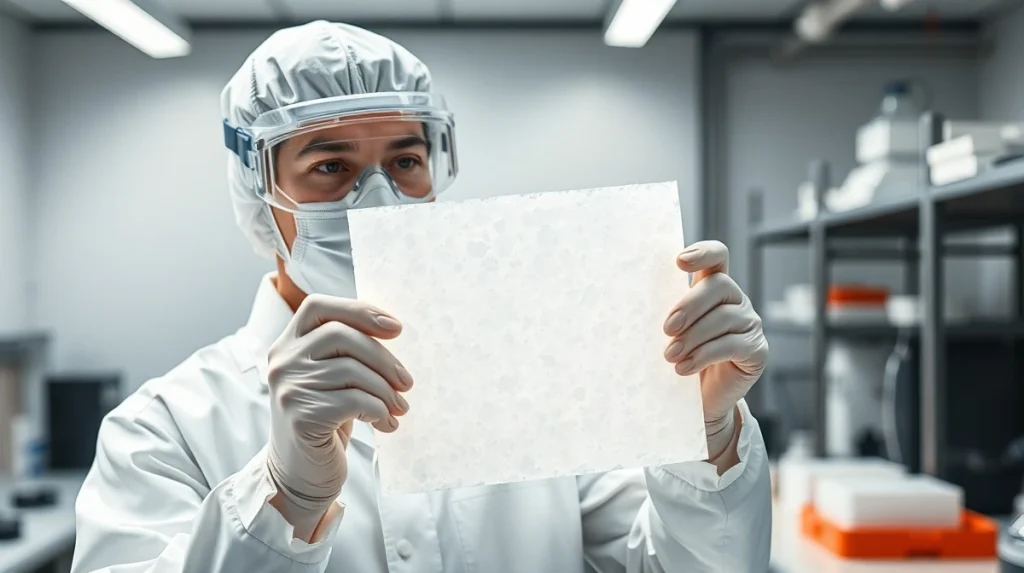
Chinese materials scientists have developed innovative gas membrane organic-silica composite aerogel materials that are revolutionizing thermal insulation across multiple industrial sectors. These advanced materials, first commercially introduced in early 2025, combine exceptional thermal performance with structural durability, addressing critical energy efficiency challenges in construction, manufacturing, and transportation industries worldwide.
Aerogel Technology: From Laboratory Curiosity to Industrial Solution
The evolution of aerogel materials represents one of materials science’s most significant advancements in thermal management. Originally developed in the 1930s, aerogels remained laboratory curiosities for decades due to manufacturing challenges and high production costs. However, recent Chinese innovations in organic-silica composite formulations have transformed these materials into commercially viable solutions. The breakthrough involves creating hybrid structures that combine silica’s thermal properties with organic polymers’ mechanical strength.
Also read: M Series ANC Token Presale Launches with Detailed Vesting
Industrial applications have expanded rapidly since 2024, particularly in sectors requiring extreme temperature management. For instance, petrochemical plants now utilize these materials for pipeline insulation, while aerospace companies incorporate them into thermal protection systems. The materials’ nanoporous structure, comprising approximately 95% air by volume, creates exceptional thermal resistance with minimal weight penalty.
Technical Specifications and Performance Metrics
China’s composite aerogel materials demonstrate remarkable performance characteristics. Laboratory testing conducted throughout 2025 revealed thermal conductivity values as low as 0.015 W/m·K at room temperature, significantly outperforming traditional insulation materials. Furthermore, these materials maintain structural integrity across temperature ranges from -200°C to 650°C, making them suitable for diverse industrial environments.
Also read: Pepeto Presale Attracts Investor Interest Amid Meme Coin Rally
The manufacturing process involves sol-gel chemistry followed by supercritical drying, which preserves the material’s porous network. Recent production innovations have reduced costs by approximately 40% compared to earlier aerogel formulations, according to industry analyses completed in late 2025. This cost reduction has accelerated adoption across multiple sectors.
Gas Membrane Applications: Enhancing Efficiency and Safety
Organic-silica composite aerogels excel in gas separation and purification applications, particularly in industrial settings requiring precise atmospheric control. The materials’ tunable pore structure allows selective permeability for different gas molecules, enabling efficient separation processes. Chemical processing plants have implemented these membranes for natural gas purification since mid-2025, reporting significant energy savings compared to conventional separation technologies.
Safety applications have also expanded dramatically. Fire protection systems now incorporate aerogel-based barriers that provide both thermal insulation and fire resistance. Building codes in several Asian markets began recognizing these materials for fire safety applications in early 2026, following extensive testing throughout 2025. The materials’ non-combustible nature and low smoke generation make them particularly valuable for high-risk industrial environments.
Environmental Impact and Sustainability Considerations
The environmental benefits of advanced aerogel insulation extend beyond energy efficiency. Life cycle assessments conducted in 2025 demonstrate that these materials can reduce building energy consumption by up to 30% compared to conventional insulation. Additionally, their durability and resistance to degradation minimize replacement frequency, reducing material waste over building lifetimes.
Manufacturing processes have evolved to incorporate more sustainable practices. Several Chinese producers now utilize silica from rice husk ash, an agricultural byproduct, reducing reliance on mined materials. Water consumption during production has decreased by approximately 25% since 2024 through process optimization and recycling initiatives.
Industrial Adoption and Market Dynamics
The global market for advanced aerogel materials has experienced rapid growth, with Chinese manufacturers capturing significant market share. Industry reports from March 2026 indicate that composite aerogel production capacity in China has increased by 150% since 2024. This expansion responds to growing demand from construction, oil and gas, and transportation sectors seeking improved energy efficiency solutions.
Construction applications have proven particularly promising. The materials’ thin profile allows for space-efficient insulation in urban buildings where floor space carries premium value. Several major construction projects in Shanghai and Beijing have incorporated these materials since late 2025, achieving superior thermal performance without sacrificing interior space.
Transportation industries have also embraced the technology. Automotive manufacturers now use aerogel composites for battery thermal management in electric vehicles, while aerospace companies apply them to spacecraft insulation systems. The materials’ lightweight nature provides particular advantages in mobile applications where weight reduction directly impacts energy consumption.
Technical Challenges and Research Directions
Despite significant advancements, technical challenges remain. Moisture resistance represents an ongoing research focus, as traditional silica aerogels can degrade in humid environments. Chinese research institutions have developed hydrophobic treatments that improve moisture resistance while maintaining thermal performance. These treatments, commercialized in early 2026, have expanded application possibilities in humid climates.
Mechanical strength continues as another research priority. While organic-silica composites demonstrate improved durability compared to pure silica aerogels, further enhancements could enable structural applications. Research published in February 2026 described new cross-linking techniques that increase compressive strength by approximately 50% while maintaining thermal performance.
Regulatory Field and Standards Development
International standards organizations have accelerated efforts to establish testing protocols and performance specifications for composite aerogel materials. The International Organization for Standardization (ISO) formed a technical committee in late 2025 specifically addressing aerogel insulation standards. These efforts aim to create consistent testing methodologies and performance benchmarks, facilitating global trade and adoption.
Building codes in multiple countries have begun incorporating provisions for aerogel insulation. California’s Title 24 energy efficiency standards, updated in 2025, recognize advanced insulation materials including aerogel composites for meeting stringent energy requirements. Similar regulatory developments have occurred in European and Asian markets, creating favorable conditions for market expansion.
Conclusion
China’s gas membrane organic-silica composite aerogel materials represent a transformative advancement in thermal insulation technology. These materials combine exceptional thermal performance with practical durability, addressing critical energy efficiency challenges across multiple industries. As manufacturing processes continue to improve and costs decrease, adoption will likely accelerate globally. The ongoing research into enhanced moisture resistance and mechanical strength promises to further expand application possibilities, solidifying aerogel composites’ position as essential materials for sustainable industrial development.
FAQs
Q1: What makes organic-silica composite aerogels different from traditional insulation materials?
Organic-silica composite aerogels offer significantly lower thermal conductivity (as low as 0.015 W/m·K) compared to traditional materials like fiberglass (0.040 W/m·K) or foam boards (0.030 W/m·K). Their nanoporous structure provides superior insulation with minimal thickness, and they maintain performance across extreme temperature ranges.
Q2: How do these materials contribute to energy efficiency in buildings?
These aerogel materials can reduce building energy consumption by up to 30% compared to conventional insulation. Their thin profile allows for space-efficient installation, particularly valuable in urban construction where interior space carries premium value. They also provide continuous insulation without thermal bridging common in traditional systems.
Q3: What industrial applications benefit most from gas membrane aerogel technology?
Petrochemical processing, aerospace, automotive manufacturing, and pharmaceutical production benefit significantly. The materials excel in applications requiring precise temperature control, gas separation, fire protection, and weight-sensitive insulation. Their chemical stability makes them suitable for corrosive industrial environments.
Q4: Are there environmental concerns with aerogel production?
Modern production methods have addressed earlier environmental concerns. Many manufacturers now use silica from agricultural byproducts like rice husk ash, reducing mining impacts. Production water consumption has decreased by approximately 25% since 2024 through recycling initiatives, and the materials’ durability reduces replacement frequency and associated waste.
Q5: How have building codes adapted to accommodate aerogel insulation materials?
International standards organizations and national building codes have increasingly recognized aerogel materials. California’s Title 24 standards updated in 2025 specifically address advanced insulation materials including aerogels. Similar regulatory developments in Europe and Asia establish testing protocols and performance requirements, facilitating broader adoption.

This article was produced with AI assistance and reviewed by our editorial team for accuracy and quality.