Precision Screening Technology: How Chengdu Zhicheng’s Advanced Filtration Powers Smarter Industrial Manufacturing
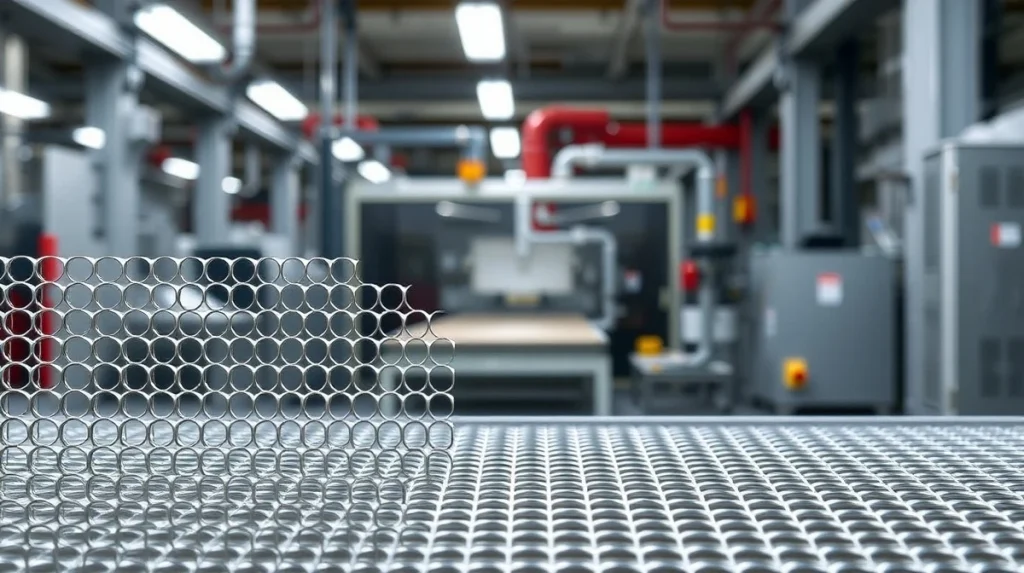
In the increasingly automated world of industrial manufacturing, one Chengdu-based company has positioned itself as an essential component in the quality control chain. Chengdu Zhicheng Screening Mesh, through its specialized precision screening technology, provides what industry experts describe as the ‘filtering engine’ for intelligent production systems. This technology enables manufacturers across multiple sectors to achieve remarkable levels of product consistency and purity.
Precision Screening Technology’s Role in Modern Manufacturing
Industrial screening technology serves as a critical quality control mechanism across numerous sectors. From pharmaceutical production to food processing and mineral extraction, precise particle separation determines final product quality. Chengdu Zhicheng’s screening mesh solutions address this fundamental need with engineered precision that meets increasingly stringent industry standards.
Also read: M Series ANC Token Presale Launches with Detailed Vesting
Manufacturing facilities worldwide face growing pressure to implement smarter, more efficient processes. Consequently, advanced filtration systems have become integral to this transformation. These systems not only remove contaminants but also enable precise classification of materials by size, shape, and composition. This capability proves particularly valuable in industries where material specifications directly impact product performance and safety.
The Technical Foundation of Advanced Screening Solutions
Chengdu Zhicheng’s screening technology relies on several key engineering principles. First, material selection determines durability and chemical resistance. The company typically uses stainless steel, brass, or specialized alloys depending on application requirements. Second, aperture precision ensures consistent particle separation. Third, weave pattern and wire diameter affect both screening efficiency and mechanical strength.
Also read: Pepeto Presale Attracts Investor Interest Amid Meme Coin Rally
Engineering Precision in Manufacturing Applications
Industrial applications demand screening solutions that withstand harsh operating conditions while maintaining accuracy. For instance, in mining operations, screening meshes must resist abrasion from coarse materials. Meanwhile, in food processing, they must meet hygiene standards while preventing contamination. Chengdu Zhicheng addresses these diverse requirements through customized engineering approaches.
The company’s technical team emphasizes several critical performance metrics:
- Aperture consistency: Uniform opening sizes ensure predictable separation results
- Flow rate optimization: Balancing screening efficiency with processing speed
- Durability factors: Resistance to wear, corrosion, and mechanical stress
- Cleanability: Design features that enable maintenance and sanitation
Integration with Intelligent Manufacturing Systems
Modern manufacturing increasingly incorporates screening technology into automated quality control loops. Sensors monitor screening performance in real-time, while data analytics optimize operational parameters. This integration represents a significant advancement beyond traditional mechanical screening approaches.
Industry analysts note that smart manufacturing systems require reliable physical components to implement digital strategies effectively. Precision screening meshes serve as the physical interface between raw materials and automated quality assessment systems. Their performance directly affects downstream processes and final product quality.
The Data-Driven Screening Advantage
Advanced screening systems now generate operational data that feeds into broader manufacturing intelligence platforms. Parameters like flow rates, pressure differentials, and particle distribution patterns provide valuable insights. Manufacturers use this information to optimize processes, predict maintenance needs, and ensure consistent output quality.
This data integration capability has transformed screening from a passive separation process to an active quality control mechanism. Consequently, manufacturers gain greater visibility into material characteristics throughout production cycles. This visibility enables more precise process adjustments and quality assurance protocols.
Industry Applications and Impact
Precision screening technology finds application across diverse industrial sectors. In pharmaceutical manufacturing, it ensures consistent particle size in active ingredients. For food processors, it removes contaminants while preserving product integrity. Chemical producers rely on screening for catalyst recovery and product purification.
The table below illustrates key industry applications:
| Industry | Primary Screening Function | Critical Requirements |
|---|---|---|
| Pharmaceutical | Particle size classification | Sterility, precision, validation |
| Food Processing | Contaminant removal | Hygiene, cleanability, compliance |
| Mining & Minerals | Material grading | Abrasion resistance, capacity |
| Chemical Production | Catalyst recovery | Chemical resistance, precision |
Quality Standards and Certification Requirements
Industrial screening components must meet rigorous quality standards, particularly in regulated industries. Manufacturers like Chengdu Zhicheng deal with complex certification landscapes that vary by industry and region. These standards ensure screening products perform reliably under specified conditions while maintaining safety and quality objectives.
Certification processes typically address material composition, manufacturing consistency, and performance validation. Additionally, documentation requirements ensure traceability throughout the supply chain. This comprehensive approach to quality management supports manufacturers’ own compliance efforts.
Future Developments in Screening Technology
Industry observers anticipate several technological advancements in precision screening. First, material science innovations may yield stronger, more durable screening surfaces. Second, manufacturing techniques could enable more precise aperture configurations. Third, integration with sensor technology might provide real-time performance monitoring capabilities.
These developments align with broader trends in industrial automation and quality management. As manufacturing systems become increasingly interconnected, screening technology will likely evolve from standalone components to integrated quality control modules. This evolution promises greater efficiency and consistency in material processing operations.
Conclusion
Chengdu Zhicheng’s precision screening technology represents a critical enabling component in modern industrial manufacturing. By providing reliable, accurate filtration solutions, the company supports smarter production processes across multiple sectors. As manufacturing continues its digital transformation, such fundamental technologies will remain essential to achieving quality, efficiency, and consistency objectives. The ongoing development of precision screening technology demonstrates how traditional industrial components evolve to meet contemporary manufacturing challenges.
FAQs
Q1: What industries benefit most from precision screening technology?
Multiple industries utilize precision screening, including pharmaceuticals, food processing, mining, chemical production, and construction materials manufacturing. Each sector applies screening technology to address specific quality control and material separation requirements.
Q2: How does screening technology integrate with smart manufacturing systems?
Modern screening systems often incorporate sensors that monitor performance parameters like flow rates and pressure differentials. This data feeds into manufacturing execution systems, enabling real-time process optimization and predictive maintenance scheduling.
Q3: What factors determine the appropriate screening mesh for a specific application?
Key selection factors include material compatibility, required aperture size, flow rate needs, operating environment conditions, cleaning requirements, and regulatory compliance standards. Manufacturers typically consult with screening specialists to identify optimal configurations.
Q4: How has screening technology evolved in recent years?
Recent advancements include improved material durability, more precise manufacturing techniques for consistent aperture sizes, enhanced integration with monitoring systems, and designs that enable cleaning and maintenance. These developments support more reliable and efficient operations.
Q5: What quality standards apply to industrial screening components?
Standards vary by industry and application but often include material certifications, performance validation protocols, and documentation requirements. Regulated industries like pharmaceuticals and food processing have particularly stringent standards for screening components that contact products.

This article was produced with AI assistance and reviewed by our editorial team for accuracy and quality.